
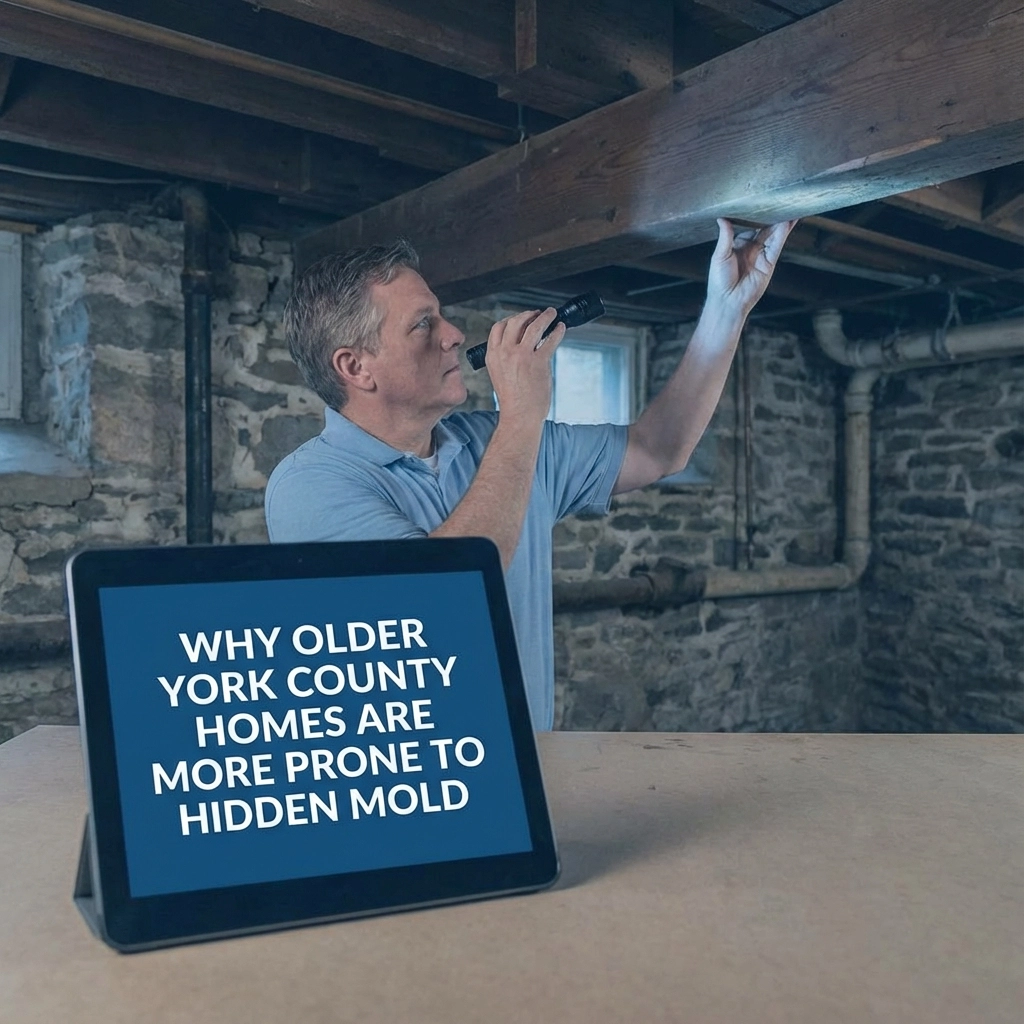
If you own a home built before 1980 in York County, PA, you're dealing with a property that's significantly more vulnerable to hidden mold than newer constructions. This isn't meant to scare you: it's simply the reality of how homes were built decades ago, before we understood moisture control and modern building science.
As someone who's conducted hundreds of mold inspections in York PA, I've seen firsthand why older homes present unique challenges. Let's dive into exactly why your vintage York County home might be harboring hidden mold: and what you can do about it.
Older York County homes were constructed during an era when builders focused on durability and craftsmanship, but moisture control wasn't even on their radar. Homes built in the 1920s through 1960s typically lack three critical elements that modern homes take for granted:
Instead, these homes feature materials like wood, plaster, and brick that actually absorb water easily and take much longer to dry once wet. This gives mold plenty of time to establish itself and spread throughout your home's hidden spaces.
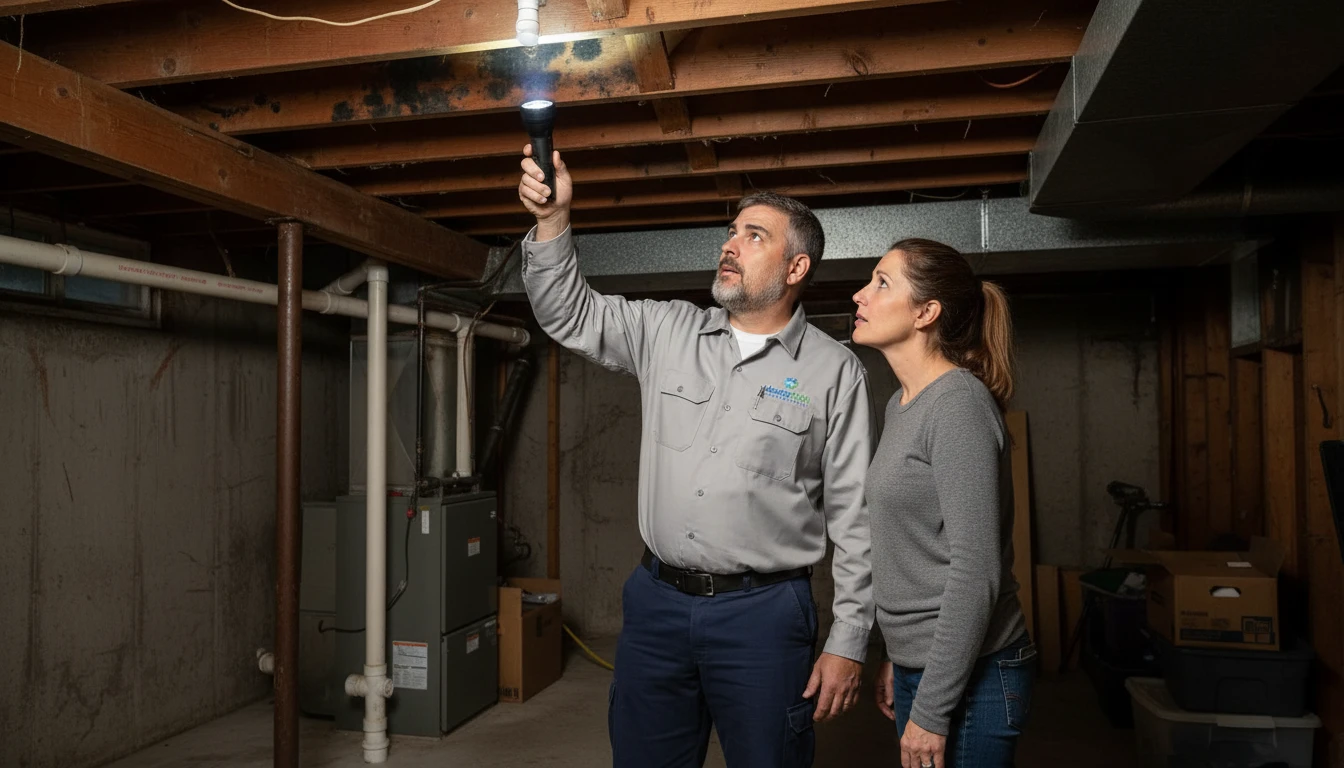
Alt text: Professional mold inspection in York County basement showing technician examining ceiling joists for mold growth with homeowner present
York County's humid continental climate creates perfect storm conditions for mold growth in older homes. Our hot, humid summers combined with temperature fluctuations create condensation problems that vintage construction simply wasn't designed to handle.
When humid air hits the cooler surfaces inside your walls: like old metal pipes or uninsulated areas: condensation forms. In newer homes, vapor barriers and proper ventilation handle this moisture. In older homes? That moisture just sits there, creating ideal breeding grounds for mold.
The most dangerous mold growth happens where you can't see it, and older York County homes have aging infrastructure that's particularly vulnerable:
Many homes from the 1940s-1960s still have their original plumbing: cast iron or galvanized steel pipes that are prone to leaks and condensation. Water leaking from pipes represents the most common cause of hidden mold growth, and the worst cases are hidden leaks inside walls or above ceilings that can fester for months before you notice them.
Original windows with deteriorated seals allow moisture infiltration, especially around the frames where water can seep into wall cavities. This is particularly problematic in York County's older neighborhoods where many homes still have their original window installations.
Older heating and cooling systems weren't designed to control humidity levels effectively. They might keep your home comfortable temperature-wise, but they're allowing moisture to build up in hidden spaces throughout your house.
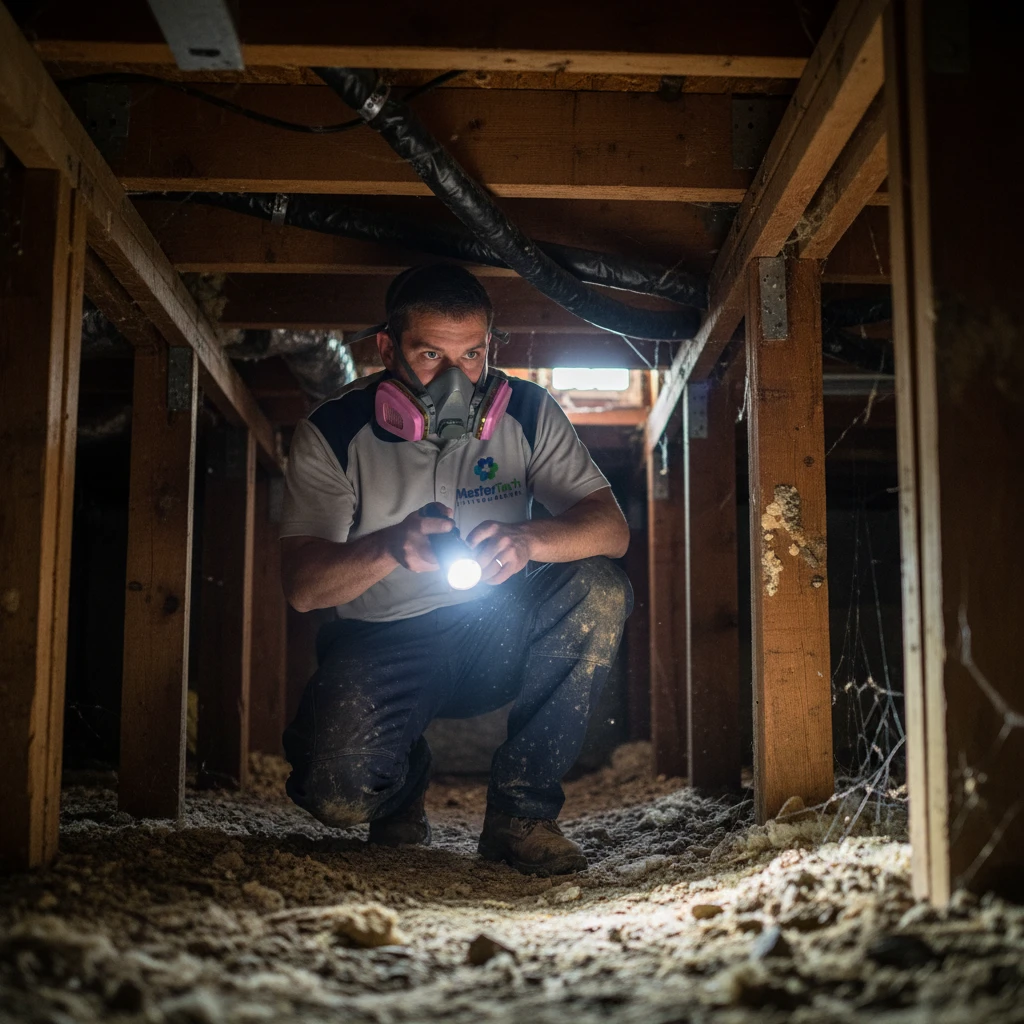
Alt text: York PA mold inspection technician in protective gear examining crawl space for moisture and mold with flashlight
Poor ventilation might be the biggest mold risk factor in older York County homes. When air doesn't circulate properly, humidity builds up and creates perfect breeding grounds for mold, especially in:
Without proper airflow, these areas become pockets of moist, stagnant air where mold thrives. Many of my mold testing appointments in older homes reveal extensive mold growth in these poorly ventilated spaces.
Based on my experience inspecting older York County homes, here are the most common locations where I find hidden mold:
Behind bathroom fixtures and tiles – Original grouting and caulking from decades ago has likely failed, allowing water to seep behind tiles and into wall cavities.
Under kitchen sinks – Original plumbing connections combined with poor ventilation create perfect conditions for mold growth under cabinets.
Inside wall cavities around pipes – This is where those hidden plumbing leaks cause the most damage, often going unnoticed for months.
Basement and crawl space areas – Poor ventilation combined with foundation moisture creates widespread mold problems.
Behind wallpaper and paneling – Popular in older homes, these materials can trap moisture against walls.
Within original ductwork – Uninsulated ducts in older homes collect condensation and distribute mold spores throughout your house.
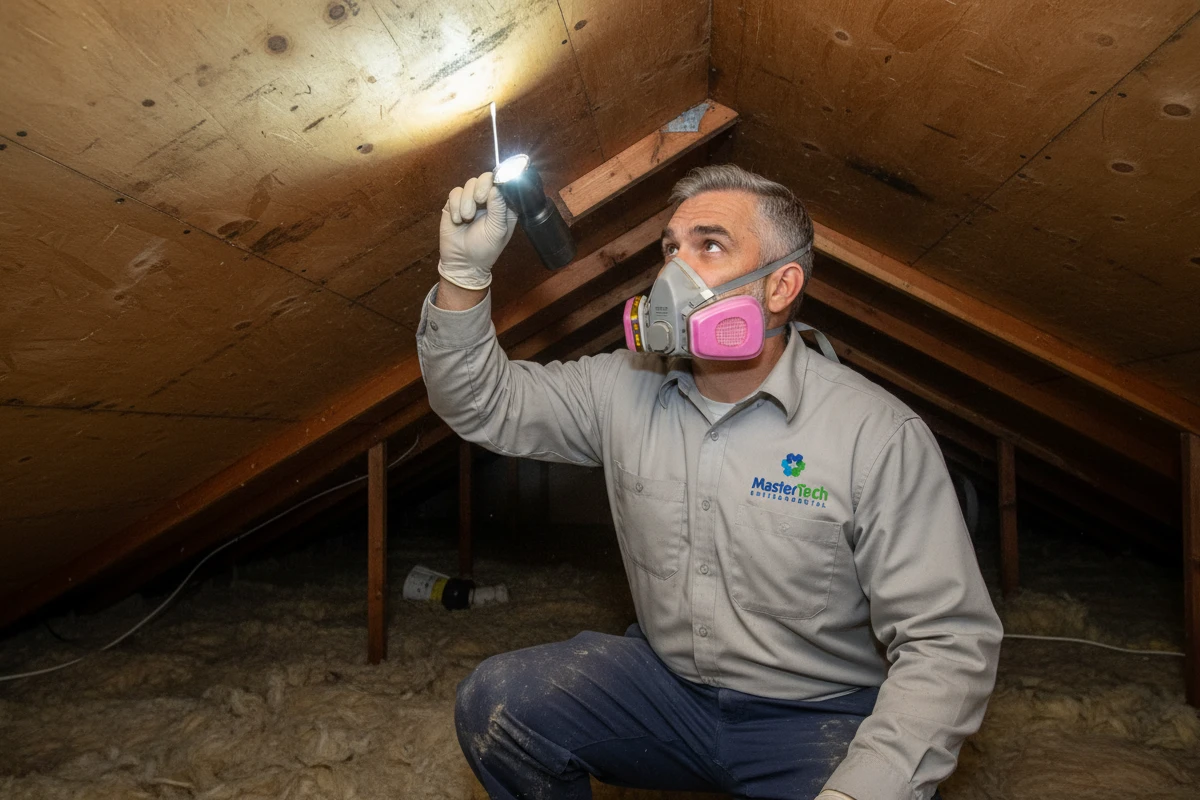
Alt text: York County mold inspection specialist wearing respirator examining attic rafters for mold contamination
Since mold often grows in areas you can't see, you need to watch for subtle warning signs:
Health symptoms that improve when you leave home and worsen when you return: especially respiratory issues, headaches, or fatigue. Many homeowners don't realize their health symptoms might be house-related until they get professional testing.
Musty odors that seem to come and go, especially in basements, bathrooms, or after rainy weather. If you're dealing with persistent musty smells, our guide on what professional mold inspection reveals can help you understand what's happening.
Visual clues like water stains, peeling paint, or warped wood: even if you don't see actual mold growth.
Increased allergy symptoms indoors, especially if multiple family members are affected.
Hidden mold in older homes isn't just a cosmetic issue: it's a health and property value concern. Prolonged exposure to mold can cause respiratory problems, especially in children and elderly family members. From a financial standpoint, unaddressed mold problems can significantly impact your home's value and lead to extensive (and expensive) remediation later.
I've seen too many York County homeowners discover major mold problems during home sales that could have been addressed much more affordably with earlier detection and treatment.
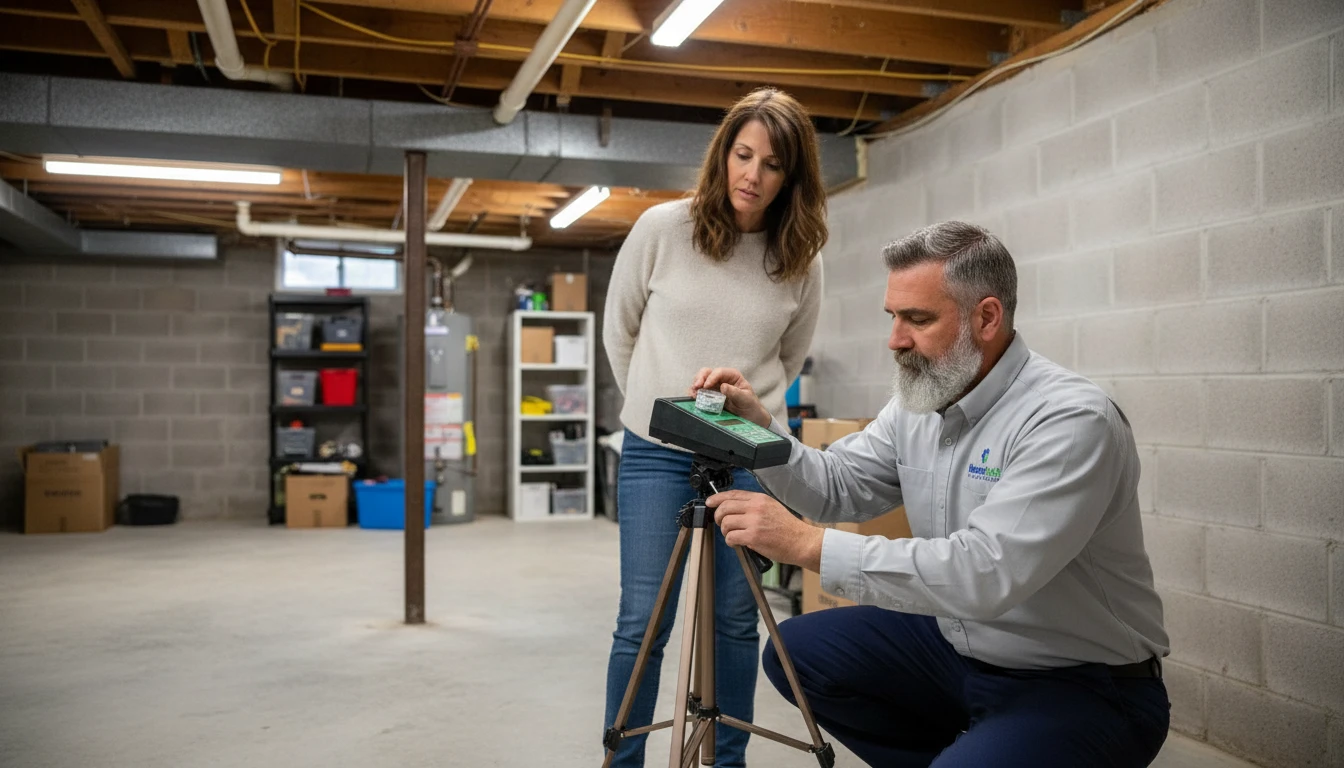
Alt text: Mastertech Environmental technician collecting air samples for mold testing in York PA basement with exposed joists
DIY mold test kits simply can't detect hidden mold behind walls, in ductwork, or in crawl spaces. Professional mold testing uses specialized equipment to identify mold in areas you can't access and provides accurate data about the types and concentrations of mold in your home.
For older York County homes, professional testing is especially important because:
If you own an older home in York County, don't wait for visible mold or health symptoms to get worse. Professional mold testing can give you peace of mind and help you address problems before they become major issues.
The good news? Most mold problems in older homes can be addressed effectively once they're properly identified. Whether it's improving ventilation, fixing hidden leaks, or addressing specific mold growth areas, solutions exist for every situation.
Your older York County home has character and charm that newer construction can't match. With proper attention to moisture control and regular professional inspections, you can enjoy your vintage home without worrying about hidden mold problems.
Ready to find out what's really happening in your older home? Contact Mastertech Environmental for comprehensive mold testing and inspection services specifically designed for York County's older residential properties.

Mastertech Environmental of York, PA. I'm your local expert in professional mold testing and inspection. With 17+ years of experience and trusted by thousands of homeowners, I can help you protect what matters most — your health and your home.