
If you've cleaned mold from your York County basement only to see it return weeks or months later, you're not alone. This frustrating cycle affects countless homeowners throughout South Central Pennsylvania, and the problem isn't that you're doing something wrong: it's that surface cleaning alone can't address the underlying conditions that allow mold to thrive.
At Mastertech Environmental of York, PA, owner Tom Duff has conducted hundreds of mold inspections and testing services throughout York County, and he consistently sees the same pattern: homeowners who focus on cleaning visible mold without addressing moisture sources inevitably face recurring growth.
Mold doesn't just appear on surfaces: it sends microscopic root systems called hyphae deep into porous materials like drywall, wood, and concrete. When you scrub away visible mold with bleach or household cleaners, you're only removing what you can see on the surface. The root system remains intact, ready to produce new visible growth as soon as conditions become favorable again.
More importantly, the moisture conditions that allowed mold to grow initially are still present. Unless these underlying moisture sources are identified and eliminated, mold will continue returning no matter how thoroughly you clean.
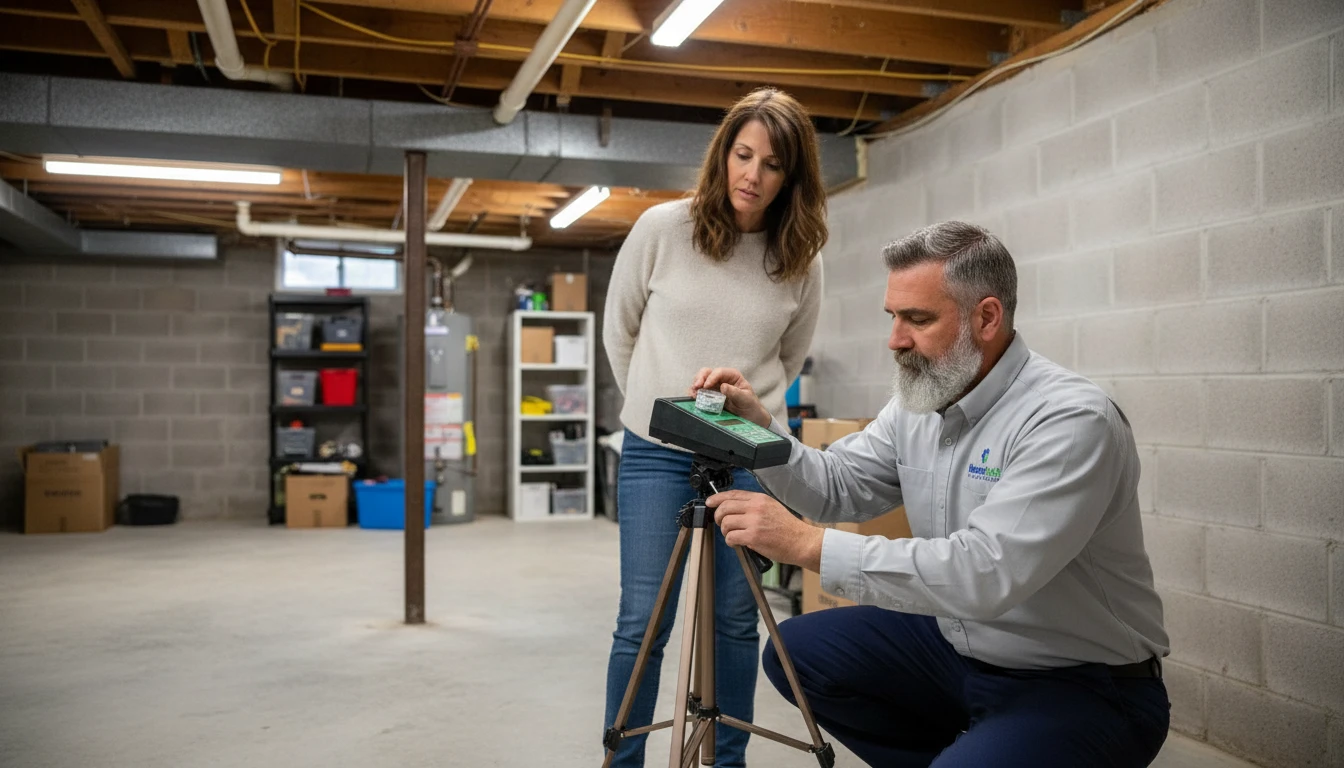
York County's geographic and geological characteristics create a perfect storm of conditions that make basement mold particularly persistent. Understanding these factors helps explain why surface cleaning fails and why professional assessment is often necessary.
York County experiences distinct seasonal changes that create ongoing moisture challenges. Heavy spring rains saturate the soil around foundations, while summer humidity creates condensation problems in cool basements. Fall brings additional moisture from leaf debris clogging gutters and drainage systems. Winter's freeze-thaw cycles create new cracks in foundations and expand existing ones, allowing water penetration that becomes apparent during spring snowmelt.
As Tom Duff explains to homeowners during inspections, "York County's weather doesn't give basements a break. Just when one moisture source resolves, another seasonal challenge begins."
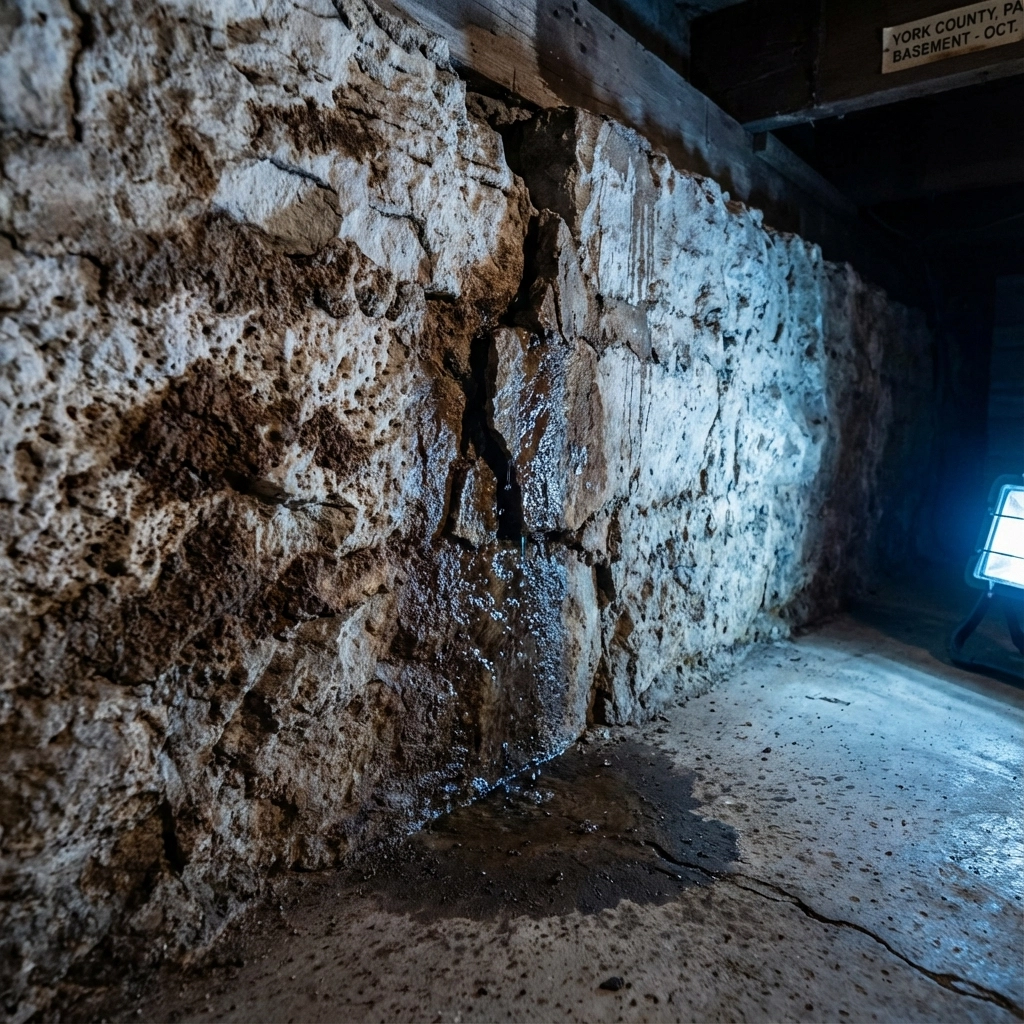
Many homes throughout York County sit on limestone foundations, which present unique challenges for moisture control. Unlike poured concrete, limestone is naturally porous and acts like a giant sponge. Water doesn't just sit against limestone foundations: it actually moves through the stone itself, appearing on interior basement walls even when there's no obvious exterior water damage.
This characteristic makes older York County homes particularly prone to hidden mold because moisture can travel through foundation materials in ways that aren't immediately apparent to homeowners.
Many homeowners reach for bleach when they discover basement mold, but this approach often backfires. Bleach cannot penetrate porous materials where mold roots hide, and the water in bleach solutions actually adds moisture to these materials. Additionally, bleach breaks down quickly in the presence of organic matter, losing its effectiveness almost immediately.
Poor air circulation in basements creates stagnant conditions where humidity accumulates. Many York County basements lack adequate ventilation, especially in older homes where basements were designed primarily for storage rather than living space. Without proper air movement, even small moisture sources can create ongoing mold problems.
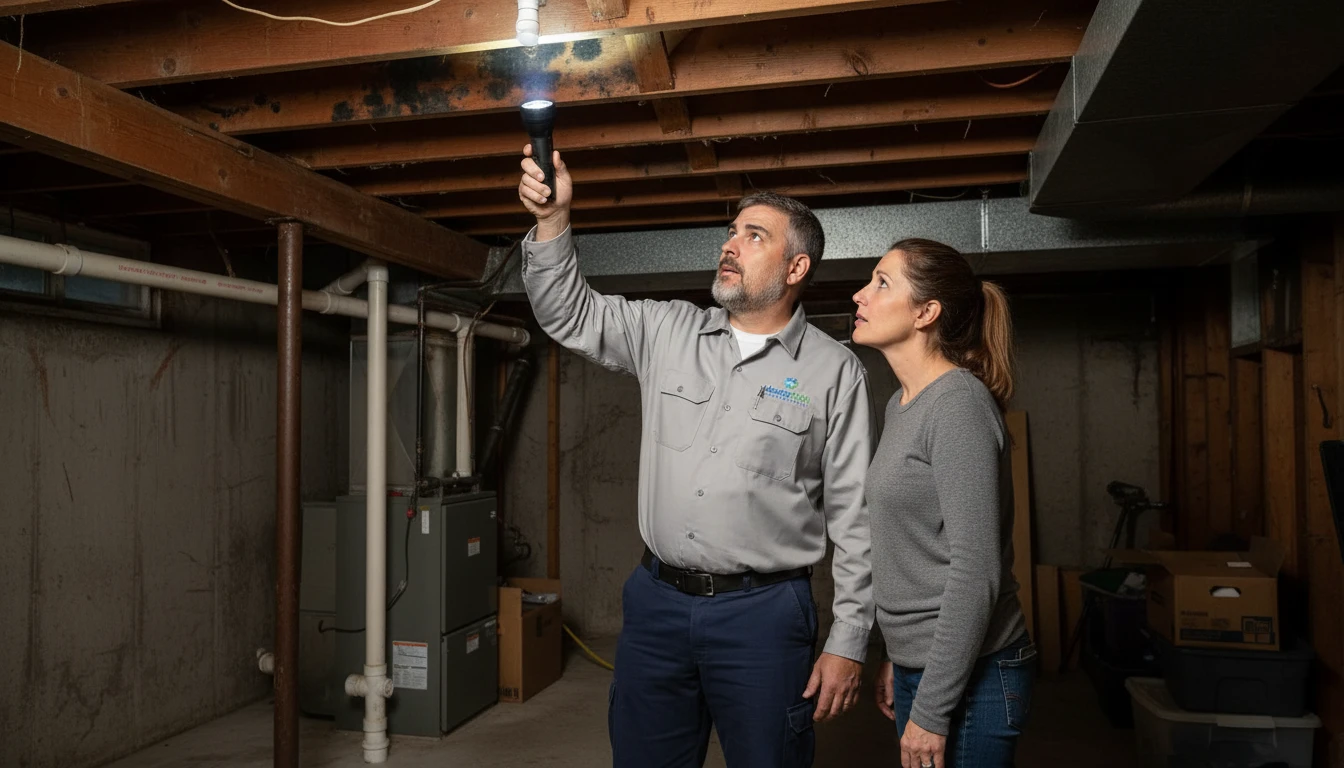
Homeowners often attempt to solve basement mold problems from the inside, installing dehumidifiers or improving interior drainage without addressing exterior moisture sources. However, most basement moisture originates outside the home from poor grading, inadequate gutters, or failing exterior foundation waterproofing.
Understanding where moisture originates helps explain why surface cleaning fails to prevent recurring mold growth.
York County's clay-heavy soil expands when wet and contracts when dry, creating ongoing pressure against foundation walls. This pressure can cause existing cracks to widen and create new ones, allowing groundwater to enter basements. Finished basements in York, PA homes often hide these moisture entry points behind drywall or paneling, making detection difficult.
Many York County homes have inadequate exterior drainage systems. Missing or damaged gutters, improper grading that slopes toward the foundation, and inadequate drainage around walkways and driveways all contribute to water accumulation around foundations. During heavy rains, this water finds its way into basements through the path of least resistance.
Heating and cooling systems in basements can contribute to moisture problems through condensation on ductwork, leaking air handlers, or inadequate humidity control. Many homeowners don't realize that their HVAC system might be part of the mold problem rather than part of the solution.
Tom Duff regularly encounters homeowners who've spent months or years fighting recurring basement mold without success. The difference between temporary surface cleaning and long-term solutions lies in comprehensive assessment of all moisture sources.
Professional mold testing can identify:
"I've seen homeowners try everything from bleach to expensive equipment, but until we identify exactly where moisture is entering and how it's moving through the basement, the mold keeps coming back," explains Tom.
If you've cleaned basement mold multiple times and it continues returning, professional assessment becomes essential. Mold testing after York County's recent heavy rains can reveal contamination that isn't visible and help identify the moisture sources that must be addressed for permanent solutions.
Permanent mold prevention requires addressing moisture at its source rather than just cleaning visible growth.
Effective long-term solutions start outside the home. This includes:
Once exterior moisture sources are controlled, interior solutions become effective:
Some situations require professional remediation rather than DIY cleaning. If mold covers more than 10 square feet, involves contaminated HVAC systems, or keeps returning despite your best efforts, professional assessment and remediation may be necessary.
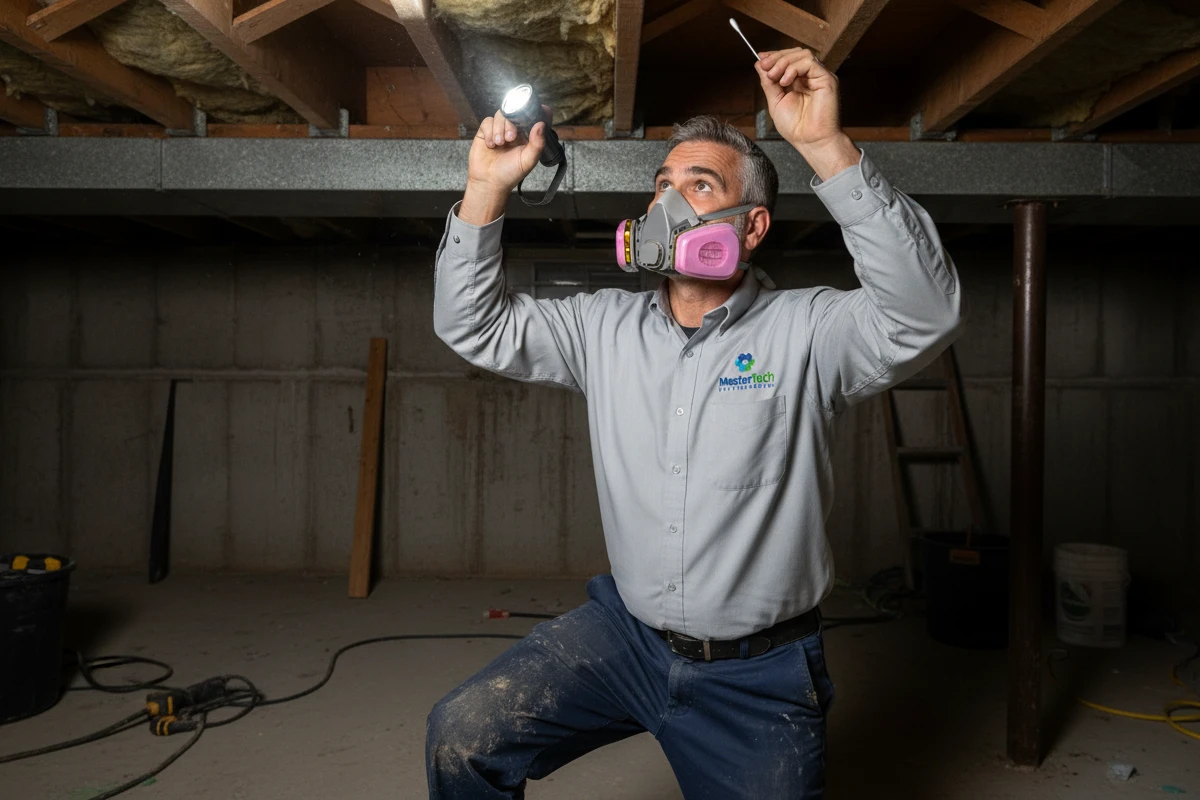
Recurring basement mold isn't just a property maintenance issue: it's a health concern. Many York County residents don't realize that joint pain and fatigue might be connected to hidden mold in their basements.
Continuous exposure to mold spores can cause or worsen respiratory symptoms, especially in children, elderly family members, or anyone with existing health conditions. If family members experience unexplained health symptoms that improve when they're away from home, basement mold might be a contributing factor.
Understanding why mold returns in York County basements empowers you to take more effective action. Rather than repeatedly cleaning visible mold, focus on identifying and addressing moisture sources. When DIY efforts aren't successful, professional assessment can provide the comprehensive evaluation needed for permanent solutions.
If you're dealing with recurring basement mold in York County, consider professional mold testing to identify hidden contamination and moisture sources. With proper assessment and targeted solutions, you can break the cycle of recurring mold and create a healthier basement environment for your family.
The key is moving beyond surface treatments to address the root causes that make York County basements particularly vulnerable to persistent mold growth. Understanding your home's specific challenges puts you in control of creating lasting solutions.

Mastertech Environmental of York, PA. I'm your local expert in professional mold testing and inspection. With 17+ years of experience and trusted by thousands of homeowners, I can help you protect what matters most — your health and your home.