
You know that feeling when you know something's off, but you can't quite put your finger on it?
Maybe you're forgetting words mid-sentence. Or you walk into a room and completely blank on why you went in there. You're anxious for no clear reason, your focus is shot, and you feel like you're thinking through a thick cloud. You mention it to your doctor, and after ruling out the usual suspects, thyroid issues, vitamin deficiencies, depression, you're left with a shrug and maybe a prescription for something that doesn't really help.
Here's the thing nobody talks about: your house might be messing with your head. Literally.
I'm not talking about the stress of a leaky roof or high utility bills. I'm talking about mold, specifically, the invisible biological soup of spores, mycotoxins, and volatile organic compounds (VOCs) that some molds release into your indoor air. And before you roll your eyes thinking this sounds like some pseudoscience rabbit hole, stick with me. The research on this is actually pretty compelling, and it's starting to change how doctors and environmental professionals think about "mystery" cognitive and mental health symptoms.

Let's start with defining what we're even talking about. "Brain fog" isn't a medical diagnosis, it's more of an umbrella term people use to describe a cluster of cognitive symptoms:
It's like trying to think through a thick haze. You're not completely out of it, but you're definitely not firing on all cylinders either. Some people describe it as feeling like they've had three glasses of wine when they haven't touched a drop.
Now, brain fog can be caused by a million things, poor sleep, chronic stress, certain medications, nutritional deficiencies, long COVID, or underlying medical conditions. But here's where it gets interesting: a growing body of research suggests that mold exposure can trigger these same symptoms, sometimes before any physical health problems even show up.
A study out of the City University of New York found that mice exposed to mold spores just three times a week developed anxiety and memory problems within three weeks, and this was before they showed any physical symptoms like respiratory issues. That timeline is pretty telling.
Anxiety and mold exposure often go hand-in-hand, and it's not just because you're stressed about finding mold in your house (though that doesn't help).
There's a physiological response happening. When your body detects mold spores and mycotoxins in your environment, your immune system kicks into gear. But unlike a bacterial or viral infection that your body can fight and clear out, mold exposure is often chronic and low-level. Your immune system stays activated, constantly on alert, pumping out inflammatory signals.
This chronic inflammation doesn't just affect your lungs or sinuses, it affects your brain, too. Inflammation in the brain can mess with neurotransmitter function, particularly serotonin and dopamine, which are critical for mood regulation. The result? Increased anxiety, irritability, and sometimes even panic attacks that seem to come out of nowhere.
People living in mold-contaminated environments frequently report feeling anxious or "on edge" without understanding why. One large study of nearly 6,000 adults found that those living in moldy homes had significantly higher rates of depression, partly due to the physical health impacts but also because of a feeling of helplessness, the sense that their environment is out of their control.
If you've been dealing with unexplained anxiety and your house has had water damage, leaks, or high humidity issues, it's worth considering whether your home environment could be contributing to your symptoms.
Alright, let's talk about mycotoxins without getting too deep into the biochemistry weeds.
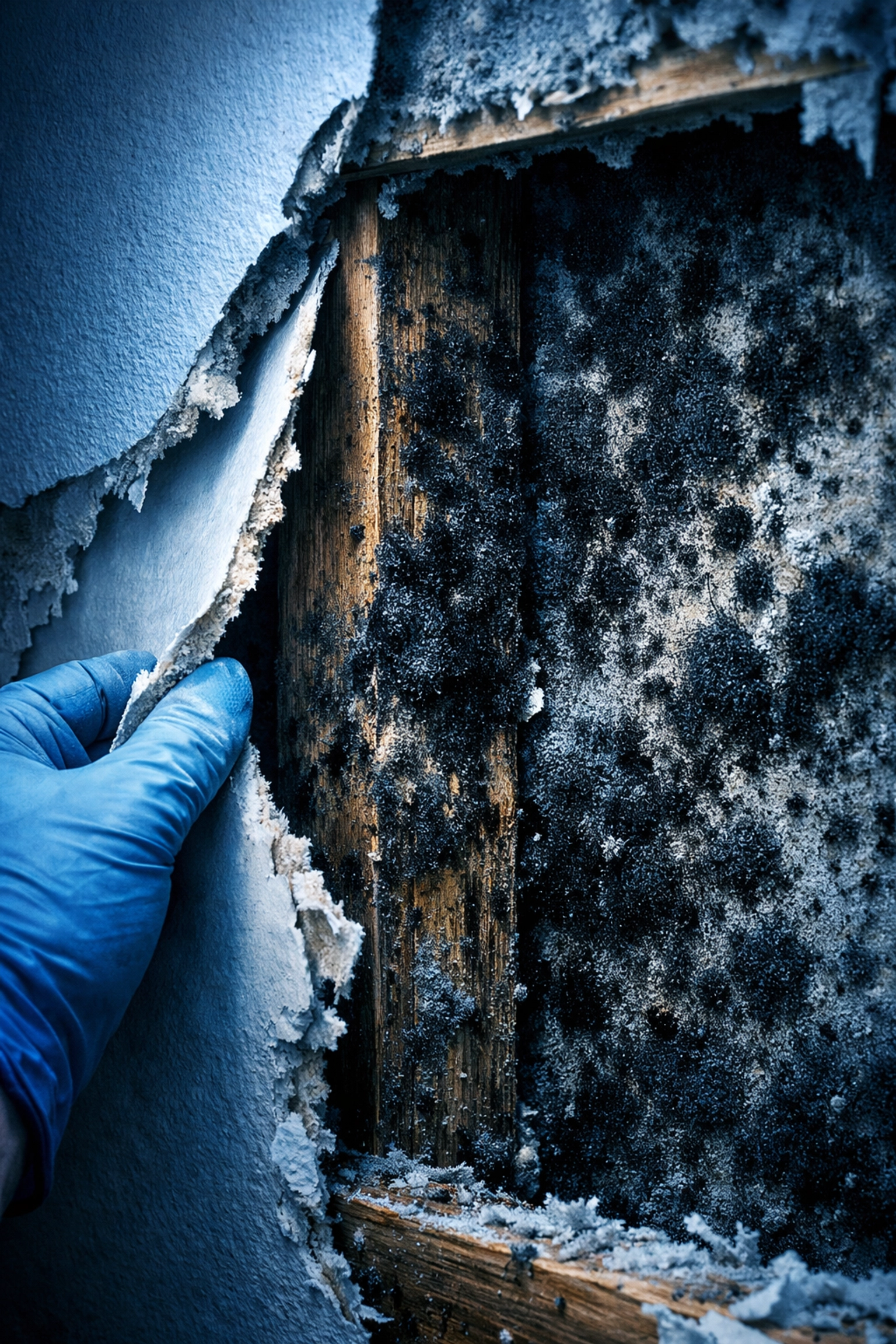
Mycotoxins are toxic compounds produced by certain types of mold as byproducts of their metabolism. Not all molds produce them, but some common indoor molds, like Stachybotrys (black mold), Aspergillus, and Penicillium, absolutely do.
When you're exposed to mycotoxins (usually through breathing them in or absorbing them through your skin), they can cross the blood-brain barrier. Once they're in your brain, they can:
The result is a brain that's not working at full capacity. Think of it like trying to run high-performance software on a computer that's infected with malware, it's sluggish, glitchy, and prone to crashes.
Here's the kicker: this can happen even if you're not experiencing obvious respiratory symptoms. You might not be coughing or sneezing, but your brain is still getting hit. Some people are more sensitive to mold than others, and cognitive symptoms can be their primary, or only, complaint.
Let's zoom out a bit and talk about inflammation, because this is really the central mechanism connecting mold exposure to brain fog and anxiety.
Your body's immune response to mold isn't subtle. When you inhale mold spores or mycotoxins, your immune system releases a cascade of inflammatory chemicals called cytokines. These are your body's alarm bells, designed to fight off invaders.
But when the "invader" is a constant presence in your home environment, those alarm bells never turn off. Chronic inflammation becomes the new normal. And here's the problem: inflammation doesn't stay localized. It goes systemic, meaning it affects your entire body, including your brain.
Neuroinflammation (inflammation in the brain) has been linked to a whole host of cognitive and mental health issues, including:
In 2024, the Association of Scientific Medical Societies in Germany (AWMF) officially recognized mood disorders as a potential symptom of mold exposure. That's a big deal. It means the medical community is starting to take this connection seriously.
If you've been struggling with brain fog, anxiety, or just generally feeling "off," and you've also noticed other symptoms like fatigue and headaches, it's worth considering whether inflammation from mold exposure could be the common thread.

Here's the frustrating part about mold-related symptoms: they're non-specific. Brain fog, anxiety, fatigue, these could be caused by dozens of different things. That's why mold isn't always the cause, but it should absolutely be ruled out, especially if you have any reason to suspect it might be lurking in your home.
Signs you should consider mold testing:
Professional mold testing gives you clarity. It either confirms that mold is a problem (so you can address it) or rules it out (so you and your doctor can focus on other potential causes).
I work with a lot of people who are relieved just to have answers. Even if the answer is "yes, you have mold," at least now they know what they're dealing with. Doctors often request mold testing when they suspect environmental factors are at play, and there's good reason for that, ruling out your environment is a logical first step.
It's also worth understanding the difference between mold exposure and allergies. Allergic reactions to mold are one thing (sneezing, watery eyes, congestion), but mycotoxin exposure and the inflammatory response it triggers is a different beast entirely. You can have one without the other.

Let's say you test your home and confirm there's a mold problem. What then?
First, don't panic. Mold is common, especially in areas with older homes or high humidity. The good news is that once the source is identified and properly remediated, most people see their symptoms improve, sometimes dramatically.
The key is addressing both the mold itself and the moisture problem that allowed it to grow in the first place. Understanding what a mold inspection includes can help you know what to expect and how to move forward.
Remediation isn't always a massive, gut-the-house project. Sometimes it's as simple as fixing a leak, improving ventilation, and cleaning affected areas properly. Other times, especially with significant contamination, you'll need professional help. The important thing is not ignoring it and hoping it goes away, it won't.
And if you're dealing with cognitive symptoms, be patient with yourself. Recovery from mold exposure can take time, especially if the exposure has been chronic. Your body needs time to clear out the mycotoxins and reduce the inflammatory load. Healthcare collaboration between your doctor and environmental professionals can be incredibly helpful during this process.
So, is there a link between mold and mental health symptoms like anxiety and brain fog? Yes, absolutely. The research is clear that mold exposure can trigger neuroinflammation, disrupt neurotransmitter function, and lead to cognitive and mood disturbances: often before physical symptoms even show up.
Does that mean every case of brain fog or anxiety is caused by mold? Of course not. But if you're experiencing unexplained cognitive or mental health symptoms and your home has had moisture issues, it's worth investigating.
The good news is that air quality testing is straightforward, and once you know what you're dealing with, you can take steps to fix it. Sometimes the answer to "Why do I feel like this?" is hiding behind your drywall or under your sink.
If you're in York, PA or the surrounding areas: Dallastown, Red Lion, Spry, Hanover, or anywhere in York County: and you're dealing with unexplained symptoms that just won't quit, consider getting your home tested. It might not be the answer, but it's worth ruling out. And if it is the answer, you'll finally have a path forward. Check out the mold testing FAQs if you want to know more about the process or what to expect.
Your brain deserves clean air. Start there.

Mastertech Environmental of York, PA. I'm your local expert in professional mold testing and inspection. With 17+ years of experience and trusted by thousands of homeowners, I can help you protect what matters most — your health and your home.