
You've been feeling off for weeks. Maybe it's the headaches that won't quit, or the constant congestion that no amount of Sudafed seems to touch. Your energy's been tanking, and you've started wondering if there's mold somewhere in your house making you sick.
Here's the thing: mold can absolutely cause health problems. But a lot of the time, what feels like mold sickness is actually something else entirely. Seasonal allergies, winter dryness, dust buildup, even stress: they all mimic the same symptoms people associate with mold exposure.
The challenge is figuring out what's actually going on before you spend money tearing apart walls or calling in remediation crews. This post walks through the most common "false alarms" people mistake for mold illness, what to look for instead, and when it actually makes sense to get professional mold testing to settle the question once and for all.
Mold exposure symptoms are frustratingly vague. Fatigue, brain fog, sinus pressure, skin irritation: these aren't unique to mold. They show up with dozens of other conditions, which is why people (and even doctors) often misdiagnose what's really happening.
The inflammation response your body triggers when exposed to mold spores looks a lot like what happens with pollen, pet dander, or viral infections. Your immune system doesn't exactly send you a memo explaining what it's reacting to. It just starts firing off histamines and inflammatory signals, and you feel lousy.
That's why pattern recognition matters more than any single symptom. If your headaches started the same week you brought home a new cat, that's probably not mold. If your fatigue kicked in after a particularly stressful month at work, same thing. But if symptoms consistently worsen in certain rooms of your house: especially after it rains or during humid months: that's when mold becomes a more likely suspect.

Spring pollen, fall ragweed, summer grass: seasonal allergies cause sneezing, congestion, itchy eyes, and fatigue. Sound familiar? Those are also the most common complaints people associate with mold exposure.
The difference is timing and location. Seasonal allergies flare up outdoors and during specific times of the year. Mold symptoms tend to be worse indoors, particularly in damp or poorly ventilated spaces like basements, bathrooms, or crawlspaces.
If your symptoms improve when you leave the house for a few hours, or if they're worse in one specific room, that's a clue you're dealing with an indoor issue: possibly mold, but also possibly dust mites or pet dander. On the other hand, if you feel worse after spending time outside during peak pollen season, you're probably just dealing with allergies.
One way to test this: take an over-the-counter antihistamine and see if it helps. If your symptoms clear up significantly, you're likely dealing with an allergic reaction to something: whether that's pollen, dust, or mold spores. But if antihistamines don't touch it, or if you're also experiencing non-allergic symptoms like joint pain or persistent headaches, it's worth digging deeper.
A persistent cold that won't quit is another common mold sickness imposter. You're congested, you're tired, maybe you've got a low-grade headache that lingers. After a couple weeks, you start thinking maybe it's not a cold after all: maybe it's something in the house.
The telltale sign of a viral infection is that it runs its course. Even a stubborn cold or sinus infection will typically resolve within two to three weeks, especially with treatment. Mold exposure, on the other hand, doesn't follow a timeline. Symptoms persist as long as you're exposed to the source.
Another clue: viral infections often come with a fever, body aches, or a sore throat: symptoms that aren't typically associated with mold. If you're running a temperature or dealing with flu-like symptoms, you're almost certainly fighting off a bug, not battling mold spores.
That said, repeated respiratory infections can sometimes point to an underlying issue like mold. If you or your kids are constantly dealing with sinus infections, bronchitis, or asthma flare-ups: especially if they seem to get worse at home: it's worth considering whether mold is playing a role. Mold inspections can help rule it out or confirm your suspicions.

Dust doesn't just make your furniture look grimy: it can make you feel terrible. Dust mites, pet dander, and general indoor air pollution cause the same respiratory symptoms people blame on mold: coughing, sneezing, congestion, and irritated eyes.
If you haven't deep-cleaned your HVAC system, replaced your furnace filter in months, or vacuumed under your couch since the last presidential election, there's a good chance your symptoms are dust-related, not mold-related.
The quickest way to test this theory is to clean aggressively for a week. Change your HVAC filter, vacuum with a HEPA filter, wipe down surfaces, and wash bedding in hot water. If your symptoms improve significantly, dust was likely the culprit.
But here's where it gets tricky: dust and mold often coexist. Mold spores settle into dust, carpets, and upholstery, so cleaning might help temporarily but won't solve the underlying problem if there's active mold growth somewhere in the house. If cleaning helps but symptoms return quickly, or if you notice a musty smell in certain areas, mold could still be in play.
Winter brings its own set of problems. Forced-air heating dries out your sinuses, skin, and respiratory system, leading to nosebleeds, scratchy throats, and that general feeling of being dried out like a piece of jerky.
People mistake this for mold sickness because the symptoms overlap: sinus pressure, headaches, fatigue, irritated eyes. The difference is that dry air symptoms improve with a humidifier, while mold symptoms get worse with added moisture (because mold thrives in humid environments).
If you're feeling lousy during winter months and your symptoms ease up when you run a humidifier, you're probably just dealing with dry air. But if adding moisture to the air makes things worse: or if you notice condensation on windows, water stains on walls, or a musty smell: you might actually be creating conditions that encourage mold growth.

This one's harder to pin down because stress genuinely causes physical symptoms: headaches, fatigue, trouble concentrating, even digestive issues. The problem is that mold exposure can cause the exact same problems, especially when it comes to cognitive symptoms like brain fog and memory issues.
Here's a useful distinction: stress-related symptoms tend to be consistent throughout the day and worsen with specific triggers (work deadlines, family conflict, financial pressure). Mold-related symptoms often follow a pattern tied to your environment: worse at home, better at work, or vice versa.
If you've been under significant stress and your symptoms align with that timeline, it's probably not mold. But if you've noticed cognitive issues that don't match your stress levels, or if they seem tied to spending time in certain rooms, it's worth investigating further.
So how do you actually figure out what's causing your symptoms? Start by tracking patterns. Keep a simple log for a week or two:
If your symptoms are location-specific: consistently worse in the basement, bathroom, or a particular bedroom: that's a strong indicator something environmental is going on. Mold thrives in damp, poorly ventilated spaces, so basements and crawlspaces are common problem areas.
Look for other signs too: visible mold growth (even small patches), water stains on ceilings or walls, peeling paint, warped flooring, or that unmistakable musty smell. If you see or smell these red flags, the symptoms you're experiencing are more likely mold-related.
But here's the catch: hidden mold doesn't always announce itself. You can have significant mold growth behind walls, under flooring, or in HVAC systems without any visible signs. That's where professional testing comes in.
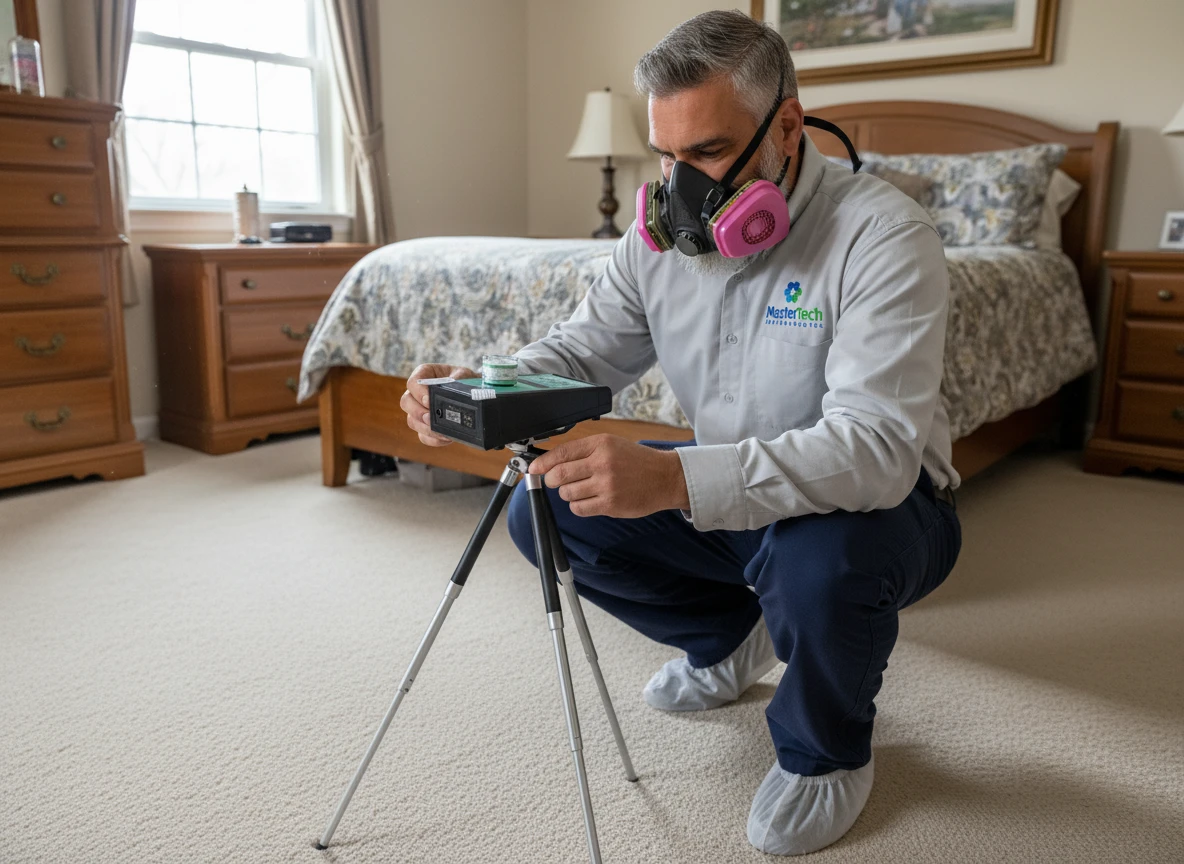
You don't need a mold inspection every time you sneeze. But there are situations where testing is the only way to get a definitive answer:
You've ruled out other causes. If you've seen an allergist, treated sinus infections, cleaned your house top to bottom, and symptoms persist: especially if they're tied to being indoors: testing can confirm whether mold is the issue.
You've had water damage. Any significant water intrusion: leaking roof, burst pipe, flooded basement: creates conditions for mold growth. Even if you cleaned up quickly, mold can develop in hidden areas. Testing helps you know if remediation is needed.
You're buying or selling a home. Mold inspections during real estate transactions protect both parties. Buyers want to know what they're getting into; sellers benefit from addressing issues upfront rather than dealing with complications during closing.
Someone in your household is high-risk. People with asthma, compromised immune systems, or chronic respiratory conditions are more vulnerable to mold exposure. If someone in your home falls into that category and symptoms aren't resolving, testing provides peace of mind or identifies a problem that needs fixing.
Professional testing typically involves air sampling, surface sampling, or both. Air samples measure mold spore concentrations throughout your home and compare them to outdoor baseline levels. Surface samples identify specific types of mold and where they're growing. An inspector will also do a visual assessment, checking for moisture issues, ventilation problems, and conditions that promote mold growth.
The results tell you whether mold is present, what types, and at what levels. Understanding those results helps you decide whether remediation is necessary or if you're dealing with normal background levels that aren't causing harm.

If testing comes back clear: or if you've determined your symptoms are allergy, dust, or stress-related: there are still practical steps you can take:
Even if mold isn't your problem right now, these steps help prevent it from becoming one down the road.
If you're in York, Dover, Red Lion, Hanover, Hallam, Wrightsville, or anywhere else in York County and you're still not sure what's causing your symptoms, professional testing is the fastest way to get clarity. Mold issues don't resolve on their own: they need to be identified and addressed properly. Whether it turns out to be mold or something else entirely, knowing for sure beats guessing. If you're ready to figure out what's really going on, get in touch and we'll help you sort it out.

Mastertech Environmental of York, PA. I'm your local expert in professional mold testing and inspection. With 17+ years of experience and trusted by thousands of homeowners, I can help you protect what matters most — your health and your home.