
When a pipe leaks or a heavy storm pushes some water into the basement, most people’s first instinct is to grab a shop vac and a couple of fans. They figure if they get the standing water out and the floor feels dry to the touch by the next day, they’ve dodged a bullet. Unfortunately, that’s not really how moisture works once it gets inside your home’s structure.
The question I get asked most often during a mold inspection is, "How much time do I actually have?" People want to know if they can wait until the weekend to deal with a damp spot or if they need to call someone immediately. The short answer is: you have a lot less time than you think.
In the world of indoor microbiology, the 24 to 48-hour mark is the point of no return. Mold spores are naturally occurring and are present in almost every indoor environment. They’re floating in the air right now, and they’re sitting on your furniture, your carpets, and inside your walls. Usually, they’re dormant because they lack the one thing they need to thrive: moisture.
The second a biological material: like the paper facing on your drywall, the plywood in your subfloor, or the dust on your baseboards: gets wet, those spores activate. Think of it like a plant seed. It can sit in a packet for years doing nothing, but add a little water and some soil, and it starts to sprout. Within 24 to 48 hours of exposure to moisture, mold spores begin to germinate and colonize.
By the time you actually see a fuzzy black or green patch on the wall, the mold has likely been growing for several days, if not a week or more. The initial growth is microscopic. You can’t see it, and you usually can’t smell it yet, but it’s there, eating away at the organic material it’s landed on. This is why buying or selling a home can be so tricky; if a seller had a small leak and "cleaned it up" themselves, the hidden growth might not be visible during a quick walkthrough.

One of the biggest misconceptions homeowners have is that mold only happens after a major event, like a burst pipe or a flooded basement. While those definitely cause problems, a lot of the mold testing I do is in homes that have never had a "flood."
High humidity alone is more than enough to trigger a mold outbreak. If the relative humidity in a room: especially a basement or a crawlspace: stays above 60% for an extended period, the air itself holds enough moisture to feed mold. Materials like drywall and fabric are porous, meaning they absorb that moisture right out of the air.
When the air is heavy and stagnant, mold can start growing on surfaces that haven't even touched "liquid" water. This is a common issue in the summer months when people try to save on their electric bills by turning off the AC or not running a dehumidifier. I’ve written before about whether dehumidifiers alone can prevent mold, and the reality is that while they help, they can’t fix a situation where moisture is already trapped in the materials.
When water enters a room, it doesn't just sit on top of the floor. It follows the path of least resistance, which usually means it runs under baseboards, soaks into the carpet padding, and wicks up into the drywall.
Wicking is a major issue. Drywall is basically a giant sponge made of gypsum and paper. If you have an inch of water on the floor, that water can wick up 10 or 12 inches into the wall cavity within a few hours. Even if you dry the floor, the back side of that drywall: the part facing the wall studs: is still soaking wet. Because there’s no airflow inside a wall cavity, that moisture stays trapped.
This is where the 24-48 hour rule becomes a real problem. You might have the carpet dry by Tuesday, but the insulation and the back of the drywall stay wet until Friday. By then, you have a massive colony of mold growing where you can’t see it. This is why it’s so important to understand what happens if mold is found; it’s rarely just on the surface.
There’s a difference in how mold behaves depending on how much moisture is present. When mold is actively "wet" and growing, it’s heavy. It’s less likely to become airborne because it’s stuck to the damp surface. This is actually when it’s safest to be around, relatively speaking, because the spores aren't flying into your lungs as easily.
The real danger often happens when that moisture source is cut off and the mold "dries out." People think that if the mold is dry, it’s dead and the problem is over. That couldn't be further from the truth. When mold dries out, it enters a survival mode. It becomes brittle and extremely light. The slightest vibration: walking past it, a breeze from an HVAC vent, or someone scrubbing it with a dry brush: will send millions of spores into the air.
These dry spores stay viable for a long time. As soon as they find moisture again, they’ll start the whole process over. This is why mold testing vs mold remediation is a distinction every homeowner should know. You might be able to clean the surface, but if the air is full of dry spores, the mold will be back the next time it rains.
I see this all the time: a homeowner has a small leak under the sink or a damp spot in the corner of the basement. They think, "I'll just leave the door open and let it air out."
The problem is that modern homes are built to be airtight for energy efficiency. While that's great for your heating bill, it’s terrible for drying out moisture. Without industrial-grade air movers and commercial dehumidifiers, internal structures like floor joists, wall studs, and subflooring can take weeks to dry out on their own.
If a piece of wood or drywall stays damp for more than two days, you aren't just looking at a mold risk; you're looking at structural rot. Mold eats the organic matter in these materials, effectively digesting your home. Waiting for it to dry naturally is essentially giving mold an all-you-can-eat buffet. If you’re curious about the specifics of the process, you can read more about us and how we approach these inspections to catch what the naked eye misses.
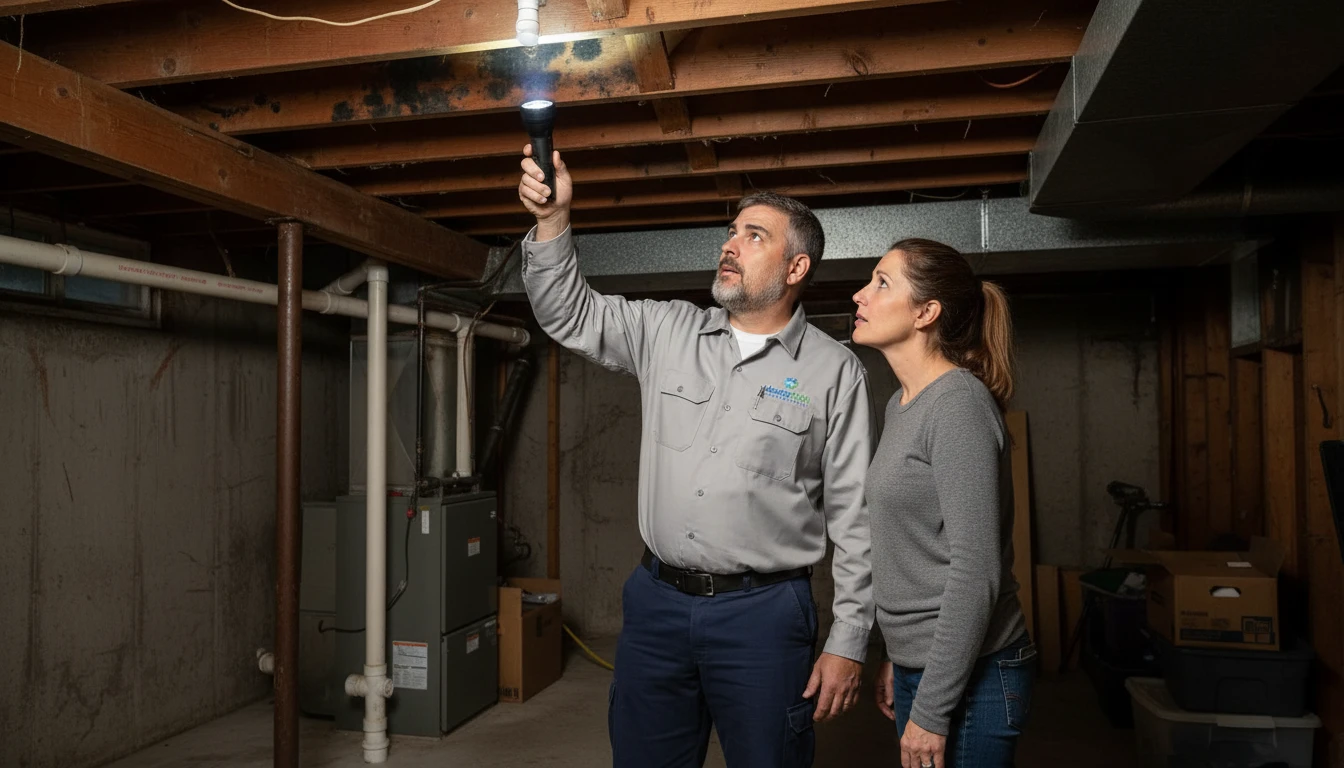
Because mold starts growing so quickly: and because so much of it happens behind the scenes: a visual "DIY" inspection usually isn't enough. I've walked into basements that smelled perfectly fine and looked dry, only to find elevated spore counts in the air samples or high moisture readings inside the walls.
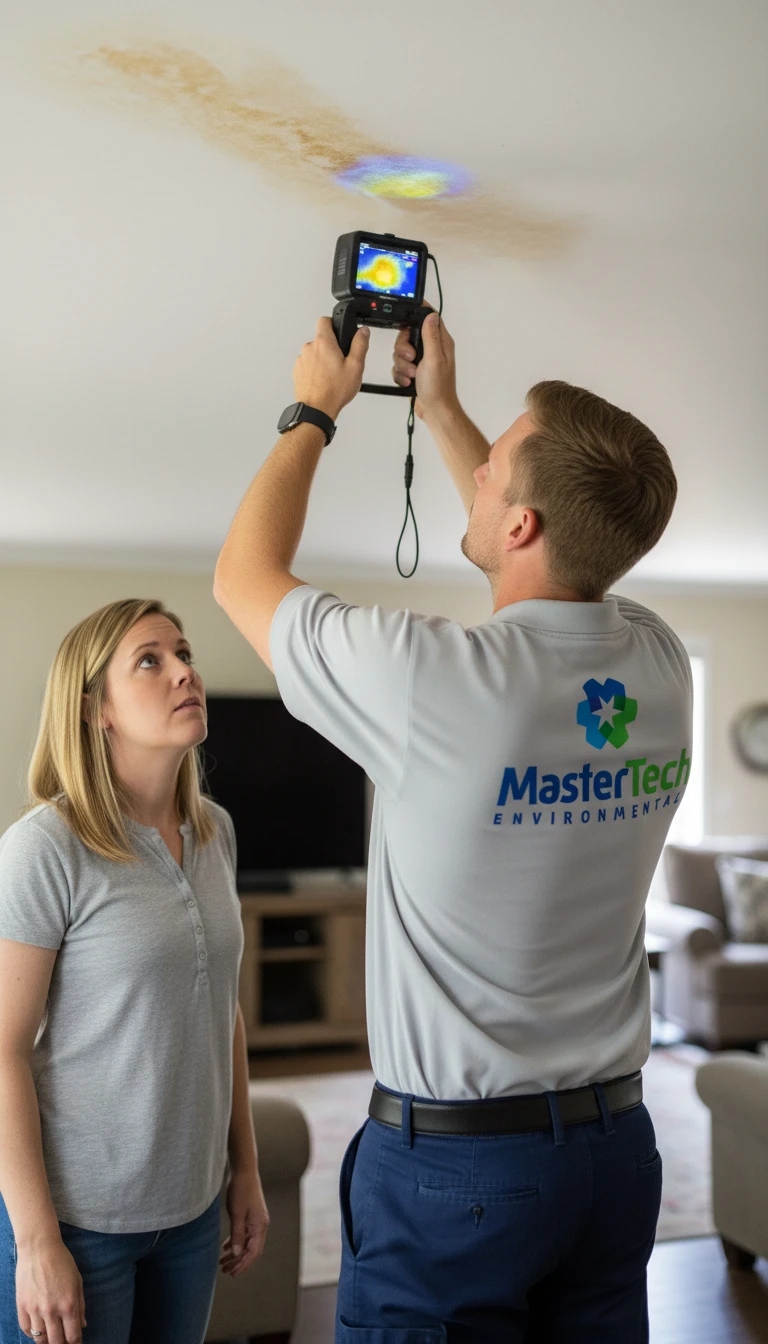
A professional mold inspection involves more than just looking for black spots. We use moisture meters to find "pockets" of wetness that haven't dried yet. We use thermal imaging to see temperature differences in walls that indicate trapped water. Most importantly, we take air and surface samples that get sent to a lab.
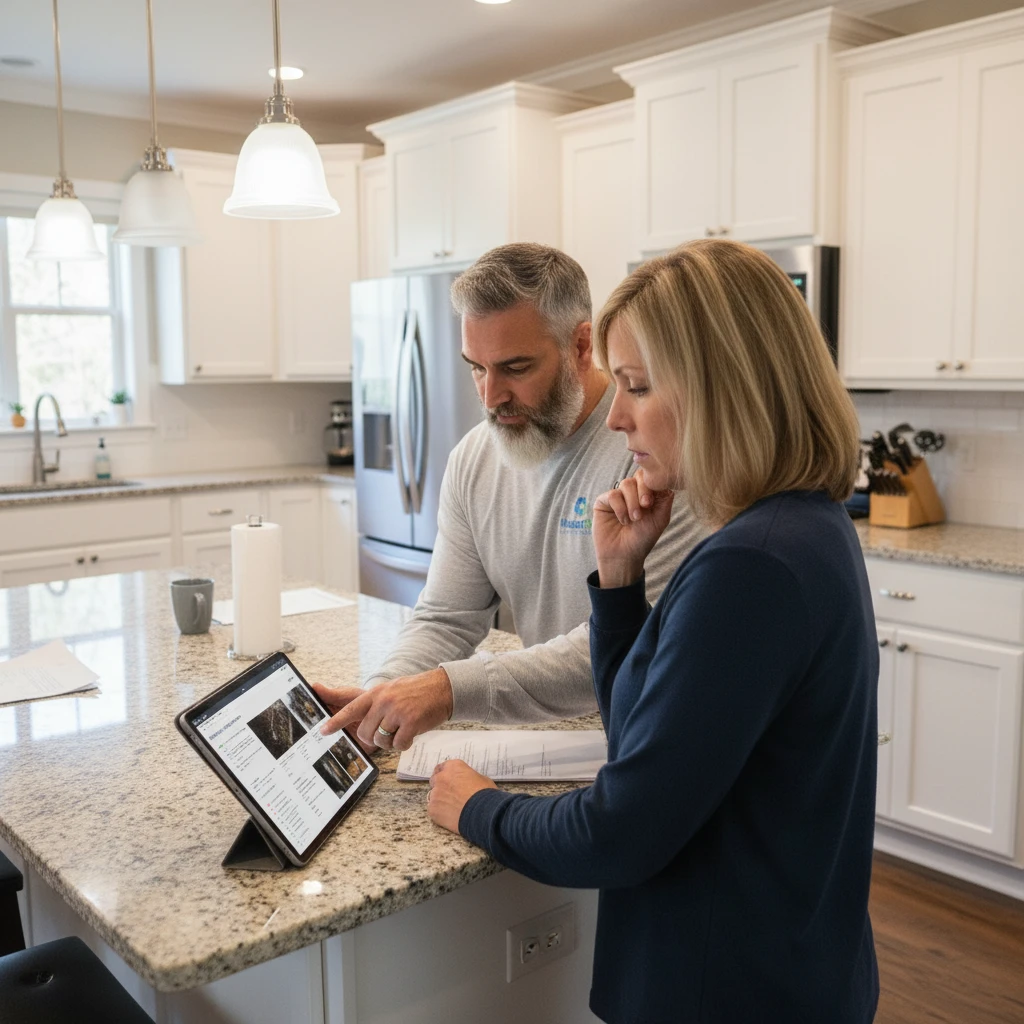
If you’ve had a water event and you’re wondering if you acted fast enough, understanding mold test results can give you the peace of mind that you actually got it dry, or the heads-up that you need to take further action. Sometimes mold testing makes sense, and sometimes it doesn't, but after the 48-hour window has passed, it’s usually the only way to be sure.
These are the "forgotten" areas of the house, but they are the most prone to rapid mold growth. Poor drainage outside can lead to constant moisture intrusion that homeowners don't notice until the smell becomes unbearable. I’ve seen how poor drainage around homes can lead to a cycle of mold growth that starts every time it rains.
In a crawlspace, the ground itself releases moisture. If you don't have a proper vapor barrier, that moisture is constantly feeding mold on your floor joists. Because people don't go into their crawlspaces every day, mold can grow for months or even years before it’s discovered. By then, the remediation becomes a much bigger project than it would have been if the moisture was caught in those first 48 hours.
Ultimately, the goal isn't just to have a dry house; it's to have a healthy one. Mold growth impacts indoor air quality, which can lead to various respiratory issues or just a generally "stuffy" feeling in the home. If you want to dive deeper into the technical side of what we look for, you can check out our blog for more articles on specific types of mold and testing methods.
If you’ve had a leak, an overflow, or just a really humid week, don't assume that things are fine just because the surface looks okay. The clock is ticking from the second the water hits the floor. Knowing how long mold testing takes can help you plan your next steps if you suspect that 48-hour window has already closed on you.
If you’re concerned about moisture or potential mold growth in your home, it’s always better to find out for sure sooner rather than later. At Mastertech Environmental of York, PA, I specialize in helping homeowners throughout York County figure out exactly what’s going on in their homes. Whether you are in York, Dallastown, Red Lion, Hanover, or Dover, I can provide the thorough testing and honest answers you need to keep your home safe. Feel free to contact me today to schedule an inspection or to ask any questions about the moisture levels in your house. Protecting your home starts with understanding the clock you’re working against.

Mastertech Environmental of York, PA. I'm your local expert in professional mold testing and inspection. With 17+ years of experience and trusted by thousands of homeowners, I can help you protect what matters most — your health and your home.