
You spend roughly 90% of your time indoors, especially during colder months. Yet most homeowners rarely think about the quality of the air they're breathing inside their own homes. Here's a reality check: indoor air can be 2-5 times more polluted than outdoor air, and sometimes up to 100 times worse.
Indoor air quality testing isn't just about peace of mind: it's about protecting your family's health and catching problems before they become expensive headaches. Let's dive into everything you need to know about testing the air in your home.
Indoor air pollution contributes to 3.2 million premature deaths worldwide each year. The Environmental Protection Agency ranks it among the top five environmental health risks we face today. That's not meant to scare you: it's meant to show you why taking control of your indoor environment is so important.
Poor indoor air quality can trigger everything from minor allergies and headaches to serious respiratory conditions, cognitive issues, and even cancer with long-term exposure. The good news? Testing and monitoring your indoor air quality gives you the power to identify problems and take action.
Professional indoor air quality testing looks for several categories of pollutants that commonly lurk in homes:
Biological Contaminants include mold spores, bacteria, dust mites, pollen, and pet dander. These microscopic particles can trigger allergic reactions, asthma attacks, and respiratory infections. Mold spores are particularly concerning because they indicate moisture problems that can lead to larger issues if left unchecked.
Volatile Organic Compounds (VOCs) come from household products, furniture, carpets, paint, and building materials. New construction or recent renovations often show elevated VOC levels due to off-gassing from fresh materials. Common VOCs include formaldehyde, benzene, and toluene.
Particulate Matter consists of tiny particles suspended in the air, measured as PM2.5 and PM10. These particles are small enough to penetrate deep into your lungs and even enter your bloodstream.
Gases like carbon monoxide (from heating systems and appliances) and radon (from soil and building materials) pose serious health risks. Carbon monoxide is especially dangerous because it's colorless and odorless.

Your body often serves as the best early warning system for indoor air quality problems. Pay attention to these symptoms, especially if they improve when you leave the house:
Physical signs around your home can also indicate air quality issues:
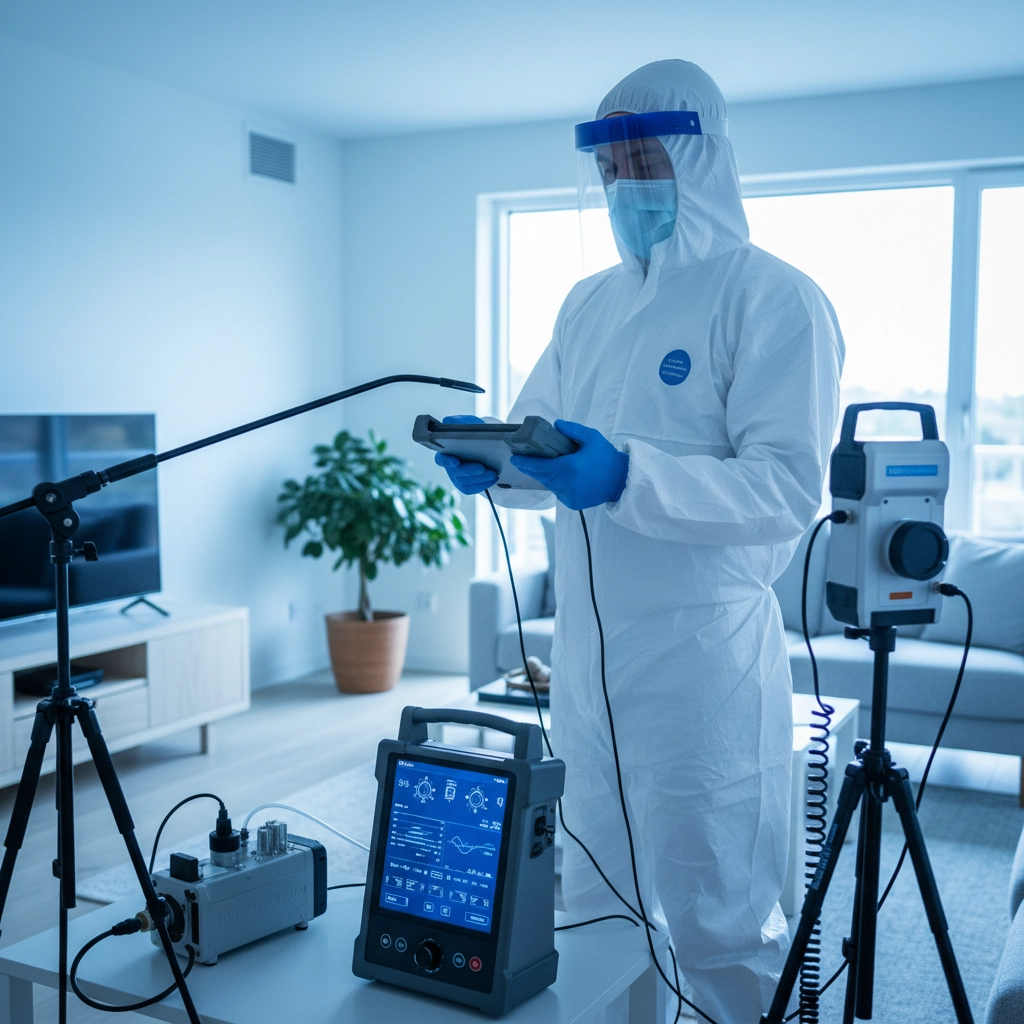
Professional indoor air quality testing involves multiple sampling methods to get a complete picture of your home's air. Here's what typically happens during a comprehensive assessment:
Visual Inspection comes first. A qualified inspector examines your home for obvious sources of contamination, moisture problems, ventilation issues, and potential problem areas.
Air Sampling uses specialized equipment to collect air samples from different rooms and areas of your home. Different pollutants require different sampling methods: some need short-term grab samples while others require longer monitoring periods.
Surface Sampling may be necessary if visible contamination is present. This helps identify specific types of mold or bacteria that might be affecting your air quality.
Moisture and Humidity Measurements are crucial because many air quality problems stem from moisture issues. Ideal indoor humidity should stay between 30-50%.
Comprehensive Professional Testing provides the most thorough analysis. Companies like Mastertech Environmental offer detailed testing that identifies multiple pollutant types and provides specific recommendations based on your results.
Targeted Testing focuses on specific concerns, such as mold spore testing after water damage or VOC testing after renovations.
Continuous Monitoring uses devices that track air quality over time, providing data on how conditions change throughout the day and seasons.
Professional air quality test results come with detailed reports that break down pollutant levels and compare them to established guidelines. Here's how to interpret common measurements:
Mold Spore Counts are compared to outdoor levels and established indoor guidelines. Higher indoor counts than outdoor levels often indicate an indoor mold source that needs attention.
VOC Levels are measured in parts per billion (ppb) or micrograms per cubic meter. Results show both individual chemical levels and total VOC concentrations.
Particulate Matter readings show PM2.5 and PM10 levels. The EPA considers PM2.5 levels below 12 μg/m³ acceptable for long-term exposure.
Gas Concentrations for carbon monoxide should ideally be zero, while radon levels above 4 pCi/L require action according to EPA guidelines.
Don't try to interpret complex test results on your own. Professional testers provide explanations of what the numbers mean for your specific situation and recommend appropriate next steps.
Certain situations make professional indoor air quality testing particularly important:
New Home or Moving – Test before you settle in to establish baseline conditions and identify any existing problems.
After Water Damage – Even minor leaks can lead to mold growth and air quality issues within 24-48 hours.
Post-Renovation Testing – New materials and disturbed dust can significantly impact indoor air quality.
Unexplained Health Symptoms – If family members experience persistent symptoms that improve outside the home, testing can identify the cause.
HVAC System Issues – Problems with heating and cooling systems can circulate contaminated air throughout your home.
Seasonal Testing – Some pollutants fluctuate with weather conditions, humidity changes, and seasonal activities.

Consumer air quality monitors have become more affordable and accessible, but they have limitations. Basic monitors can track general trends and alert you to obvious problems, but they can't identify specific pollutants or provide the detailed analysis needed for health-related decisions.
Professional testing offers several advantages:
DIY testing works well for general monitoring and can help you decide when professional testing is warranted. However, when health symptoms are involved or you need definitive answers, professional testing provides the accuracy and expertise you need.
When selecting an indoor air quality testing company, look for:
At Mastertech Environmental, we specialize exclusively in mold testing and inspections, ensuring our recommendations are based solely on your test results rather than sales incentives. Our focus on testing and analysis means you get unbiased results and honest recommendations.
Once you have test results, the next steps depend on what was found:
Minor Issues might be addressed with improved ventilation, humidity control, or source removal.
Moderate Problems may require professional remediation or system repairs.
Serious Contamination needs immediate professional intervention and may require temporary relocation during cleanup.
Remember, testing is just the first step. The real value comes from using those results to create a healthier living environment for your family.
Consider indoor air quality testing as important as regular HVAC maintenance or pest inspections. Annual or bi-annual testing helps you stay ahead of problems and ensures your home remains a healthy environment.
Don't wait for symptoms or visible problems to appear. Proactive testing gives you the information needed to maintain good indoor air quality year-round and protect your family's health.
Ready to learn more about your home's air quality? Contact Mastertech Environmental to schedule professional testing and get the peace of mind that comes with knowing exactly what you're breathing.

Mastertech Environmental of York, PA. I'm your local expert in professional mold testing and inspection. With 17+ years of experience and trusted by thousands of homeowners, I can help you protect what matters most — your health and your home.