
When you smell that musty odor in your York basement or notice a suspicious stain on your wall, you're probably wondering if mold is lurking behind the scenes. Traditional mold inspections often involved guesswork, invasive probing, and sometimes missing hidden problems altogether. But modern mold inspection technology has revolutionized how we detect moisture and potential mold issues in York homes.
Moisture mapping and infrared mold inspections use cutting-edge science to see what the naked eye can't. These technologies work together like a detective duo: infrared cameras spot the thermal clues, while moisture mapping creates a comprehensive picture of where water problems exist in your home.
Think of infrared cameras as superhuman eyes that see heat instead of light. Every object in your home naturally emits infrared energy based on its temperature, but this energy remains completely invisible to us. Infrared cameras capture this thermal radiation and transform it into visual images where different temperatures appear as different colors.
Here's where it gets interesting for mold detection: moisture almost always creates temperature variations. When water infiltrates your walls, floors, or ceilings, those areas typically register cooler temperatures than the surrounding dry materials. This happens because water conducts heat differently than most building materials: it affects how quickly surfaces warm up and cool down.
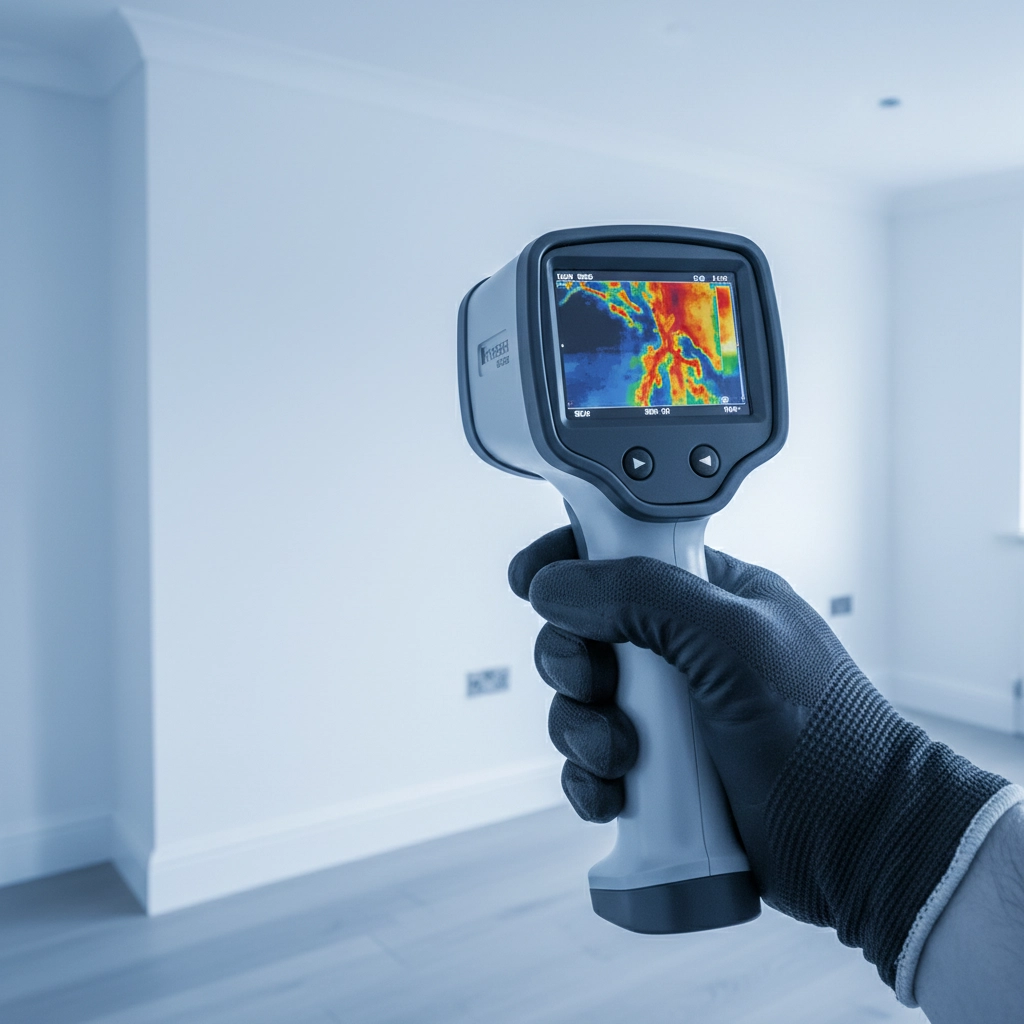
Modern infrared cameras used in York mold inspections can detect temperature differences as small as a fraction of a degree. This incredible sensitivity means we can spot moisture problems that might be completely hidden from view, whether they're behind your drywall, under your hardwood floors, or above your drop ceiling.
Water doesn't just randomly appear in your home: it follows predictable patterns based on physics and your home's specific characteristics. In York's climate, with our humid summers and temperature fluctuations, moisture intrusion often occurs through several common pathways:
Thermal bridging happens when temperature differences between indoor and outdoor environments create condensation points. Your infrared inspection can identify these areas where moisture tends to accumulate seasonally.
Capillary action draws moisture upward through porous materials like concrete and masonry: common in York's older homes. Infrared imaging reveals the full extent of this moisture migration, even when only small areas show visible signs.
Vapor diffusion occurs when moisture moves through materials due to pressure differences. This process creates subtle temperature patterns that infrared technology can detect long before you notice any visible problems.
Living in York means dealing with specific environmental factors that make moisture mapping particularly valuable. Our area experiences:
These factors make York homes particularly susceptible to moisture problems that benefit from scientific detection methods.
Moisture mapping goes beyond just taking pictures with an infrared camera. It's a systematic process that creates a comprehensive picture of moisture conditions throughout your property.
The process starts with a thermal scan of your entire home, identifying temperature anomalies that suggest moisture presence. Cool spots on walls, ceilings, or floors get flagged for closer investigation. But infrared imaging is just the beginning.
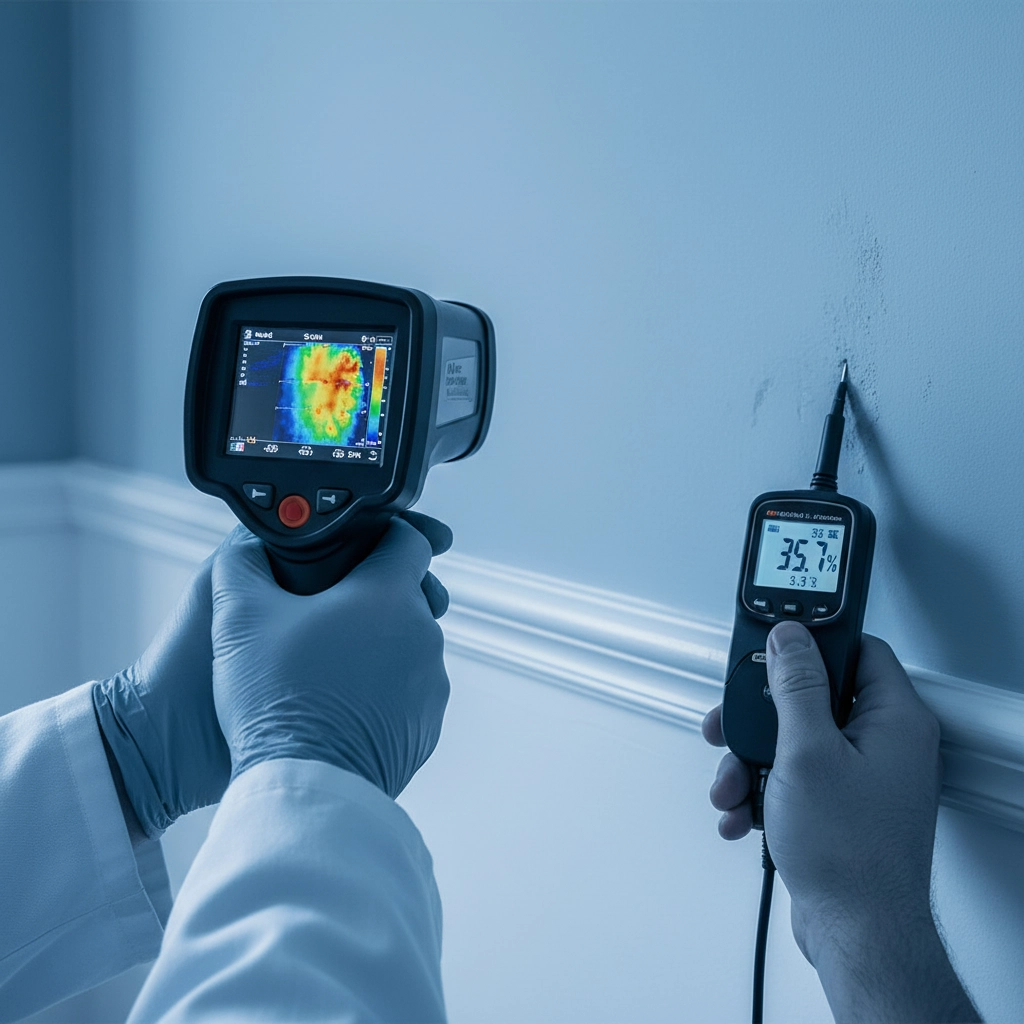
Next comes verification using moisture meters that provide direct measurements of water content in materials. While the thermal imaging shows us where to look, moisture meters confirm whether elevated moisture levels actually exist in those areas.
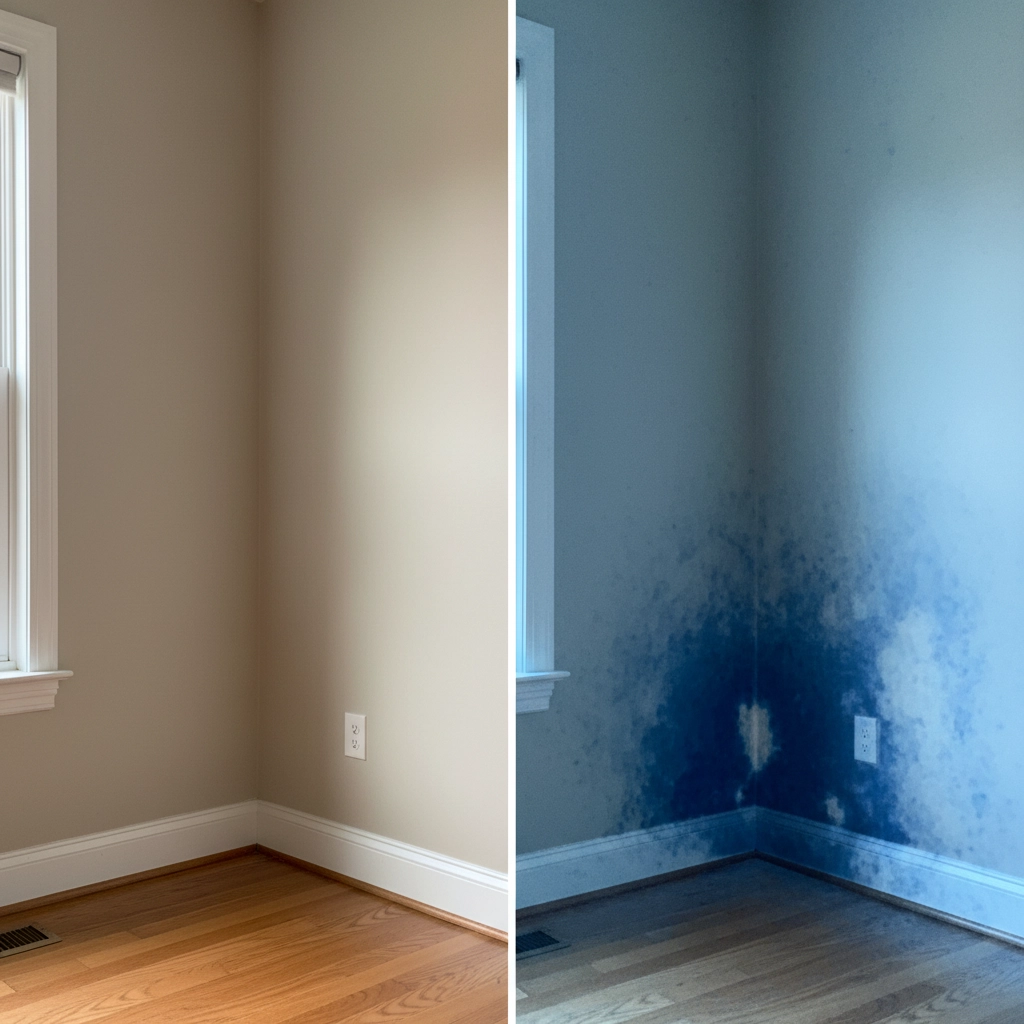
This two-step verification process eliminates false positives and ensures we're not chasing thermal patterns that might be caused by other factors like insulation gaps or air currents.
Consider a typical scenario in a York home: you notice a small water stain on your ceiling after heavy rain. Traditional inspection methods might involve cutting holes in your drywall to see how far the water damage extends. With moisture mapping and infrared technology, we can:
The technology proves especially valuable in York's older homes where moisture problems often hide behind finished surfaces or in hard-to-access areas like crawl spaces and attics.
When you see infrared images from your mold inspection, you're looking at a thermal map of your home. Cooler areas typically appear in blues and purples, while warmer areas show up in reds and yellows. But interpreting these images requires understanding building science and how different materials behave thermally.
For example, a cool spot behind your bathroom tile might indicate a plumbing leak, while a cool area along an exterior wall could suggest an insulation problem that's creating condensation. An experienced inspector understands these patterns and can distinguish between moisture-related thermal anomalies and other building performance issues.
Here's the crucial science: mold doesn't just appear randomly. It needs specific conditions to grow: primarily moisture, organic material to feed on, and the right temperature range. By detecting moisture problems early through infrared imaging, we can address conditions before mold has a chance to establish itself.
Mold can begin growing within 24-48 hours of water exposure under the right conditions. Traditional inspection methods might miss hidden moisture problems until visible mold appears weeks or months later. Infrared technology identifies these problems at the moisture stage, giving you the opportunity to address issues proactively.
Not every situation requires advanced moisture detection, but certain scenarios make it particularly valuable:
The combination of infrared imaging and moisture mapping provides several advantages over traditional inspection methods:
Non-invasive detection means no holes in your walls or damage to your property during the inspection process. Comprehensive coverage ensures we don't miss hidden problems that visual inspection alone might overlook. Scientific accuracy provides reliable data rather than guesswork about moisture conditions.
Real-time results allow immediate decision-making about next steps, and documentation provides clear evidence for insurance claims or remediation planning.
For York residents, moisture mapping and infrared mold testing represent a significant advancement in protecting your home and family's health. These technologies allow early detection of moisture problems before they become expensive remediation projects.
The science behind these methods continues evolving, with newer cameras offering improved resolution and more accurate temperature measurements. This means increasingly precise detection of moisture-related problems in York homes.
Whether you're buying a home, dealing with water damage, or simply want peace of mind about your indoor air quality, understanding the science behind modern moisture detection helps you make informed decisions about your property's condition and your family's health.
The key takeaway: moisture problems don't have to remain hidden until they become major issues. With scientific detection methods, York homeowners can stay ahead of potential mold problems and maintain healthier, safer homes.

Mastertech Environmental of York, PA. I'm your local expert in professional mold testing and inspection. With 17+ years of experience and trusted by thousands of homeowners, I can help you protect what matters most — your health and your home.