
Water damage in your York basement can quickly turn from a minor inconvenience into a major health hazard. With Pennsylvania's humid summers and freeze-thaw cycles, basement moisture issues are all too common in our area. If you've recently dealt with water damage, here are 10 crucial things you need to know about mold testing to protect your home and family.
This is the most important thing York homeowners need to understand: mold doesn't wait. After water damage occurs, you have a very narrow window before mold begins to establish itself. Within just 24 to 48 hours of water exposure, mold spores can begin colonizing damp surfaces in your basement.
This tight timeline means you can't afford to "wait and see" if things dry out on their own. Whether it's a burst pipe, sump pump failure, or flooding from one of our notorious Pennsylvania storms, immediate action is essential. Even what seems like minor water damage can create major problems if moisture gets trapped behind walls or under flooring.

Basements are particularly vulnerable to mold growth because they're below grade, essentially functioning as a "hydraulic sponge" that draws moisture into the space. York's clay soil and seasonal weather patterns make this even more challenging for local homeowners.
The combination of poor ventilation, temperature fluctuations, and natural moisture migration through concrete foundations creates the perfect storm for mold growth. What's worse is that due to the "stack effect," mold spores from your damp basement circulate throughout your entire house, affecting air quality on every floor.
Before you rush into your basement to assess water damage, take safety precautions seriously. Turn off electrical power to the affected area and wear protective gear, including a mask, to prevent inhaling potential mold spores.
When inspecting for mold, focus on walls, ceiling corners, floors, baseboards, and any areas where you've moved furniture or lifted rugs. Look for discoloration, but don't poke or disturb any suspicious spots: this can release billions of spores into the air and make the problem much worse.
As we've discussed in our previous post about hidden mold in York homes, many homeowners make critical detection mistakes that can worsen their situation.
One of the easiest initial checks for mold is simply using your nose. That persistent musty or earthy odor is often the first sign of mold growth, especially in basements with limited ventilation. If you notice this smell after water damage, take it seriously: it's your basement telling you there's a problem.
However, don't rely on smell alone. Some molds don't produce strong odors, and by the time you can smell it, the problem may already be extensive.
While not 100% accurate, a simple DIY swab test can help identify obvious mold growth. Mix one part bleach with 16 parts water in a well-ventilated area. Dab a cotton swab in this solution and test a suspected spot. If the area lightens quickly, that's a strong indicator of mold presence.
For white, powdery substances on basement walls, try the water test: place a small sample in a glass of water. If it dissolves, it's likely harmless efflorescence (mineral deposits) rather than mold.
But here's the reality: DIY mold test kits often fall short compared to professional testing methods. They can give you false confidence or unnecessary panic.
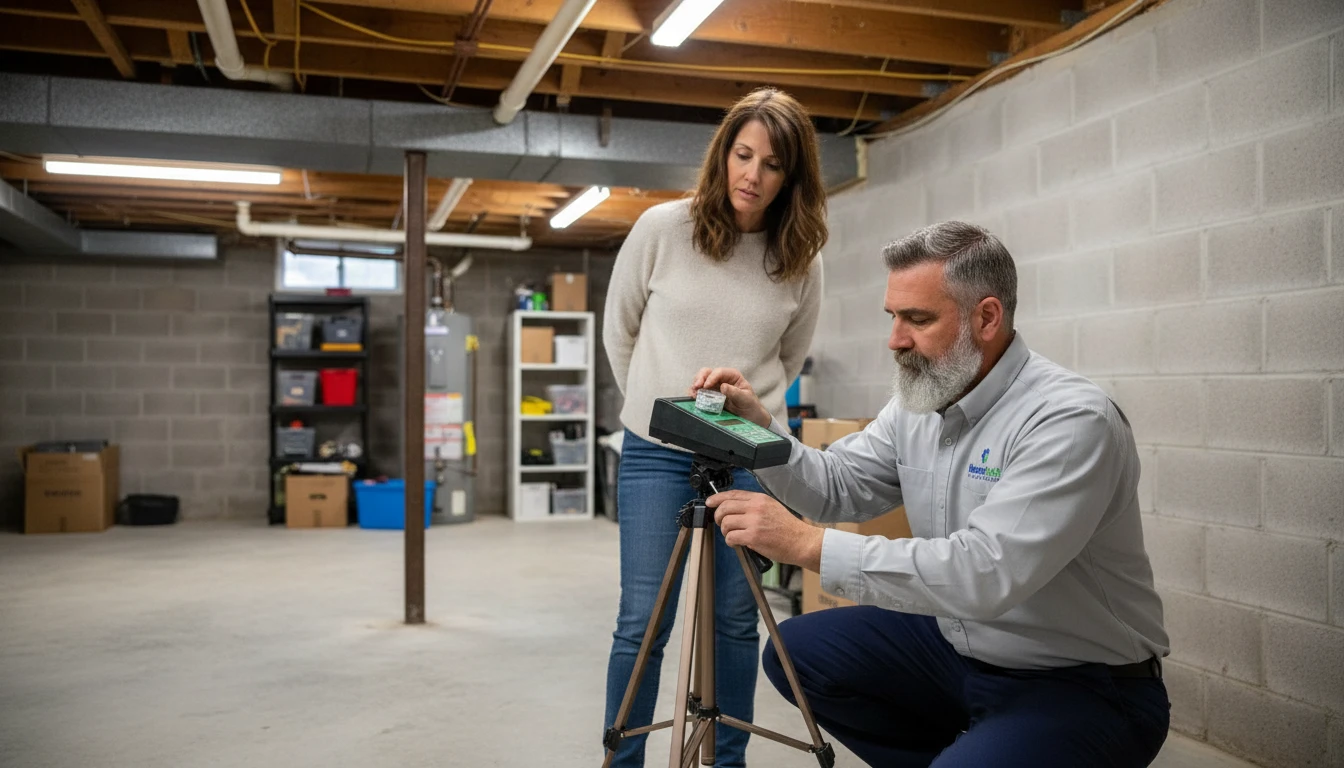
Professional mold testing goes far beyond what you can do with store-bought kits. We use air sampling that collects 75 liters of air through specialized cassettes, which are then analyzed in certified laboratories to determine exact mold spore concentrations.
Our testing also includes moisture mapping with thermal imaging cameras and moisture meters. These tools detect temperature variations and moisture content in materials that aren't visible to the naked eye. The science behind moisture mapping and infrared inspections reveals problems that traditional visual inspections miss.
Professional testing is particularly valuable in several situations:
The EPA and CDC generally don't recommend testing if you can see visible mold: the solution is always professional removal. But for suspected hidden mold or post-remediation verification, testing is crucial.
York homeowners should budget for these typical costs:
While these numbers might seem daunting, consider the alternative: the real health risks of not testing for mold can lead to much higher costs down the road, both financially and health-wise.

You should definitely seek professional help when:
As we've covered in our guide on why professional mold testing beats DIY kits, there are significant advantages to working with certified professionals who understand York's specific environmental challenges.
After addressing immediate water damage and mold concerns, focus on prevention:
Monitor previously affected areas regularly. Check around windows, doors, ceilings, and baseboards for signs of returning moisture. How humidity and York's climate affect mold growth explains why ongoing vigilance is so important in our area.
Water damage in your York basement doesn't have to turn into a mold disaster, but only if you act quickly and smart. The 24-48 hour window for preventing mold growth is real, and professional testing can mean the difference between a minor remediation job and a major home health crisis.
If you're dealing with water damage in your basement right now, don't wait. The sooner you understand exactly what you're dealing with, the more options you'll have and the less it will cost to fix properly.
Remember, your basement's health affects your entire home's air quality. Taking care of moisture and mold issues down below protects your family's health on every floor above.

Mastertech Environmental of York, PA. I'm your local expert in professional mold testing and inspection. With 17+ years of experience and trusted by thousands of homeowners, I can help you protect what matters most — your health and your home.