
Most people don't spend a lot of time in their attics. It’s usually a place for holiday decorations, old suitcases, and dust. Because it’s a "set it and forget it" part of the home, it’s also the perfect environment for a small problem to turn into a complete disaster without anyone noticing. When a roof develops a leak, the attic is the first line of defense, and unfortunately, it’s also where mold finds its favorite place to grow.
A roof leak isn't always a gushing hole that sends water dripping through the living room ceiling. In fact, the most dangerous leaks are the ones that barely drip at all. These slow, consistent intrusions of moisture create a humid, stagnant environment that allows mold to feast on your home’s wooden structure and insulation. By the time you see a brown stain on your bedroom ceiling, the mold in the attic has likely been throwing a party for months.
To understand why roof leaks and mold go hand-in-hand, you have to look at the physics of how an attic works. An attic is designed to be a dry, well-ventilated buffer between the inside of your home and the elements outside. However, wood: specifically the plywood or oriented strand board (OSB) that makes up your roof decking: is incredibly porous. It acts like a giant sponge.
When a shingle fails, or when the flashing around a chimney or vent pipe pulls away, water starts to seep into that wood. Because the attic is often warmer than the outside air (due to heat rising from the house), that moisture doesn't just sit there; it creates a localized pocket of high humidity. Mold spores are everywhere, but they need three things to grow: moisture, a food source (wood and paper-faced insulation), and the right temperature. A leaky roof provides the missing piece of that puzzle.
Once a spore lands on a damp piece of plywood, it can begin to colonize in as little as 24 to 48 hours. From there, it spreads. It moves across the rafters, down into the floor joists, and eventually into the insulation. This is often referred to as a "bloom," where the growth covers large sections of the underside of the roof deck.
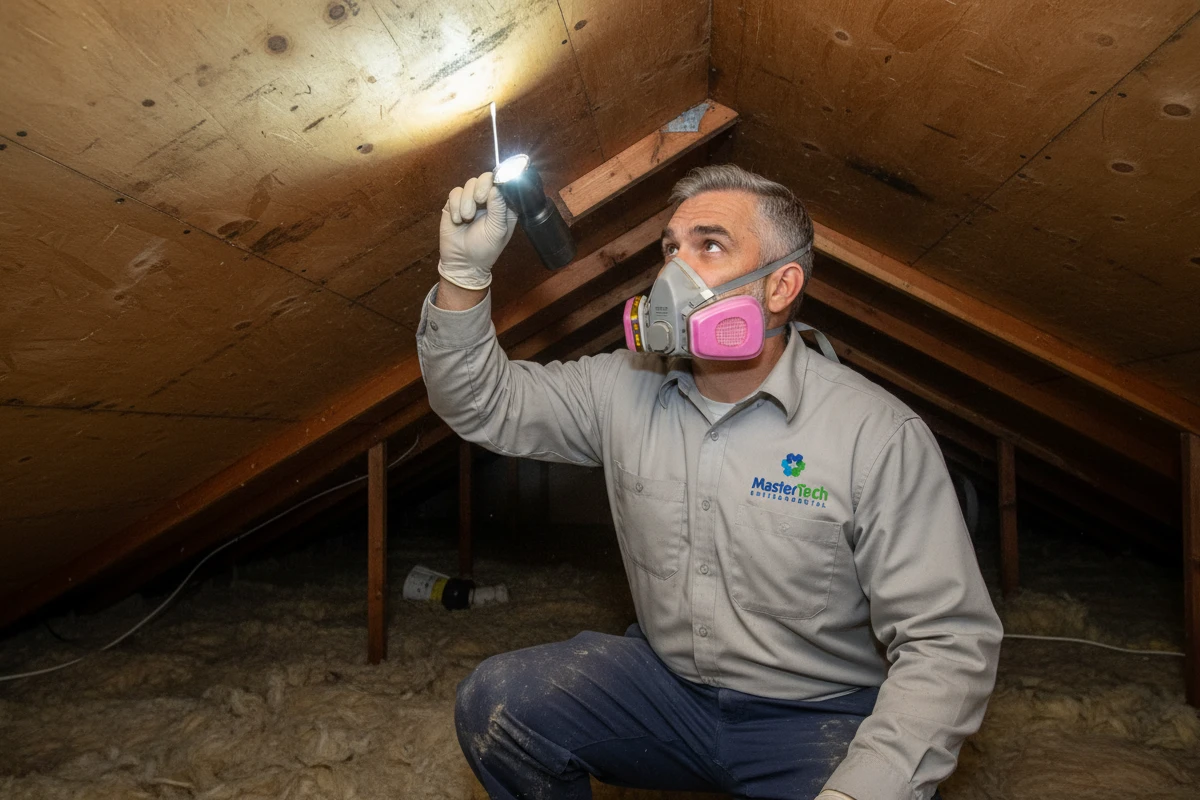
It sounds counterintuitive, but a massive roof failure is often "better" for the homeowner than a tiny pinhole leak. Why? Because if a tree limb goes through your roof, you know about it immediately. You call a roofer, you tarp it, and you dry it out.
The tiny leaks are the ones that keep me busy. These are the leaks caused by a single backed-out nail, a cracked rubber boot around a plumbing vent, or a slightly compromised valley. These leaks might only let in a few tablespoons of water during a heavy storm. That water gets soaked up by the insulation or the wood, and then it sits.
Because the leak is small, it never saturates the ceiling enough to show a visible water stain in the living space. Instead, it creates a "micro-climate" in the attic. The wood stays perpetually damp, never fully drying out between rain cycles. This constant state of dampness is the primary driver for what toxic mold looks and smells like as it begins to take over the underside of your roof.
When water drips from a leak, it rarely stays on the wood. It gravitates downward into the attic insulation. Whether you have fiberglass batts or blown-in cellulose, insulation is fantastic at trapping moisture. Once insulation gets wet, it loses its R-value (insulating capability), but more importantly, it holds that water against the wooden floor joists and the top of the drywall ceiling.
Mold can grow deep within the layers of insulation where you can’t see it. This is why a simple visual check isn't always enough. If you’re smelling something "off" but don't see anything, it’s a major red flag. Understanding how to spot hidden mold is crucial for any homeowner who suspects a roof leak might be causing more than just structural issues.
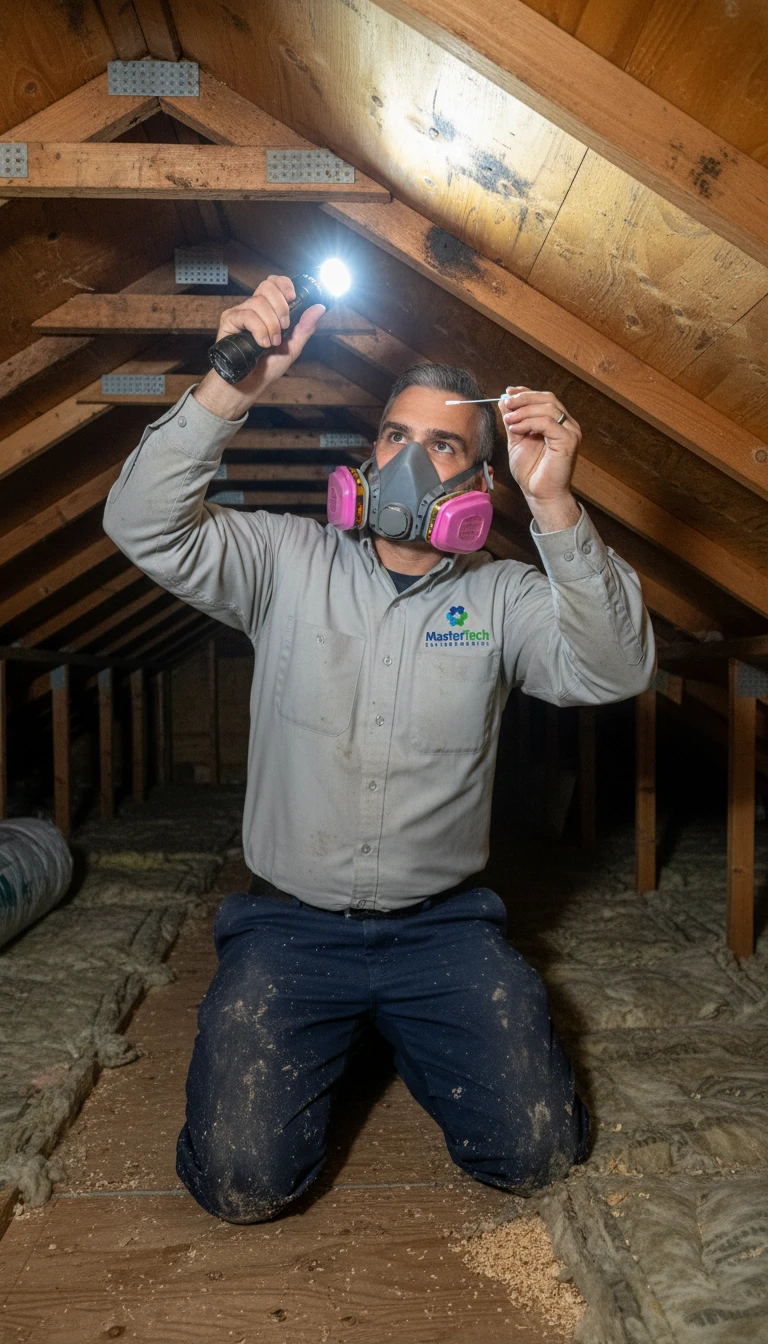
A common misconception is that if the mold is "just in the attic," it isn't hurting anyone. Unfortunately, that’s not how the air in your house works. Most homes experience something called the "stack effect." This is a natural phenomenon where warm air rises and escapes through the top of the house (the attic), while cooler air is pulled in from the bottom (basement or crawl space).
However, this isn't a one-way street. Pressure changes, HVAC systems, and "bypass" leaks (cracks around light fixtures, plumbing stacks, and attic hatches) can allow air from the attic to be pulled back down into the living areas. If your attic is filled with mold spores due to a long-term roof leak, those spores can find their way into your bedrooms and kitchen.
This is particularly concerning for people with underlying conditions. We often see mold and asthma making breathing harder for residents who didn't even realize they had a leak in their roof. If your family is experiencing unexplained respiratory issues, the attic is one of the first places a professional will look.
If you suspect your roof has been leaking, or if you’ve just had a new roof put on after years of nursing an old one, you need to know what’s going on in that space. Many people make the mistake of thinking that fixing the leak fixes the mold. It doesn't. Fixing the leak just stops the moisture; the mold that grew while the leak was active will remain there, dormant but potentially harmful, until it is properly remediated.
A detailed mold inspection is the only way to determine the extent of the growth. We use specialized tools like moisture meters and thermal imaging to see exactly where the water traveled. Sometimes a leak starts in one corner of the roof, but the water runs down a rafter and settles ten feet away.

Testing is another vital piece of the puzzle. Just looking at a dark stain doesn't tell you the whole story. Is it active? Is it a species that produces mycotoxins? Professional mold testing provides a scientific baseline of what is happening in your air and on your surfaces. This is especially important if you are selling your home, as a surprise mold discovery during a buyer's home inspection can tank a deal or cost you thousands in last-minute concessions.
If you’re feeling brave enough to head up into the attic with a flashlight, here are the top red flags you should be searching for:
If you find these issues, don't panic, but don't ignore them either. It’s important to understand what a professional mold inspection report should include so you can make an informed decision on how to handle the cleanup.
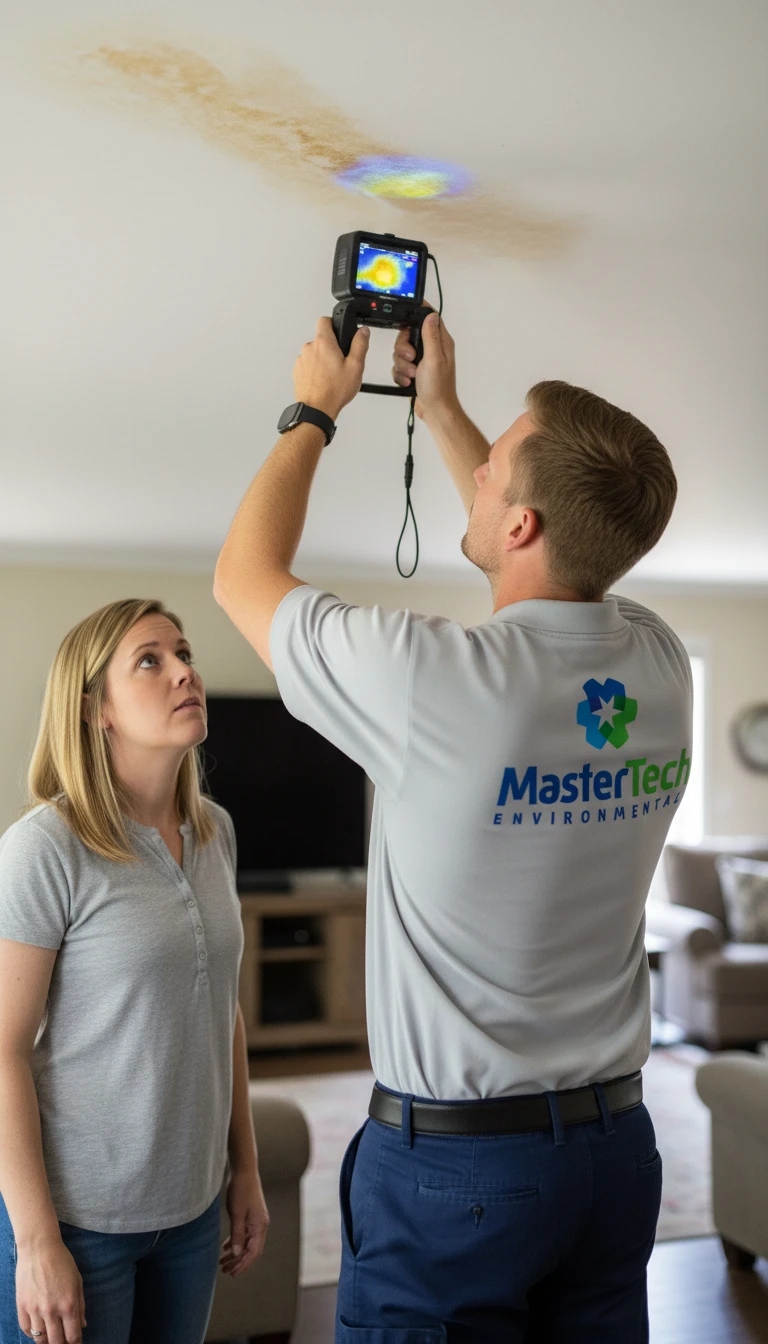
We see a lot of attic issues pop up after seasons of extreme weather. Whether it’s a winter with heavy snow that caused ice dams or a spring with relentless downpours, your roof takes a beating. After a significant weather event, it’s worth asking whether you need testing after heavy rains. Often, a leak doesn't show up during a 20-minute shower, but a three-day soaking will finally push water through those vulnerable spots.
If you’ve already started feeling sick and suspect the house is to blame, you might find that what doctors ask for often involves environmental testing. Knowing exactly what is in your attic can help healthcare providers better understand your exposure levels.
At the end of the day, your roof and your attic are a system. When one part of that system fails: like a shingle or a piece of flashing: the rest of the system is at risk. Mold isn't just a cosmetic issue; it’s a structural and health concern that feeds on the very materials holding your house together. If you’ve dealt with a roof leak recently, or if you’re living in an older home where the history of the roof is a bit of a mystery, getting a professional eyes-on assessment is the smartest move you can make. It’s much cheaper to catch a small bloom early than to replace a whole roof deck and all your insulation later on.
I’ve spent plenty of time crawling through the tight spaces of attics all over the region, from the historic homes in York, PA to the newer builds in Red Lion and Dallastown. Whether you're dealing with the aftermath of a storm in Hanover, spotting weird stains in your Shrewsbury home, or just want some peace of mind for your family in Stewartstown, Mastertech Environmental of York, PA is here to help. I handle the testing and inspections personally, making sure you get a straight answer without the sales pitch. If you're worried about what might be growing above your head, give me a call. We'll figure out if that roof leak left you with a mold problem and exactly what you need to do to get it fixed.

Mastertech Environmental of York, PA. I'm your local expert in professional mold testing and inspection. With 17+ years of experience and trusted by thousands of homeowners, I can help you protect what matters most — your health and your home.