
If you’re a York homeowner dealing with musty smells or mysterious health symptoms, the culprit might be lurking right beneath your feet. Mold on floor joists in crawl spaces and basements is more common than you’d think here in Pennsylvania, and it’s often the result of two sneaky problems: high humidity and foundation leaks.
Here’s the thing – I’ve been doing mold inspections around York for years, and I can’t tell you how many times I’ve crawled into a basement or crawl space to find mold happily growing on wooden floor joists. The homeowners are usually shocked because they had no idea it was even there.
Floor joists are basically sitting ducks when it comes to mold growth. They’re made of unfinished wood that soaks up moisture like a sponge, and once that moisture hits, mold can start growing in just 24 to 48 hours. Combine that with York’s humid summers and the naturally damp conditions in basements and crawl spaces, and you’ve got a recipe for trouble.
The worst part? Most homeowners never go into these spaces, so the mold grows unchecked for months or even years before anyone notices.
Let’s talk about humidity first, because this is probably the biggest culprit I see in York homes. When humidity levels creep above 50%, mold spores start getting excited. And crawl spaces? They’re naturally humid because they’re so close to the ground where soil moisture rises up like invisible steam.
Here’s what I typically find during inspections:
Poor Ventilation Issues
Many crawl spaces around York have ventilation problems. Sometimes there are no vents at all, sometimes they’re blocked by landscaping or storage, and sometimes they’re only on one side of the house. Without proper airflow, moisture just sits there creating a mold playground.
Missing Vapor Barriers
I can’t tell you how many crawl spaces I’ve inspected that don’t have proper vapor barriers. Without that plastic sheeting on the ground, moisture from the soil seeps right up into your crawl space. It’s like having a moisture fountain running 24/7 under your house.
Condensation Problems
York’s temperature swings create condensation issues too. When warm, humid air meets cooler surfaces in your crawl space, water droplets form on everything – including your floor joists. It’s basic science, but it creates big problems.
The magic number you want to hit is keeping humidity between 35 and 50 percent. Anything higher and you’re inviting mold to the party.
Now let’s talk about foundation leaks – the second major way water finds your floor joists. I see this all the time in York homes, especially older ones with foundation issues.
Foundation Wall Cracks
York’s clay soil and freeze-thaw cycles can create cracks in foundation walls. Water seeps through these cracks and creates perfect little mold gardens right where your floor joists meet the foundation. I’ve seen some nasty mold growth in these exact spots.
Groundwater Problems
Sometimes water enters through the footing area or through concrete block walls. If your house sits in a low-lying area or has poor drainage, groundwater can become a real problem. Water damage in your basement is more serious than most homeowners realize.
Plumbing Disasters
Leaky pipes in crawl spaces are mold’s best friend. The water drips directly onto organic materials, creating concentrated mold growth that spreads quickly. I’ve seen entire sections of floor joists covered in mold from a single small plumbing leak that went unnoticed for months.

What makes York basements and crawl spaces particularly problematic is when multiple issues combine. Picture this: you’ve got high humidity from poor ventilation, plus a small foundation crack letting in water, plus maybe a minor plumbing leak. That’s when mold really takes off.
I remember one inspection where the homeowner kept getting sick but couldn’t figure out why. When I got into their crawl space, I found mold covering most of their floor joists. They had three problems: no vapor barrier, blocked vents, and a tiny foundation crack that had been leaking for years. The health symptoms they were experiencing were directly related to the mold growing under their house.
Beyond humidity and foundation leaks, there are a few other factors that make mold problems worse:
Construction Moisture
Sometimes mold problems start during construction. If floor joists get rained on before the roof goes up and aren’t properly dried, mold can establish itself right from the beginning. This is more common than you’d think.
Gutters and Drainage
Clogged gutters and poor drainage around your house can direct water toward your foundation instead of away from it. Over time, this increases your risk of both foundation leaks and high humidity in your crawl space.
Open Crawl Space Vents
This might sound backwards, but sometimes crawl space vents make humidity problems worse. When warm, humid summer air enters through vents and hits cooler surfaces, condensation forms everywhere.
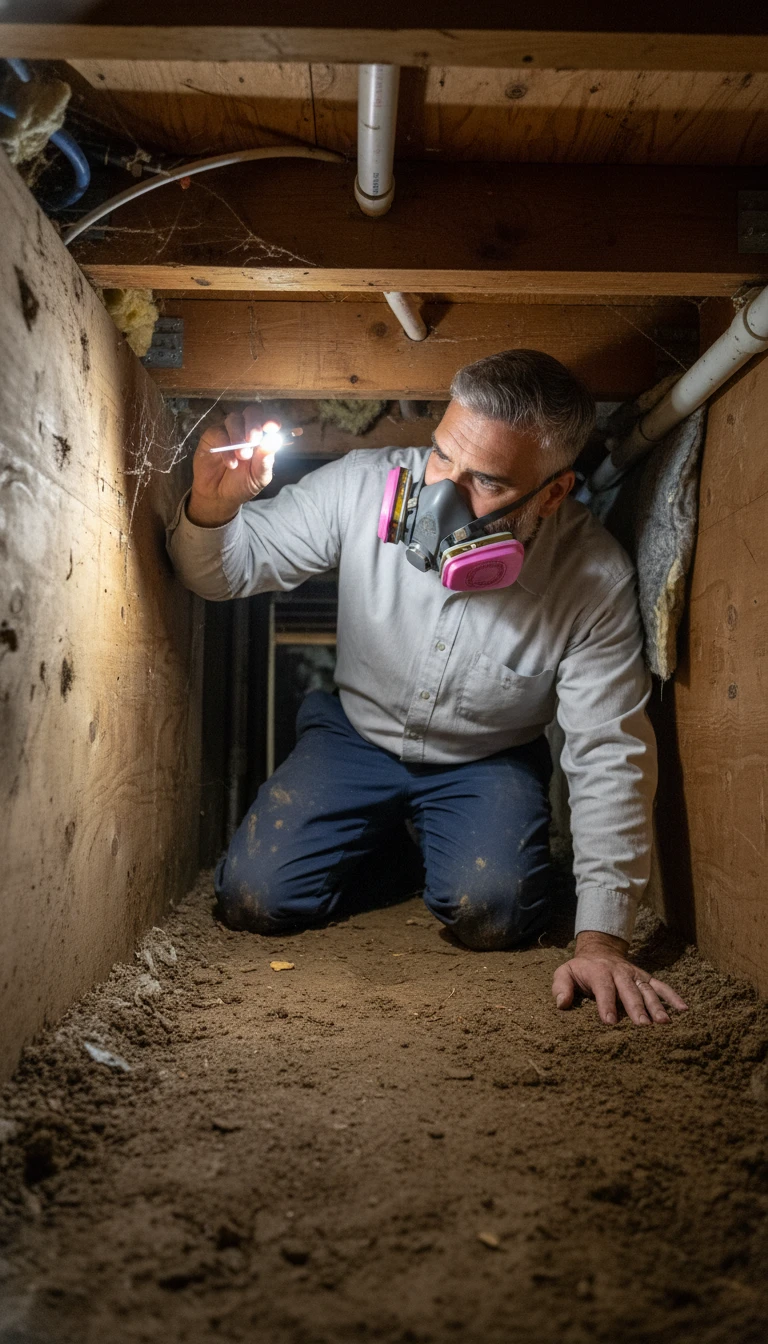
Since most people don’t regularly check their crawl spaces or basements, here are some warning signs to watch for:
If you’re experiencing any of these issues, it’s worth having a professional mold inspection to check what’s happening beneath your floors.
Here’s the thing about floor joist mold – you can’t always see it, even when you look. Mold often grows on the back sides of joists or in insulation where it’s hidden from view. That’s why professional mold testing beats DIY kits every time.
During a professional inspection, I check humidity levels, look for hidden moisture sources, and take samples from suspicious areas. This gives you a complete picture of what’s really happening in your crawl space or basement.
If you do have mold on your floor joists, here’s what needs to happen:
Control the Moisture Source
First, you’ve got to fix whatever’s causing the moisture problem. That might mean sealing foundation cracks, improving ventilation, installing a vapor barrier, or fixing plumbing leaks. Without addressing the source, mold will just come back.
Professional Treatment
Mold on floor joists typically requires professional treatment with specialized products. The good news is that most joists don’t need to be replaced unless there’s serious structural damage from wood rot.
Ongoing Prevention
Keep humidity levels between 35-50%, ensure proper ventilation, and regularly check for new moisture issues. Understanding how York’s climate affects mold growth helps you stay ahead of problems.
Floor joist mold is one of those problems that only gets worse with time. The longer you wait, the more extensive (and expensive) the solution becomes. Plus, you and your family are breathing whatever’s growing down there every day.
If you’re dealing with unexplained odors, health symptoms, or visible moisture issues in your York home, don’t assume it’s just “normal house stuff.” Hidden mold in basements is more common than most people realize, and catching it early makes all the difference.
The bottom line? Your floor joists are the backbone of your house, and keeping them mold-free protects both your health and your investment. When in doubt, get them checked out.

Mastertech Environmental of York, PA. I'm your local expert in professional mold testing and inspection. With 17+ years of experience and trusted by thousands of homeowners, I can help you protect what matters most — your health and your home.