
Living in York County, PA means dealing with weather patterns that seem designed to create the perfect storm for basement moisture problems. If you've ever walked downstairs and caught that unmistakable musty smell, you're not alone: and you're definitely not imagining it.
As someone who's been doing mold testing and inspections in York PA for years, I can tell you that our local weather creates some of the most challenging conditions for basement moisture control I've seen anywhere. Let me break down exactly why York County's climate makes your basement such a magnet for that musty smell.
Our location in south-central Pennsylvania puts us right in the crosshairs of multiple weather systems that spell trouble for basements. We get hit with heavy rainfall throughout the year, experience dramatic freeze-thaw cycles in winter, and deal with humidity levels that would make a greenhouse jealous.
The numbers don't lie: York County receives an average of 41 inches of precipitation annually, with spring and summer bringing particularly intense storms that can dump several inches of rain in just a few hours. When you combine this with our clay-heavy soil that doesn't drain well, you've got a recipe for water that has nowhere to go but against your foundation walls.
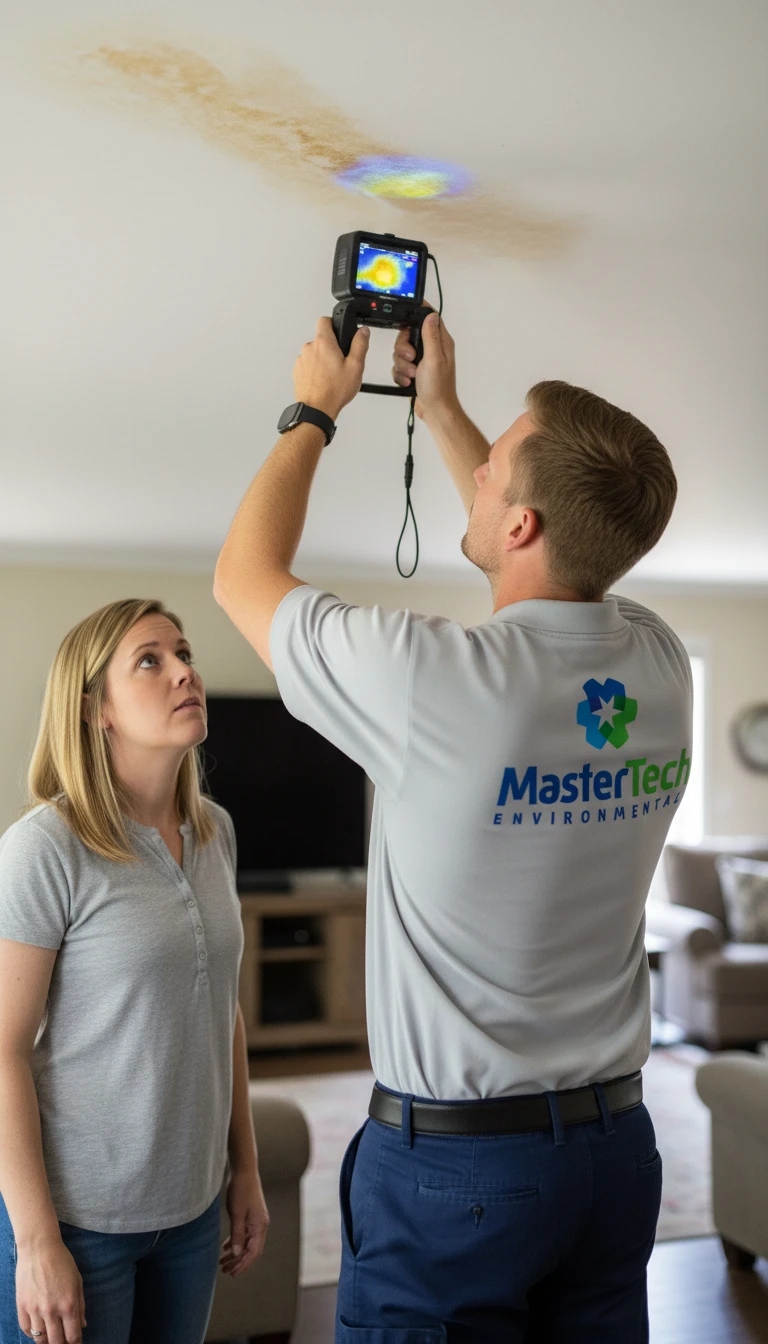
Alt text: Mastertech Environmental technician using thermal imaging camera to detect moisture intrusion and hidden water damage in York County basement ceiling
Here's where things get really interesting from a technical standpoint. Pennsylvania's frost line sits at approximately 3.5 feet below ground level. Most basements extend well below this depth, which means they're constantly exposed to unfrozen groundwater: even during our harshest winters.
This creates what we call hydrostatic pressure, where water in the saturated soil around your foundation is literally pressing against your basement walls 24/7. Over time, this pressure finds every tiny crack, gap, or weakness in your foundation and pushes water through. It's like having a slow, steady leak that never stops.
During spring snowmelt, this pressure can increase dramatically as tons of melted snow suddenly add to the groundwater supply. I've seen basements that stayed dry all winter suddenly develop serious moisture problems once the snow starts melting in March.
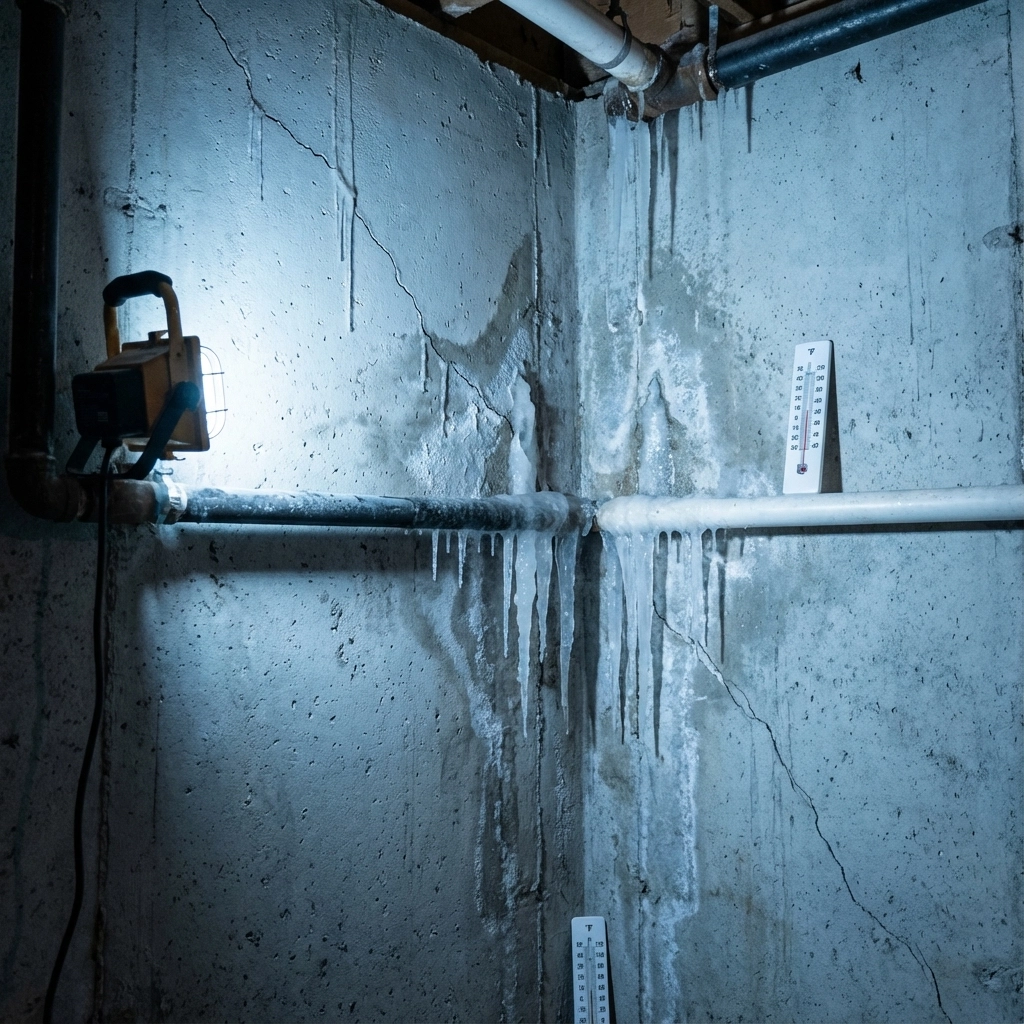
Winter in York County isn't just cold: it's a cycle of freezing and thawing that puts enormous stress on building materials. Water expands when it freezes, and when that water is sitting in small cracks in your foundation, it acts like a tiny jackhammer, gradually widening those cracks each time temperatures drop below freezing.
Come spring, these newly widened cracks become highways for water infiltration. What started as a hairline crack in October might be a significant moisture entry point by April. This is why many homeowners notice musty smells appearing for the first time after a particularly harsh winter.
Even when water isn't actively leaking into your basement, York County's humidity levels create their own set of problems. Our summers regularly push humidity levels above 70%, and basements: being naturally cooler than the rest of your house: become condensation magnets.
When warm, humid air meets cool basement walls and floors, moisture condenses out of the air and settles on surfaces. This is especially problematic in unfinished basements where concrete block walls and exposed pipes provide plenty of cool surfaces for condensation to form.
Professional basement mold testing and inspections in York PA often reveal that humidity-related mold growth is just as common as water intrusion-related problems.
That distinctive musty odor isn't just unpleasant: it's your basement's way of telling you that mold and mildew are growing somewhere in the space. Mold produces volatile organic compounds (VOCs) as it grows, and many of these compounds have that characteristic earthy, musty smell.
The tricky part is that you can often smell mold growth before you can see it. Mold loves to grow in hidden spaces: behind drywall, under flooring, inside wall cavities, or in insulation. By the time you actually see visible mold growth, the problem has usually been developing for weeks or even months.

Alt text: Professional mold inspector examining basement ceiling joists and ductwork for signs of moisture damage and mold growth in York County home
Living with a musty basement isn't just about the unpleasant smell: it can impact your family's health. Mold spores and mycotoxins can circulate throughout your home via your HVAC system, potentially triggering allergic reactions, respiratory problems, and other health issues.
Children, elderly family members, and anyone with compromised immune systems or existing respiratory conditions are particularly susceptible to mold-related health problems. Even if you don't spend much time in your basement, the air from that space doesn't stay put: it moves throughout your entire home.
After years of doing mold testing and inspections throughout our area, I've noticed distinct seasonal patterns in when basement problems develop:
Spring (March-May): This is prime time for water intrusion problems as snowmelt combines with spring rains to create maximum hydrostatic pressure. I see more emergency calls during this period than any other time of year.
Summer (June-August): High humidity leads to condensation problems, especially in air-conditioned homes where the temperature differential between upstairs and basement is greatest.
Fall (September-November): Heavy autumn rains can overwhelm drainage systems that worked fine during drier months, leading to both water intrusion and humidity problems.
Winter (December-February): While active water problems may be less common, this is when freeze-thaw damage accumulates, setting the stage for spring problems.
Many homeowners try to solve musty basement problems with dehumidifiers, fans, or surface cleaning, but these approaches only address symptoms, not causes. Professional mold testing can identify exactly what types of mold are present, where they're growing, and what moisture sources are feeding the problem.
During a professional mold inspection, we use specialized equipment to measure moisture levels in different materials, identify hidden water intrusion points, and collect air samples that reveal the full scope of any mold problem. This information is crucial for developing an effective remediation plan.

Alt text: Certified mold inspector setting up air quality testing equipment in York County basement to measure mold spore levels and identify contamination sources
Interestingly, I've noticed that certain areas within York County tend to have more basement moisture problems than others. Homes in Dallastown, Emigsville, and North York often deal with different types of challenges based on local soil conditions, drainage patterns, and elevation.
Properties in lower-lying areas or those built near streams tend to experience more severe hydrostatic pressure problems, while homes on hillsides might deal more with surface water runoff issues during heavy rains.
If you're noticing a musty smell in your basement, don't wait for it to get worse. Early detection and intervention can save you thousands of dollars in remediation costs and protect your family's health. The longer moisture problems persist, the more extensive: and expensive: the damage becomes.
Professional mold testing can give you a clear picture of what you're dealing with and provide the information you need to make informed decisions about remediation. Whether you're in Spring Garden Township, Grantley, or anywhere else in York County, understanding your specific moisture challenges is the first step toward solving them.
The combination of our local climate, soil conditions, and seasonal weather patterns makes York County basements particularly vulnerable to moisture problems. But with proper testing, identification of moisture sources, and targeted remediation, you can eliminate that musty smell and protect your home's value and your family's health.
Don't let York County's challenging weather win the battle against your basement. Professional mold testing and inspection services can help you understand exactly what you're dealing with and develop a plan to address it effectively.

Mastertech Environmental of York, PA. I'm your local expert in professional mold testing and inspection. With 17+ years of experience and trusted by thousands of homeowners, I can help you protect what matters most — your health and your home.