
After spending years conducting mold inspections and testing throughout York County, I've noticed some distinct characteristics that make our crawl spaces unique compared to other regions. Understanding these differences is crucial for homeowners who want to protect their properties from mold, moisture damage, and structural issues.
York County sits in south-central Pennsylvania, giving us a humid continental climate that creates perfect conditions for crawl space problems. Our summers are hot and humid, while winters bring freeze-thaw cycles that other regions don't experience as intensely.
The humidity levels here regularly exceed 60% during summer months, which is problematic for crawl spaces. When warm, moist air enters a cooler crawl space, condensation forms on surfaces: creating ideal conditions for mold growth. This is why I see so many crawlspace mold issues during my inspections between June and September.
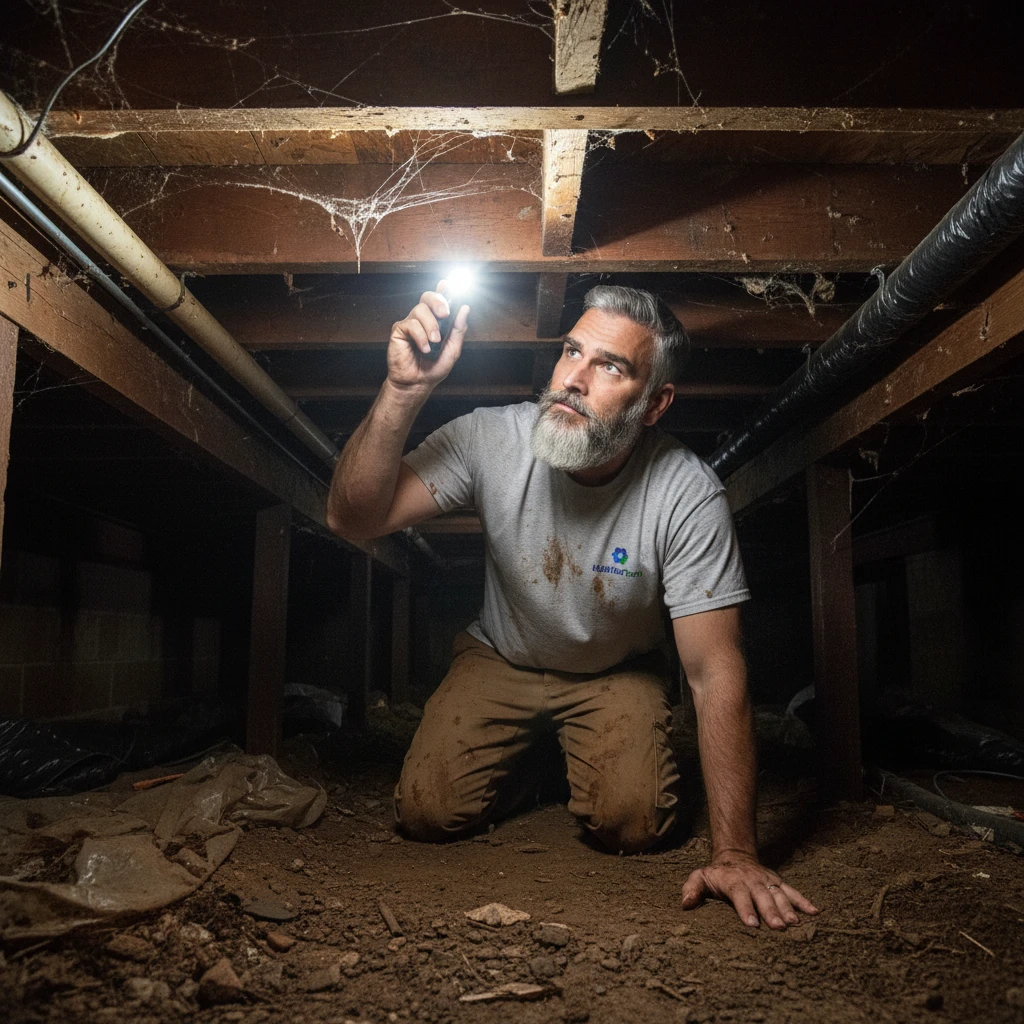
What makes this particularly challenging in York County is our proximity to the Susquehanna River and Codorus Creek. These water sources increase local humidity levels, making moisture management in crawl spaces even more critical than in drier regions.
York County's geology presents unique challenges that I don't see in other areas. Our soil is predominantly clay-based with limestone bedrock underneath. This combination creates several problems:
Poor Drainage: Clay soil doesn't drain well, meaning water sits around foundations longer. During heavy rains (which we get plenty of), this water finds its way into crawl spaces through foundation walls and floor cracks.
Soil Expansion: Clay soil expands when wet and contracts when dry. This constant movement puts pressure on foundation walls, creating cracks that allow moisture and even water intrusion into crawl spaces.
Limestone Issues: The limestone bedrock can develop sinkholes and settlement issues over time. When foundations settle unevenly, it creates gaps and cracks that compromise crawl space integrity.
Homes in York County were built during different eras with varying construction standards. Many homes built between 1950-1980 used construction methods that seemed adequate then but create problems now:
Vented Crawl Spaces: Most older York County homes have vented crawl spaces, which were thought to help with moisture control. However, in our humid climate, these vents actually introduce more moisture during summer months.
Insufficient Vapor Barriers: Many crawl spaces I inspect have no vapor barrier or inadequate plastic sheeting that's deteriorated over time. Without proper moisture barriers, ground moisture constantly evaporates into the crawl space.
Local Building Materials: Homes here often used local materials like limestone blocks for foundations. While durable, these materials are porous and can wick moisture from the surrounding clay soil.
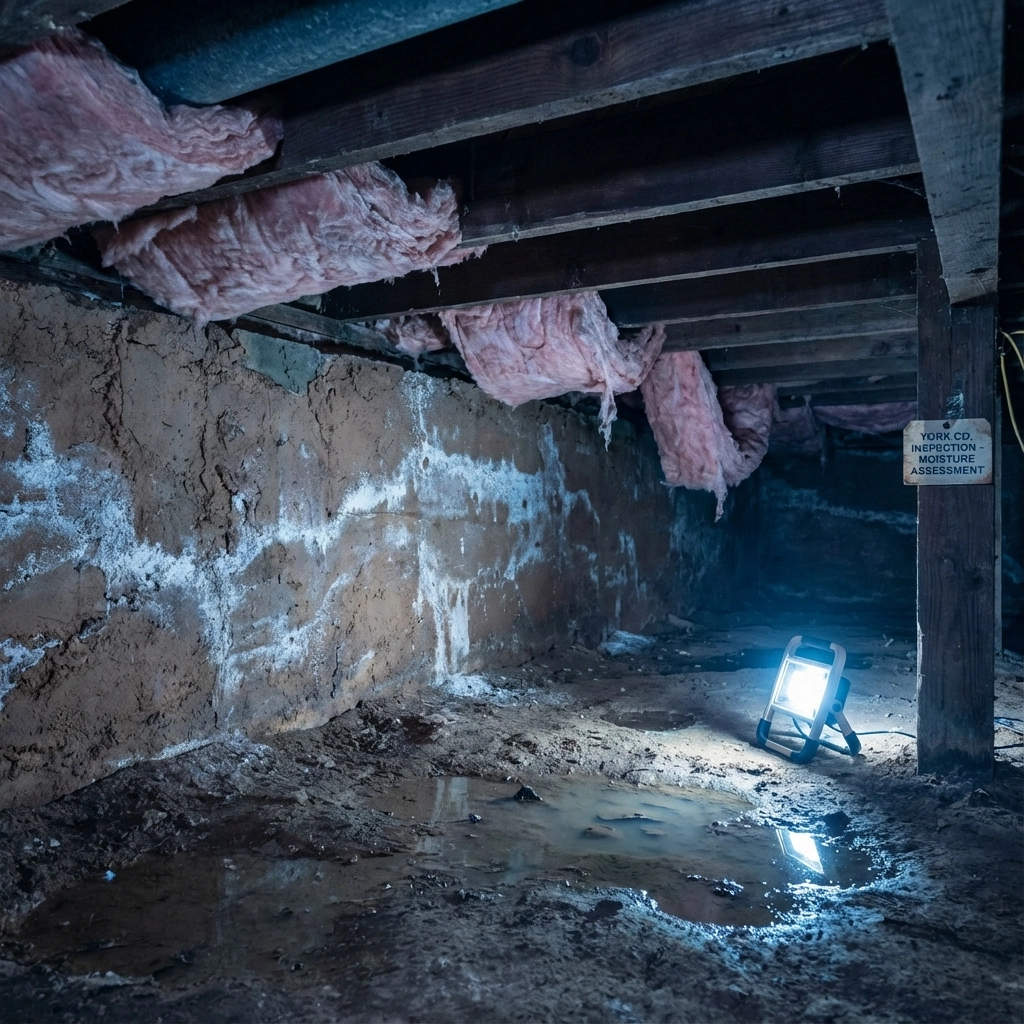
York County experiences distinct seasonal patterns that create ongoing challenges for crawl spaces:
Spring Flooding: Our area regularly experiences spring flooding from snowmelt and heavy rains. The Codorus Creek and other waterways overflow, saturating the ground around homes. This is when I see the most water damage calls for basement mold testing and inspections.
Summer Humidity: High humidity combined with temperature differentials between outdoor air and cooler crawl spaces creates condensation problems. I've measured humidity levels over 80% in some York County crawl spaces during July and August.
Winter Freeze-Thaw: Our winter temperatures regularly fluctuate around freezing. This freeze-thaw action expands and contracts moisture in foundation cracks, making them larger each year.
Fall Moisture: Autumn brings heavy rains and falling leaves that can clog drainage systems around foundations, directing water toward crawl spaces.
Because of these unique conditions, cookie-cutter approaches to crawl space problems often fail in York County. I've seen homeowners try solutions that work in drier or more stable climates, only to have problems return within months.
For example, simple dehumidifiers that work well in other regions struggle here because of our extreme humidity levels and constant moisture intrusion from clay soil. Similarly, basic vapor barriers may not withstand the soil movement and settling that's common in our area.
This is why professional mold testing and inspections are so important: generic solutions rarely address the specific combination of challenges we face in York County.

Several environmental factors specific to our region contribute to crawl space problems:
Agricultural Runoff: York County has significant agricultural activity. Fertilizers and pesticides can alter soil chemistry around foundations, potentially affecting drainage patterns and moisture levels.
Industrial History: Some areas of York County have industrial contamination that affects groundwater levels and soil composition. This can create unique moisture patterns that don't exist in other regions.
Urban Heat Islands: Developed areas like York city create heat islands that increase local humidity and affect air circulation patterns around homes.
Based on my experience in this specific area, here are the warning signs I look for:
If you notice any of these issues, it's important to get professional mold testing to determine the extent of the problem.
Understanding these regional differences is why working with local professionals matters. When I conduct inspections, I'm not just looking for generic mold problems: I'm specifically checking for issues that commonly occur in York County crawl spaces based on our unique conditions.
For instance, I know to check specific areas where limestone foundations commonly develop cracks, and I understand how our seasonal patterns affect moisture levels throughout the year. This local knowledge helps me provide more accurate assessments and better recommendations for remediation.

Because of our specific challenges, prevention strategies need to be tailored to local conditions:
Proper Drainage: Given our clay soil, comprehensive drainage solutions are essential. This often means more extensive work than in other regions.
Sealed Crawl Spaces: Vented crawl spaces rarely work well here. Sealing and conditioning crawl spaces is usually more effective in our humid climate.
Regular Monitoring: Because conditions change seasonally, regular monitoring is crucial. I recommend annual inspections, especially after severe weather events.
Soil Management: Managing water flow around the foundation is critical with our clay soil conditions.
If you suspect crawl space issues in your York County home, don't wait for problems to worsen. Our unique regional conditions mean that small problems can quickly become major issues if not addressed properly.
Professional mold testing and inspection services can identify problems early and recommend solutions that work specifically for our local conditions. Whether you're in York, Red Lion, Dallastown, or surrounding areas, understanding these regional differences is the first step toward protecting your home.
Remember, what works in other parts of the country may not be the best solution for York County crawl spaces. Local expertise makes all the difference in properly addressing these unique challenges and keeping your home healthy and dry.

Mastertech Environmental of York, PA. I'm your local expert in professional mold testing and inspection. With 17+ years of experience and trusted by thousands of homeowners, I can help you protect what matters most — your health and your home.