
When the temperature starts to drop and the first frost hits, most people are thinking about their heating bills or getting the winter tires on the car. What they aren’t thinking about is the physics experiment happening inside their walls. Winter is actually one of the busiest times for mold issues, but it isn’t because of heavy rain or flooding. It’s because of condensation.
Condensation is a simple concept that causes massive headaches. It’s the same thing that happens when you take a cold can of soda out of the fridge on a hot day: the air hits the cold surface, and water beads up. In the winter, your house becomes that cold soda can, just in reverse. The outside of the house is freezing, the inside is warm, and the surfaces in between become the battleground.
People often think winter air is dry. Outside, it usually is. But inside a home where people are living, breathing, showering, and cooking, the humidity can climb fast. Because we seal our homes up tight to keep the heat in, that moisture has nowhere to go.
When warm, moist indoor air hits a cold surface: like a window pane, a corner of a closet on an exterior wall, or a roof rafter: it reaches its "dew point." The air can no longer hold the moisture, and it turns into liquid water. If that water sits on a porous surface like drywall, wood, or insulation for more than 24 to 48 hours, mold starts to grow.
This isn't just about a little bit of fog on the glass. This is about structural components of your home getting wet from the inside out.
Windows are usually the first place you’ll notice a problem. In many homes, you’ll see water pooling on the sills or running down the glass. While it’s tempting to just wipe it off and move on, that water often seeps into the wooden window frames or behind the drywall surrounding the window.
If you have curtains or blinds that stay closed all day, you’re making it worse. The window stays even colder because the room’s heat can’t reach it, and the trapped air between the curtain and the glass becomes a localized swamp. Over a few months, this constant moisture leads to black mold growth on the sills and the surrounding wall.
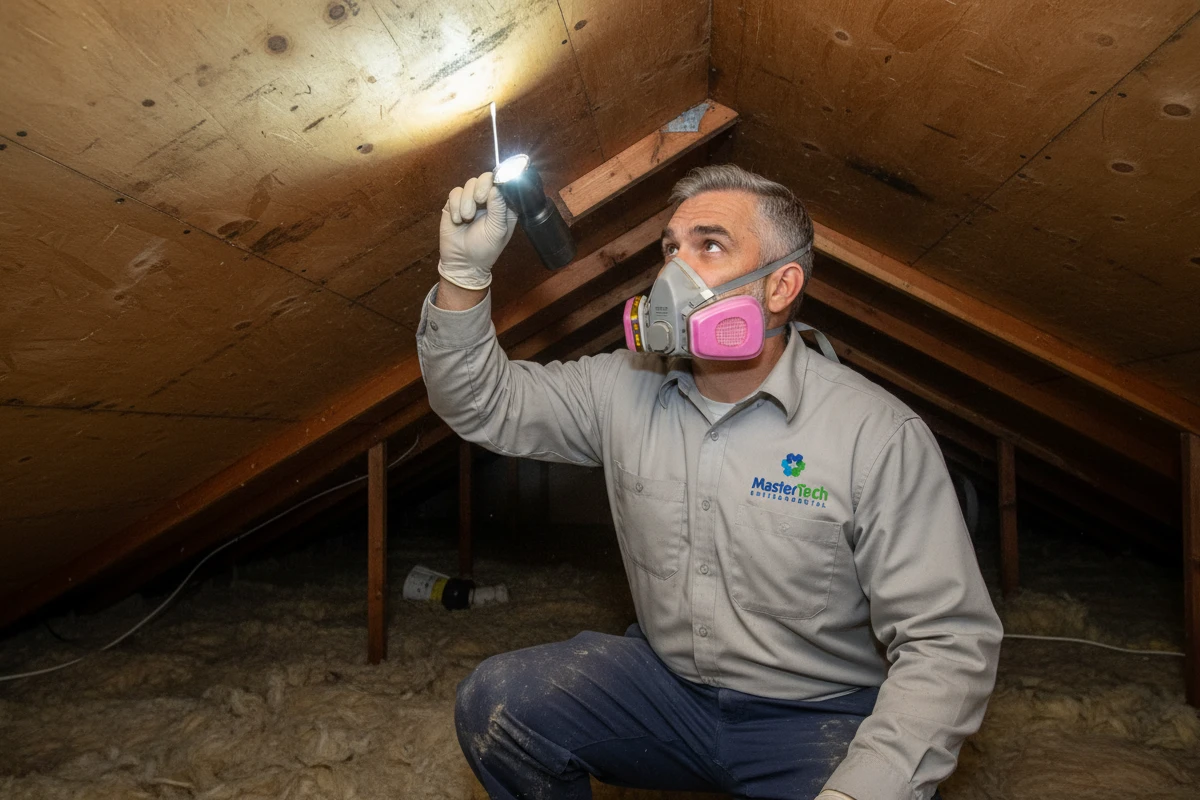
The attic is arguably the most vulnerable spot in a house during the winter. Most people don’t go up there often, so problems go unnoticed for months. Two things usually cause winter mold in an attic: poor ventilation and "thermal bypasses."
A thermal bypass is just a fancy way of saying warm air is escaping from your living space into the attic. This happens through recessed lights, pull-down stairs, or gaps around plumbing stacks. When that warm, humid air hits the underside of your freezing cold roof deck, it condenses. In extreme cases, it can even frost over. When the sun hits the roof and warms it up, that frost melts, creating what we call "attic rain."
If you see dark staining on your roof plywood or white fuzzy growth on the rafters, you likely have a condensation issue. This is why a professional mold inspection is important. We don't just look for the mold; we look for the reason the attic is wet in the first place. Without fixing the ventilation or sealing those air leaks, the mold will just come back every single winter.
Have you ever noticed dark streaks on your ceiling that look like the outlines of the joists? Or maybe a corner of a room that always feels a bit damp? This is often caused by missing insulation. When a specific part of a wall or ceiling is significantly colder than the rest of the room, moisture will hit that spot first.
Dust and soot in the air are attracted to these damp spots, which creates "ghosting." Eventually, that dust and moisture provide the perfect food source for mold. In many cases, homeowners think they have a roof leak, but when we perform moisture mapping, we find that the roof is fine: the wall is just so cold that it’s creating its own water.
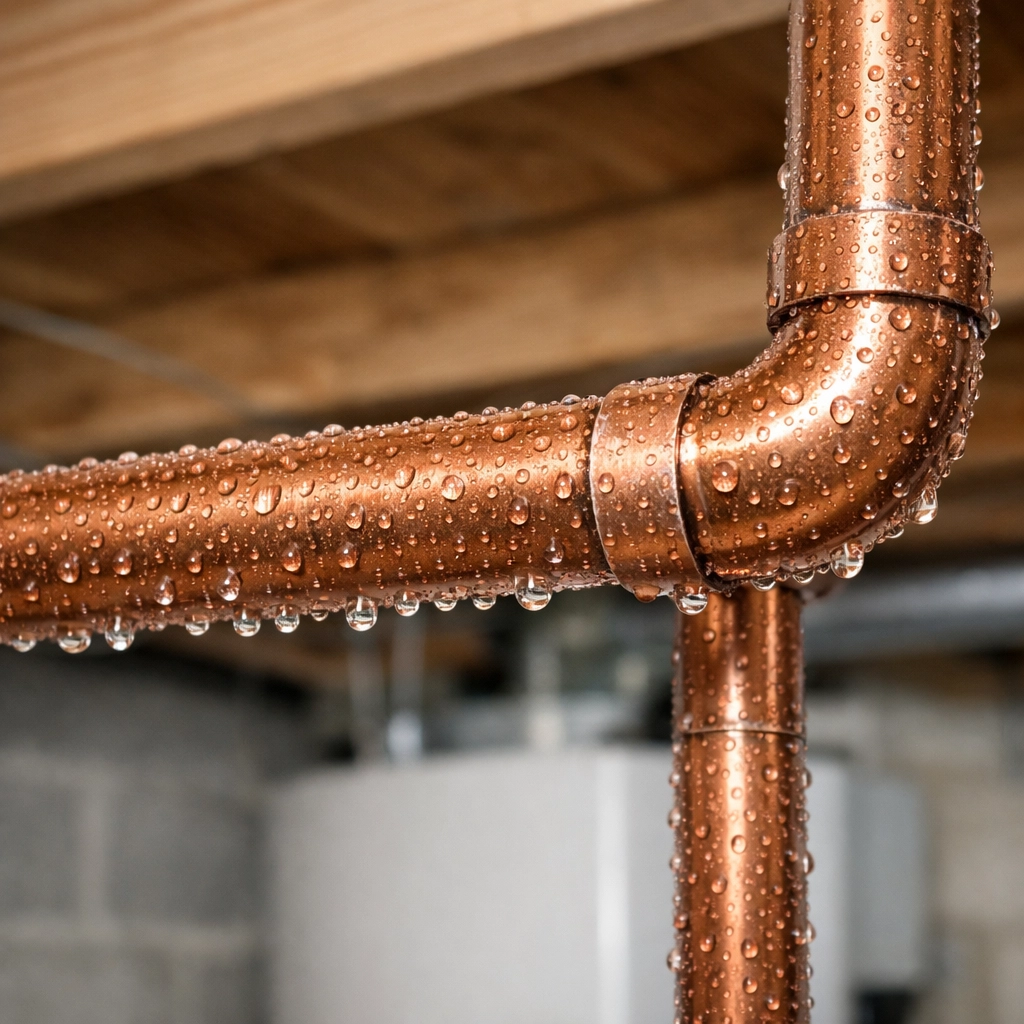
Basements are notoriously damp, but winter brings a specific type of moisture. Cold water pipes running through a warm basement will sweat profusely. If those pipes are located near drywall or stored boxes, you’ve got a recipe for a basement mold problem.
Similarly, foundation walls that are partially above grade can get extremely cold. If you have furniture pushed right up against an exterior basement wall, you’re preventing airflow. That gap becomes a pocket of stagnant, cold air where condensation can form on the wall behind the furniture. You might not realize you have a problem until you move the couch in the spring and find the back of it covered in green or white fuzz.
Most people don't realize they have a mold problem until they smell it or see it. By then, it’s usually been growing for a while. A "musty" or "earthy" smell is the biggest red flag. If you notice that smell specifically when the heat kicks on or when you open a certain closet, you need to investigate.
Another sign is physical symptoms that seem to get worse when you're home. While I'm not a doctor, I've spent years seeing how mold affects people. If you feel fine at work but start sneezing or getting headaches as soon as you sit on your couch, your indoor air quality might be the culprit.
You can buy a DIY mold kit at a hardware store, but honestly, they aren't worth the money. Those kits usually just tell you that mold spores are present: which is true for every house on the planet. They don't tell you the concentration, the type of mold, or where the moisture is coming from.
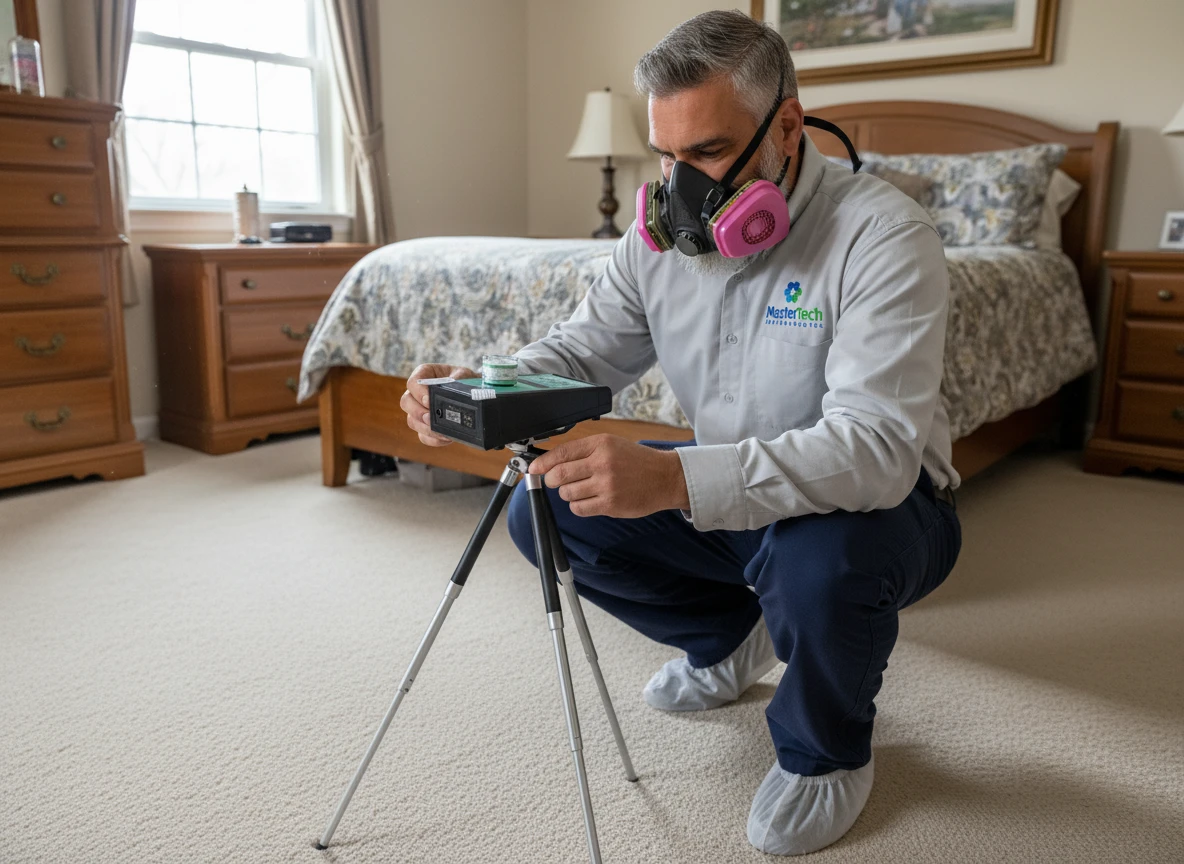
Professional mold testing is different. We use calibrated air pumps to pull specific volumes of air through a filter, which is then analyzed by a third-party lab. This tells us exactly what is floating around in your breathing zone. More importantly, we use tools like thermal imaging cameras to find the cold spots and moisture meters to find the water hidden behind your walls.
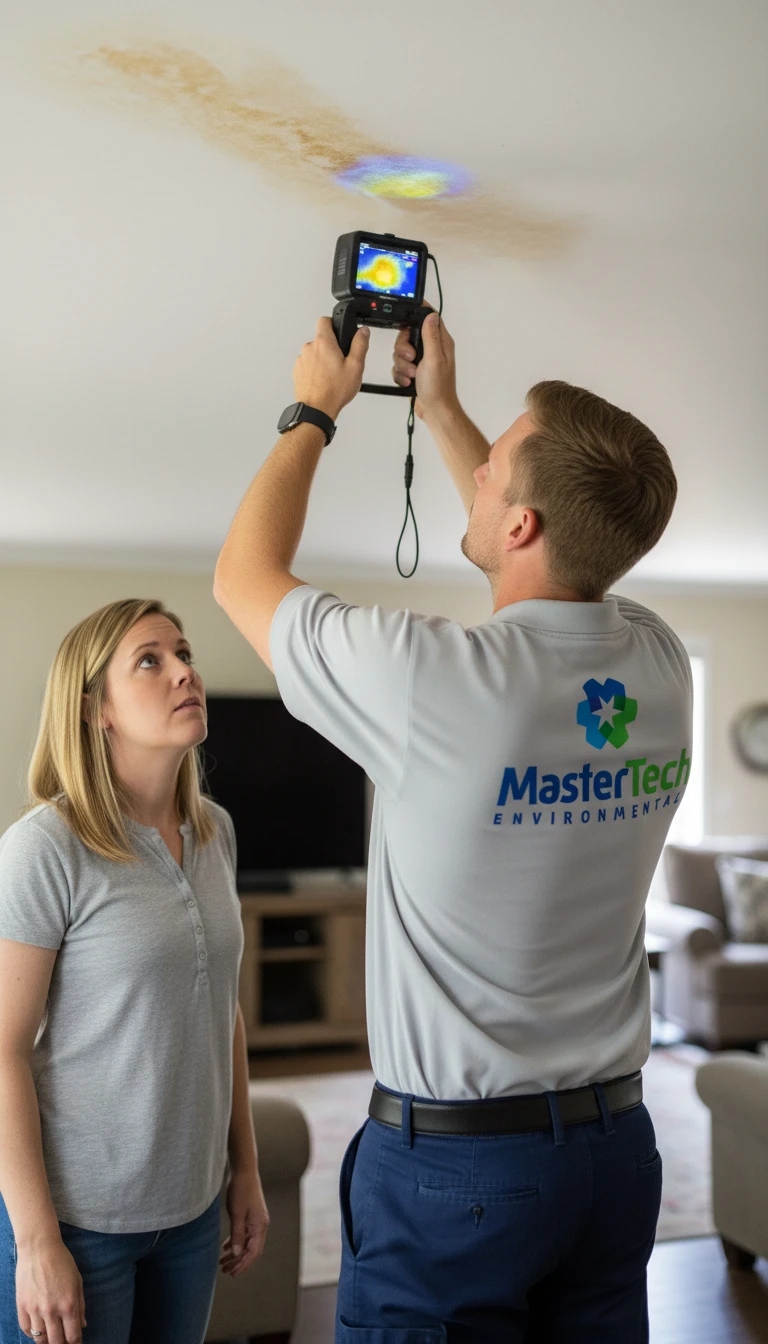
When I walk into a house, I'm looking for the "why." Finding mold is easy; finding the source is the hard part. Moisture mapping involves using non-invasive tools to track the path of moisture through a structure.
By using an infrared camera, I can see temperature differences in your walls. A cold, wet spot looks different than a cold, dry spot. This allows us to pinpoint exactly where condensation is occurring or where a pipe might be sweating behind the plaster. This is a standard part of what a mold inspection includes. Knowing exactly where the water is allows for a targeted fix, rather than tearing down half your house to find a small leak or a cold bridge.
If you are in the middle of a real estate transaction, winter condensation can be a deal-breaker. A home inspector might see some staining in the attic and flag it as a "potential" problem. This is where a specialized inspection comes in. For anyone buying or selling a home, getting a clear answer on whether a stain is old and dry or an active mold colony is crucial.
Sellers should be proactive. If you know your windows sweat or your attic gets stuffy, fix it before the house goes on the market. Buyers should always ask for a separate mold assessment if the home has been closed up for a long time, as that’s when condensation issues are at their peak.
You don't always need a professional to lower your risk. Here are a few "regular guy" tips to keep your house dry:
If you’ve already found visible mold, wiping it with bleach isn't the answer. Bleach is mostly water; on porous surfaces like wood or drywall, the chlorine stays on top while the water soaks in, which can actually feed the mold roots.
If you suspect an issue, the first step is an inspection. We can determine the scope of the problem and whether attic mold or wall mold is actually affecting your living space. Sometimes, the fix is as simple as adding a vent or sealing a gap. Other times, it requires a more involved cleaning process. The goal is always to get your home back to a safe, healthy state without overcomplicating things.
Mold doesn't have to be a nightmare, but you can't ignore it: especially not in the winter when the conditions that cause it are happening every single day. Being proactive about moisture management is the best way to protect your home and your family.
If you are dealing with damp windows, musty smells, or visible growth in your home, give us a call at Mastertech Environmental of York, PA. We specialize in finding the root cause of these winter moisture problems and providing honest, straightforward solutions for homeowners in York, PA, as well as those in Dallastown, Red Lion, Hanover, West Manchester, Shiloh, Dover, Weigelstown, Emigsville, and North York. Whether you need a comprehensive mold inspection, professional mold testing, or detailed moisture mapping to figure out why your house is "sweating," we are here to help you get it sorted out properly.

Mastertech Environmental of York, PA. I'm your local expert in professional mold testing and inspection. With 17+ years of experience and trusted by thousands of homeowners, I can help you protect what matters most — your health and your home.