
Attic mold in York, PA is usually a ventilation problem, not a roof leak
Almost everyone who calls me about attic mold assumes the roof is leaking. Most of the time it isn't. Warm, humid air from inside the house is getting into a cold attic and condensing on the underside of the roof deck — which is why attic mold so often comes back after it's been cleaned. I find the moisture path and tell you what has to change.
- — Ventilation and air-leak assessment included
- — $450 flat, 4 samples included
- — Tape lift tells you if it's active or old staining
- — No remediation sold, ever
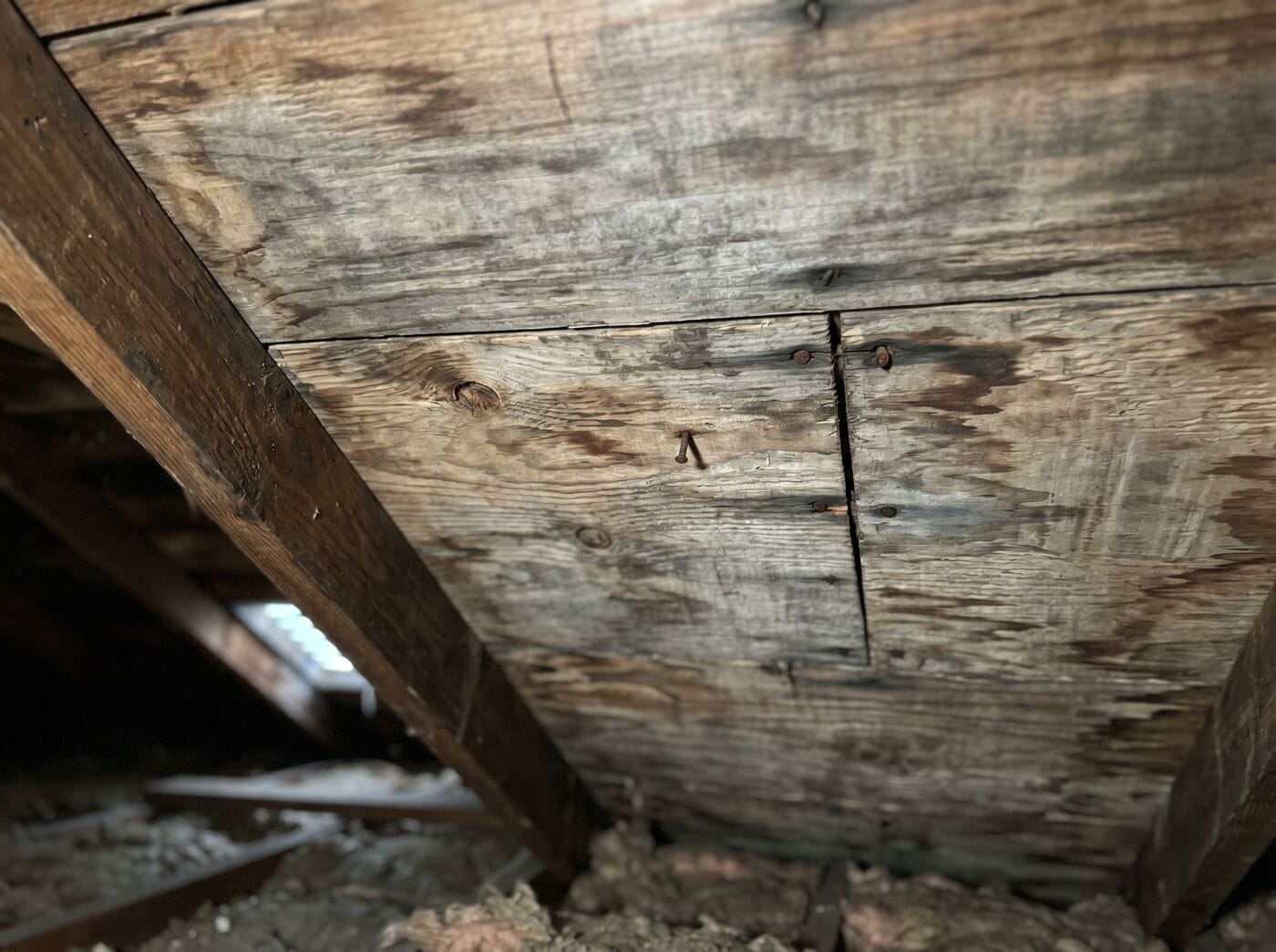
Cleaning attic mold without changing the attic doesn't hold
This is the single most useful thing I can tell you about attic mold, and it's why I lead with it.
Mold needs moisture and time. It does not need water dripping on it. An attic that is getting warm humid air from the house below, and has nowhere to send that air, will reach the moisture level mold needs every cold month of the year — no leak required.
So when someone has the sheathing cleaned or encapsulated and the staining is back two winters later, nothing went wrong with the cleanup. The cleanup was never the problem. The air path was still open and the ventilation was still out of balance, so the conditions that grew it the first time were still in place the day the contractor drove away. Surface treatment removes the growth. It doesn't change the physics.
That's what makes the diagnostic part worth paying for. The question isn't really "is there mold in my attic" — from the hatch you can usually see that yourself. The question is where the moisture is arriving from, whether it's active right now, and what specifically has to change so it stays gone. Air sealing at the ceiling plane, balanced intake and exhaust, full insulation coverage, and bath fans that actually discharge outdoors. Which of those you need depends on your house, and there is no single answer that fits every attic.
The other thing worth saying plainly: not everything black on a roof deck is mold. Asphalt bleed-through around the shingle nails is dark and blotchy and alarming and completely harmless. So is old water staining from a leak that was repaired a decade ago and dried out. A tape lift settles it for $0 extra on a standard inspection, and I've told plenty of people their attic was fine.
What an attic inspection covers
- Whether the staining is active growth, old inactive staining, or asphalt bleed-through
- Wood moisture content readings across the sheathing and framing
- Where indoor air is getting into the attic, found on thermal imaging
- Whether soffit intake is open or blocked, and whether exhaust is balanced against it
- Every bath and kitchen fan duct: connected, insulated, and terminating outdoors
- Insulation coverage, compression and gaps over the ceiling plane
- Species identification from the accredited lab if a sample is warranted
- Written scope of what has to change, with no contractor bidding it
The four attic moisture patterns I find in York County
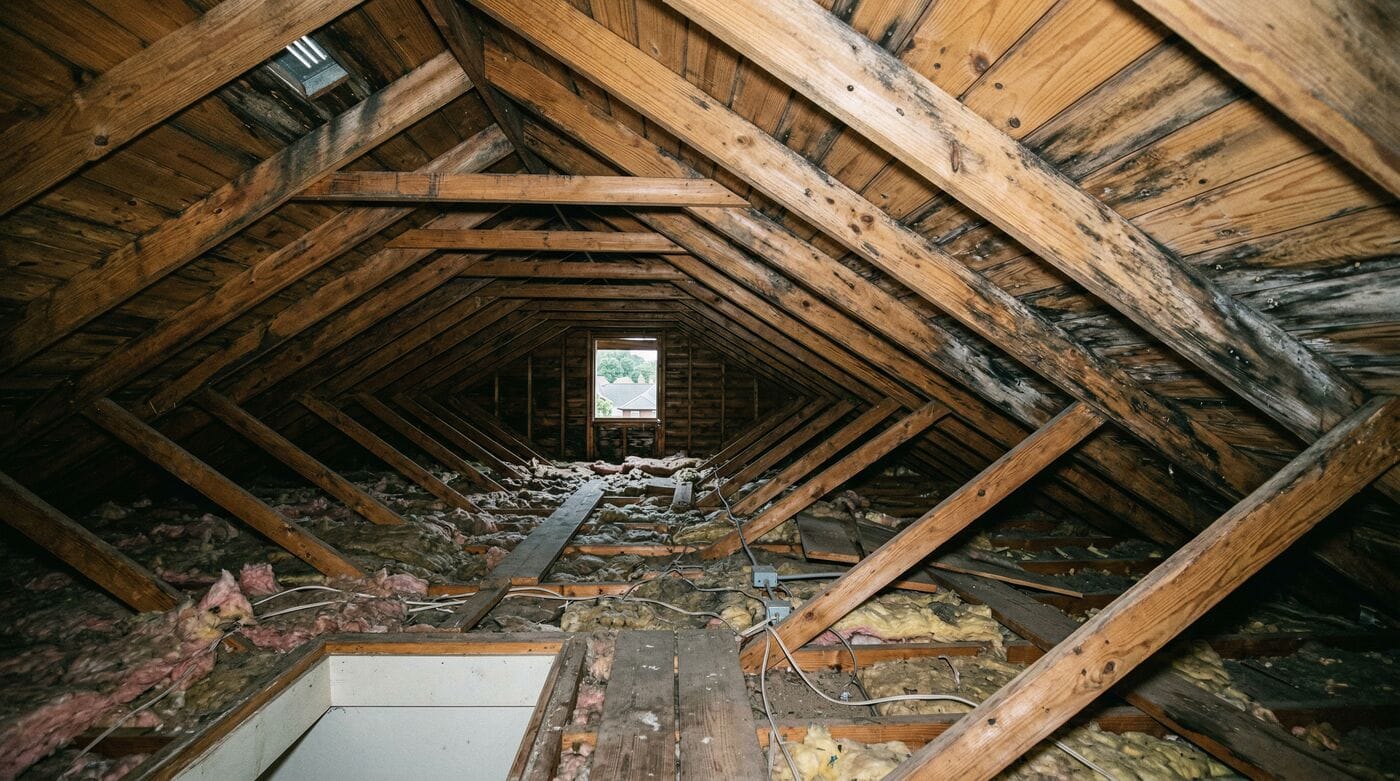
The pattern of the growth tells you the cause, which is why I photograph the whole attic and not just the worst spot.
Condensation on the sheathing
Warm indoor air gets into a cold attic and gives up its moisture on the underside of the roof deck. It shows up across a whole slope — usually the north-facing one — rather than in one spot. This is the cause of most attic mold I find in York County, and there is no leak to fix.
A bath fan dumping into the attic
The fan runs, the duct ends six inches above the insulation or isn't connected at all, and every shower puts a few pints of water vapor into the attic. The growth pattern is a cone spreading out from the duct end. Easy to diagnose, easy to fix, and surprisingly common in houses of every age.
Intake and exhaust out of balance
Ridge vents with painted-over or insulation-blocked soffit intake means air enters and never leaves. The attic stays humid instead of flushing itself, and you get growth without any single failure to point at.
Air leaks from the living space
Recessed lights, the attic hatch, plumbing and wiring penetrations, an open chase behind a knee wall. Each one is small. Together they're a hole in your ceiling that runs all winter, and they're why sealing usually matters more than adding ventilation.
You usually smell an attic problem before you see it
Air moves down out of an attic into the rooms below it as readily as it moves up, so the first evidence often isn't visual.
- Musty smell on the top floor or in a bedroom closet with an attic hatch
- Ice dams at the eaves in winter — a heat-loss and moisture signature
- Heating bills climbing as moisture-damaged insulation loses its value
- Dark or blotchy staining visible on the sheathing from the attic opening
- Frost on nail points or on the underside of the deck on a cold morning
- A bath fan that runs but never seems to clear the mirror
A roof that was recently repaired or replaced is worth a look too. It only takes 24 to 48 hours of wet material for growth to start, so a leak that existed for a week before anyone noticed can leave something behind even after the roof itself is sound.
And if you're buying, the attic is the single most-skipped space in a home purchase. It's hot, it's awkward, and it's where the seller's cheapest deferred maintenance lives. I've found problems up there that changed the number at closing.
How I inspect an attic
Six steps, same every time, and the ventilation assessment in step four is the one that decides whether the problem stays fixed.
Visual inspection of the whole attic
Rafters or trusses, the underside of the sheathing, the band area, the insulation surface, and every duct and penetration I can reach. I photograph the pattern, because the pattern is what tells you the cause.
Moisture readings on the wood
Calibrated meter readings on the sheathing and framing, taken in several places. Wood moisture content is a number, not an impression, and it's the difference between active growth and old staining that dried out years ago.
Thermal imaging
Infrared scanning of the roof plane and the ceiling below to find wet material, missing insulation and the warm spots where indoor air is getting up there. Air leaks and insulation gaps show up on camera in a way they don't by flashlight.
Ventilation assessment
I check whether the soffit intake is actually open, whether it's blocked by insulation, whether the exhaust path works, and whether the two are balanced. This is the part most attic reports skip, and it's the part that determines whether the mold comes back.
Sampling where it answers something
Tape lift or swab on the stained material to settle whether it's active growth and what species, plus air samples if someone in the house is symptomatic or if you need documentation. 4 are included in the price.
Report and results call
Written report in 1-2 business days: photos, moisture readings, lab data, the cause I've determined, and what has to change — written as scope a roofer or insulation contractor can bid from. Then we go through it on the phone.
I don't sell the cleanup, so I have no reason to inflate this
Attic mold is one of the most oversold problems in this industry. A whole-attic encapsulation quote is an easy thing to sell to a frightened homeowner.
- No remediation work sold, ever
- No referral fees from remediation or roofing contractors
- No ownership stake in the lab that runs the samples
- If it's asphalt bleed-through or old inactive staining, the report says so
- Instructor-level certification — I train other inspectors in this work
Indoor Air Quality Testing in the Rooms Under the Attic
When the attic runs hot and humid, the bedrooms below often feel it. Readings in those rooms — fine and coarse particulate, humidity, temperature and CO2 — show whether the upstairs stands out from the rest of the house, with insulation dust among the possible sources for a coarse pattern. That's an extra clue alongside the attic inspection itself. Roof leak in the mix? See roof leaks and attic mold.
- PM1.0
- PM2.5
- PM10
- CO2
- TVOC
- Formaldehyde screening
- Relative humidity
- Temperature
Particle readings point to common household sources consistent with the particle-size pattern observed. They don't identify a particle as mold, dust, pollen or pet dander.
Learn More About Indoor Air Quality TestingWhat a mold inspection costs in York, PA
Flat pricing, nothing hidden. Extra samples beyond the 4 included are $85 each. Lab results come back in 1-2 business days.
- Visual inspection of the areas of concern
- Thermal imaging
- Moisture meter readings
- 4 air or surface samples
- Accredited independent lab analysis
- Written report with photos and readings
- Phone walkthrough of the results
Covers properties or inspected areas up to approximately 2,500 sq ft. Larger properties may need more inspection time, more areas or more sampling, so the price can go up — I'll tell you the number before I come out.
Schedule a residential inspection- Visual inspection of the areas of concern
- Thermal imaging
- Moisture meter readings
- 4 air or surface samples
- Accredited independent lab analysis
- Written report with photos and readings
- Phone walkthrough of the results
Covers the extra reporting and square footage that comes with commercial buildings. Additional samples $85 each.
Schedule a commercial inspectionSee the report before you hire me
The inspection is only worth as much as the paperwork you're left holding. Mine lays out what I looked at, what I found, what the lab said, and what should happen next — in language you can hand to a contractor, a landlord, or a realtor.
- Inspection summary
- Lab sample results
- Moisture readings
- Area-by-area notes
- Photos of findings
- Recommendations
- Limitations
- Next steps
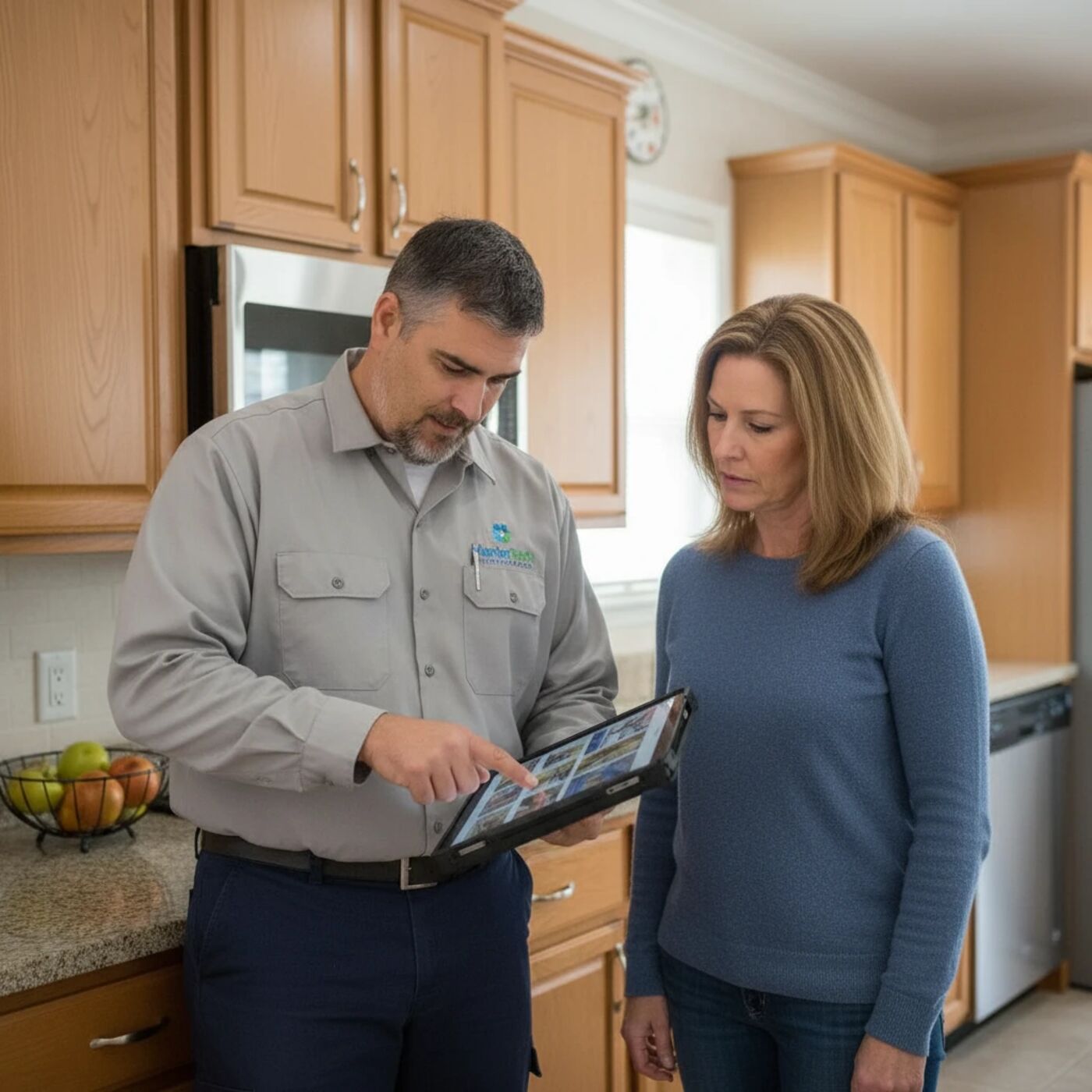
What homeowners say after an attic inspection
Rated 5.0 from 5 Google reviews.
I could not recommend this business enough for mold inspections! If you're looking for quick turnaround, great communication and honest upfront service - this is your place. Tom was respectful, professional, and explained everything in great detail.
Truly the best! I can't say enough good things about Tom. I truly feel like I had someone I could count on by my side during this very stressful situation.
We had a great experience with Tom at Mastertech throughout this whole process. They took extra time to answer all of our questions and explained everything in a way that actually made sense.
Attic mold questions
No. Some of what people photograph and send me is asphalt bleed-through from the shingle nails, and some of it is old water staining that's completely inactive. Both look alarming and neither one is growing. That's exactly the question a tape lift answers, and it's why I'd rather test than tell you over the phone.
Attic and roof-line reading
Articles from my own attic inspections around York County — frost, bath fans, roof leaks and what the sheathing actually tells you.
Attic Mold in York, PA Homes: A Practical Homeowner Guide
Roof leaks are only part of the story. Learn how condensation, exhaust ducts and air leakage can lead to attic mold — and what to check before paying for cleanup.
Read the articleRoof Leaks + Attic Mold: A Common York PA Combo
Most people rarely go in their attic - which is exactly why roof leak damage and mold growth go undetected for so long. Learn why roof leaks and attic mold are a common combination in York County homes.
Read the articleCan You Have Mold Without a Water Leak?
Yes - and it is more common than most homeowners realize. Mold needs moisture, but moisture does not have to come from a pipe burst or a roof leak. Here's every way moisture enters York County homes without a single leak occurring.
Read the articleOther pages people land on
Same approach, different corner of the problem.
Mold inspection cost in York, PA
The flat price — $450 residential, $785 commercial — what it includes, and why free inspections cost more.
Read thisMold inspector near me
What a real inspection covers, what to ask before you hire, and why free ones cost more.
Read thisMold testing near me
Air, surface and ERMI testing explained, with what each one can and can't tell you.
Read thisBasement mold testing in York, PA
Block walls, seepage and finished basements — what I find and what the readings mean.
Read thisWhere I work
I cover York and the towns around it — basically anything within about 7 miles of 2400 Taxville Rd, York, PA 17408, plus a good bit of York County beyond that. If you're close and don't see your town, call me anyway.
Based in York, not a call center
You reach me directly, and I'm the one who shows up and does the inspection. Most weeks I can be out within a couple of days, sooner if you're up against a closing date.