
Basement Mold Inspection in York, PA
Most of the mold calls I get in York County start in the basement. I come out, test it, and tell you what is actually there — I do not sell remediation, so there is nothing for me to talk you into.
- — Certified mold inspector since 2010
- — $450 residential, 4 samples included
- — Accredited independent lab analysis
- — I don't sell remediation
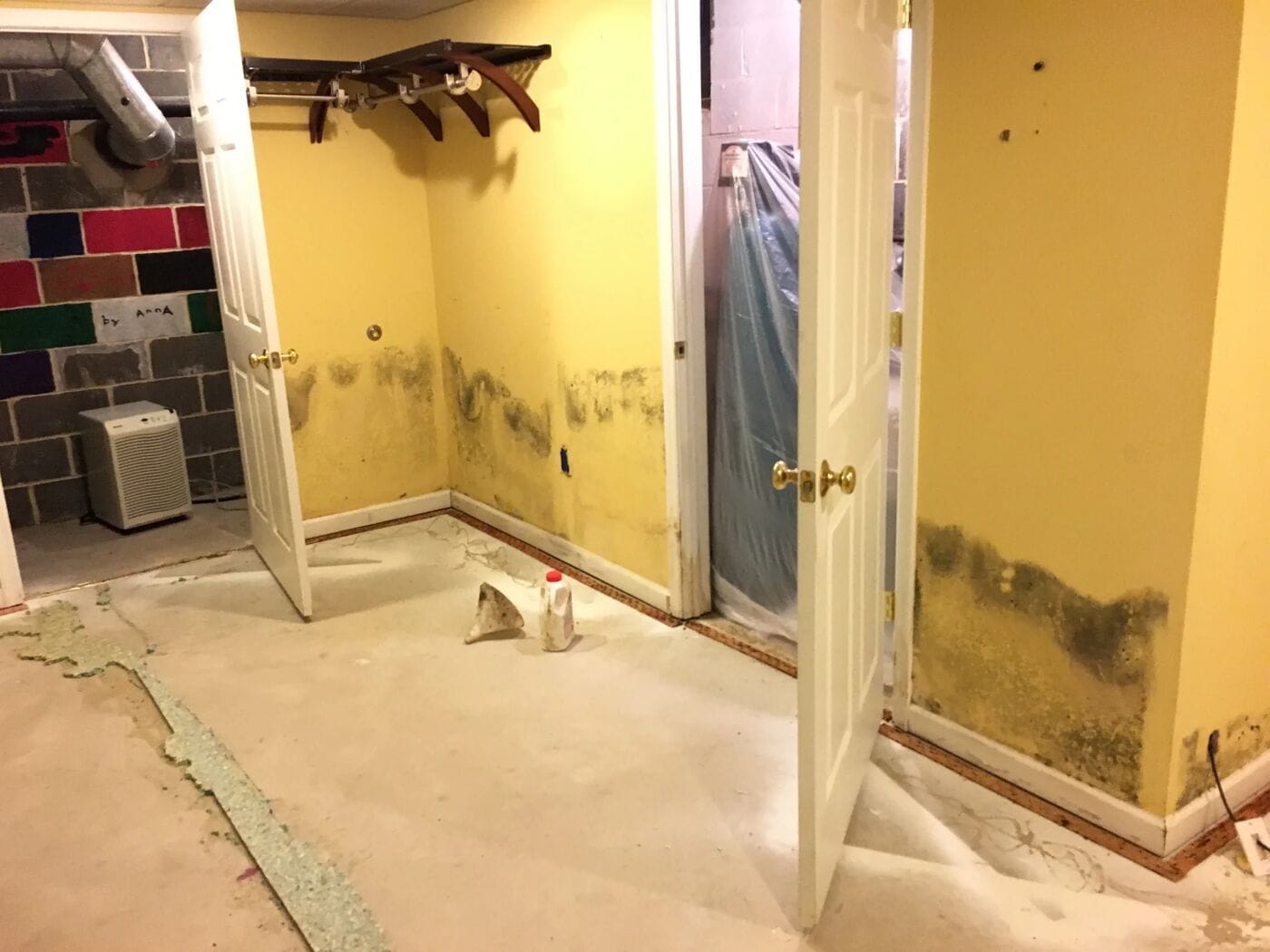
Basements are the first place mold shows up around here
Older York County homes sit on stone, block, or poured foundations that were never built to stay dry. Add a wet spring, a downspout dumping next to the wall, and a basement that runs cool all summer, and you have the conditions mold needs. It does not take a flood.
Sometimes you can see it — dark spotting on the block, fuzzy growth on stored cardboard, a white bloom on the joists. Sometimes all you get is that damp smell when you open the basement door. Either way, guessing costs you more than testing does.
My job is to find where the moisture is coming from, sample the air and the surfaces, and send it to an accredited lab. You get a written report in one to two business days with photos, moisture readings, and lab numbers you can hand to a contractor.
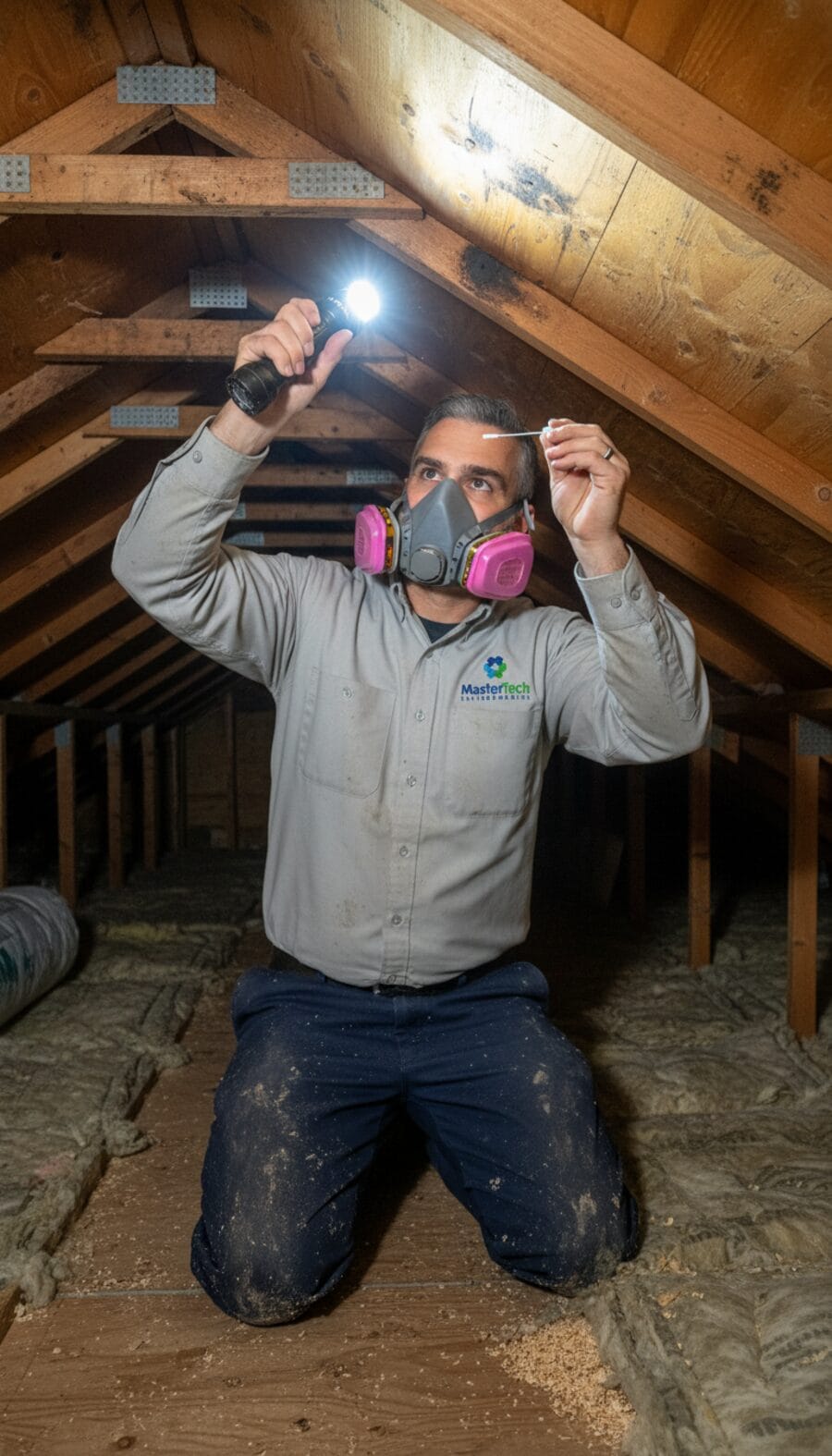
Tell me what's going on and I'll come back with details and pricing.
Signs you may have mold in your basement
Any one of these is worth a look. Two or three together, and you probably already know the answer.
- A musty or earthy smell that hits you at the bottom of the stairs
- Dark speckling or streaking on block, stone, or poured concrete walls
- White, gray, or green fuzz on joists, subfloor, or framing
- Efflorescence — that chalky white crust — showing where water moves through the wall
- Water staining along the bottom of drywall or at the base of finished walls
- Cupping, buckling, or peeling flooring and baseboard
- Stored boxes, books, or furniture that smell musty after a season downstairs
- Allergy symptoms that get worse when you spend time in the basement
- A sump pump that runs constantly, or one that failed and nobody caught it
- Condensation on ductwork, pipes, or windows through the summer
Why basements grow mold
Mold is a moisture problem. Find the moisture and you know why the mold is there.
Water coming through the foundation
Hydrostatic pressure pushes water through block and stone walls and up through the slab. You often see it first as staining or efflorescence at floor level.
Grading and gutters
Downspouts that discharge next to the wall or a yard that slopes back toward the house put roof water right where you do not want it.
High humidity in summer
Warm, wet outside air hits cool basement surfaces and condenses. Above 60% relative humidity, mold does not need a leak at all.
Plumbing and appliance leaks
A slow supply-line drip behind a wall or under a laundry sink can feed growth for months before anything looks wrong.
Finished basements
Drywall, framing, carpet, and insulation against a foundation wall hide moisture and give mold something to eat. Most of what I find in finished basements is behind the finish.
No air movement
Closed-off storage rooms, behind-the-stairs spaces, and corners stacked with boxes stay damp longer than the rest of the basement.
What happens during the inspection
We talk first
What you smell, what you see, how long it has been going on, whether the basement has ever taken water. That shapes where I spend my time.
Walk the outside
Grading, downspouts, window wells, and anywhere the ground sends water toward the foundation.
Full visual of the basement
Everything accessible, including behind stored items where I can get to it safely.
Readings and imaging
Moisture meter, hygrometer, and thermal camera to map where things are wet and how humid the space runs.
Sampling
Air and surface samples where the findings call for them, plus an outdoor control sample for comparison.
Report and a phone call
Written report in one to two business days, then I call and go through it with you in plain language.
Health complaints I hear about basement mold
I am an inspector, not a doctor, so I will not tell you what mold is doing to your health. What I can tell you is what people describe to me: stuffy nose, itchy eyes, coughing, and headaches that ease up when they leave the house. People with asthma or allergies usually notice it first.
Basement air does not stay in the basement. The stack effect pulls it upstairs through joist bays, stair openings, and mechanical chases, so a basement problem can show up as an air quality problem in your living room. Testing tells you whether that is what is happening.
Whole-Home Indoor Air Quality Testing from the Basement Up
Basements are where humidity, dust and weak ventilation stack up, and coarse readings there can include biological particulate along with ordinary dust. Testing the basement next to the first-floor rooms shows whether it stands out from the rest of the house — extra clues beyond what mold sampling covers on its own. If the humidity runs high, why York County basements trap moisture explains what's usually behind it.
- PM1.0
- PM2.5
- PM10
- CO2
- TVOC
- Formaldehyde screening
- Relative humidity
- Temperature
Particle readings point to common household sources consistent with the particle-size pattern observed. They don't identify a particle as mold, dust, pollen or pet dander.
Learn More About Indoor Air Quality TestingWhat a mold inspection costs in York, PA
Flat pricing, nothing hidden. Extra samples beyond the 4 included are $85 each. Lab results come back in 1-2 business days.
- Visual inspection of the areas of concern
- Thermal imaging
- Moisture meter readings
- 4 air or surface samples
- Accredited independent lab analysis
- Written report with photos and readings
- Phone walkthrough of the results
Covers properties or inspected areas up to approximately 2,500 sq ft. Larger properties may need more inspection time, more areas or more sampling, so the price can go up — I'll tell you the number before I come out.
Schedule a residential inspection- Visual inspection of the areas of concern
- Thermal imaging
- Moisture meter readings
- 4 air or surface samples
- Accredited independent lab analysis
- Written report with photos and readings
- Phone walkthrough of the results
Covers the extra reporting and square footage that comes with commercial buildings. Additional samples $85 each.
Schedule a commercial inspectionSee the report before you hire me
The inspection is only worth as much as the paperwork you're left holding. Mine lays out what I looked at, what I found, what the lab said, and what should happen next — in language you can hand to a contractor, a landlord, or a realtor.
- Inspection summary
- Lab sample results
- Moisture readings
- Area-by-area notes
- Photos of findings
- Recommendations
- Limitations
- Next steps
What people say after an inspection
Rated 5.0 from 5 Google reviews.
I could not recommend this business enough for mold inspections! If you're looking for quick turnaround, great communication and honest upfront service - this is your place. Tom was respectful, professional, and explained everything in great detail.
Truly the best! I can't say enough good things about Tom. I truly feel like I had someone I could count on by my side during this very stressful situation.
We had a great experience with Tom at Mastertech throughout this whole process. They took extra time to answer all of our questions and explained everything in a way that actually made sense.
Basement Mold Inspection questions
$450 for a residential inspection with four samples included. Extra samples are $85 each. Commercial buildings start at $785 with four samples. If your home is over about 2,500 square feet, I'll quote it before I come out — no surprises when I get there.
Other inspections that might apply
Crawl Space Mold Inspection
Joists, subfloor, vapor barrier and foundation walls in the space nobody looks at.
Learn moreAttic Mold Inspection
Roof sheathing, rafters, bath fan venting and attic ventilation problems.
Learn moreReal Estate Mold Inspection
Pre-purchase and pre-listing testing with a report in 1-2 business days.
Learn moreBasement mold testing in York, PA
Block walls, seepage and finished basements — what I find and what the readings mean.
Reading on basement mold inspections
Articles and guides from my own inspections, on exactly this part of the house.
Basement Mold in York, PA: What You Need to Know
York, PA — Basement Mold Resource
Read the articleFall Drainage Issues & Foundation Moisture
Fall is when drainage problems become mold problems. Clogged gutters, saturated soil, and heavy autumn rains drive moisture into basements and crawl spaces just as temperatures create ideal mold growth conditions. Here's what to do before winter arrives.
Read the articleSpring Snow Melt & Basement Moisture in York County
Every spring, York County homeowners face the same risk: rapid snowmelt saturates the soil, overwhelms drainage systems, and drives moisture into basements and crawl spaces. Here's what to watch for and exactly how to protect your home before mold takes hold.
Read the articleWhere I work
I cover York and the towns around it — basically anything within about 7 miles of 2400 Taxville Rd, York, PA 17408, plus a good bit of York County beyond that. If you're close and don't see your town, call me anyway.
Based in York, not a call center
You reach me directly, and I'm the one who shows up and does the inspection. Most weeks I can be out within a couple of days, sooner if you're up against a closing date.