Bathroom Mold Inspection in York, PA
Bathroom Mold Inspections in York, PA
Certified bathroom mold inspection for York County homes. We find mold behind tiles, inside walls, and under floors - using moisture meters, thermal imaging, and accredited lab testing to give you real answers.
Why Bathrooms Are High-Risk for Mold
Bathrooms Are the Most Common Location for Mold in York County Homes
Bathrooms introduce moisture every single day - through showers, baths, and condensation - and they often don't dry out as fast as they should. Most bathroom mold problems don't come from one dramatic event. They build slowly, from normal daily use combined with conditions that prevent the space from fully drying between uses.
Mold can hide behind tiles, inside wall cavities, and under flooring long before it is visible on the surface. By the time you see it, it has often been developing for weeks or months. And because bathrooms are cleaned frequently, surface mold is often wiped away repeatedly without addressing the conditions that caused it.
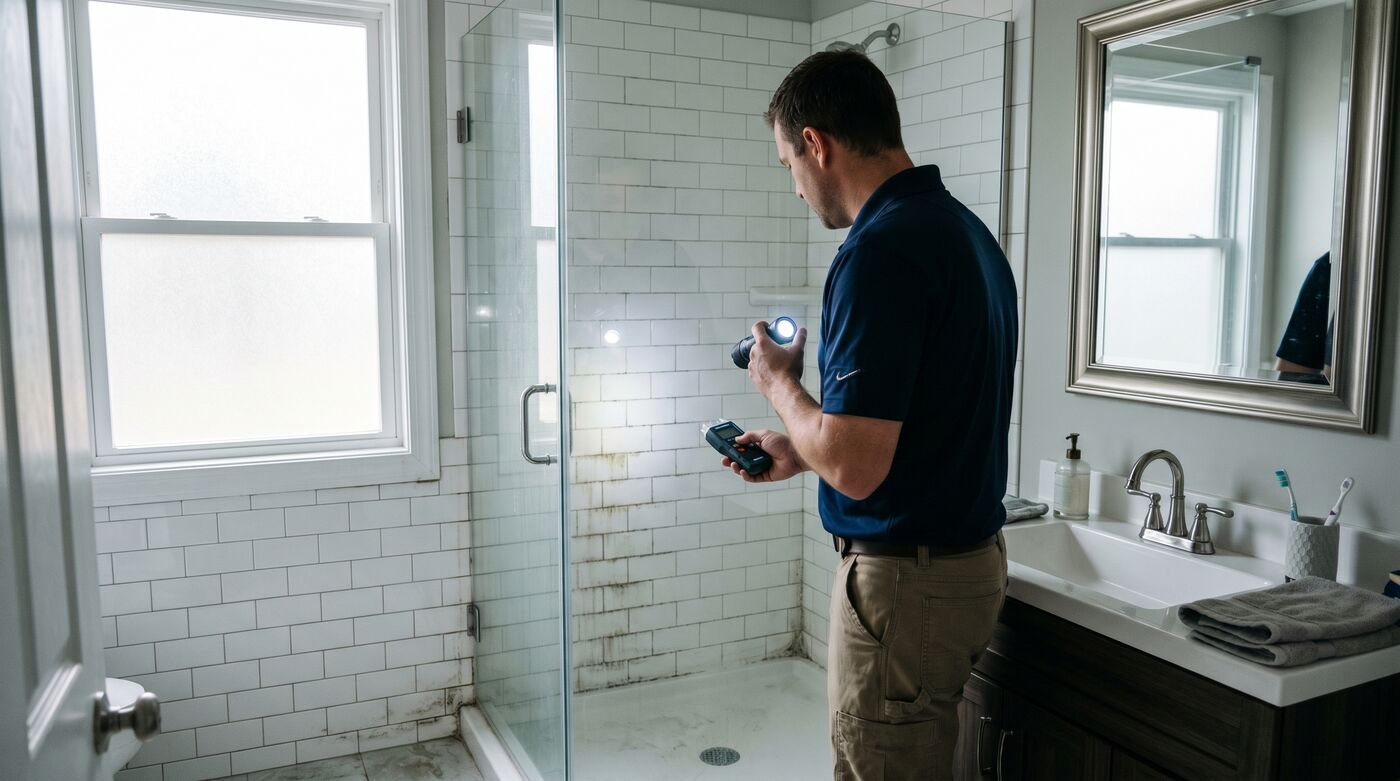
At Mastertech Environmental of York, we perform thorough bathroom mold inspections using calibrated moisture meters, thermal imaging, and accredited laboratory testing. We find mold where it hides, identify the moisture source feeding it, and give you a clear written report - so you know exactly what you're dealing with and what needs to happen next.

8,000+
inspections completed in York County, PA
Warning Signs
Signs You May Have Mold in Your Bathroom
Bathroom mold is often more widespread than the visible surface suggests. By the time staining or odor is obvious, mold may already be growing inside wall cavities or beneath the floor. These are the most common warning signs that warrant a professional inspection:
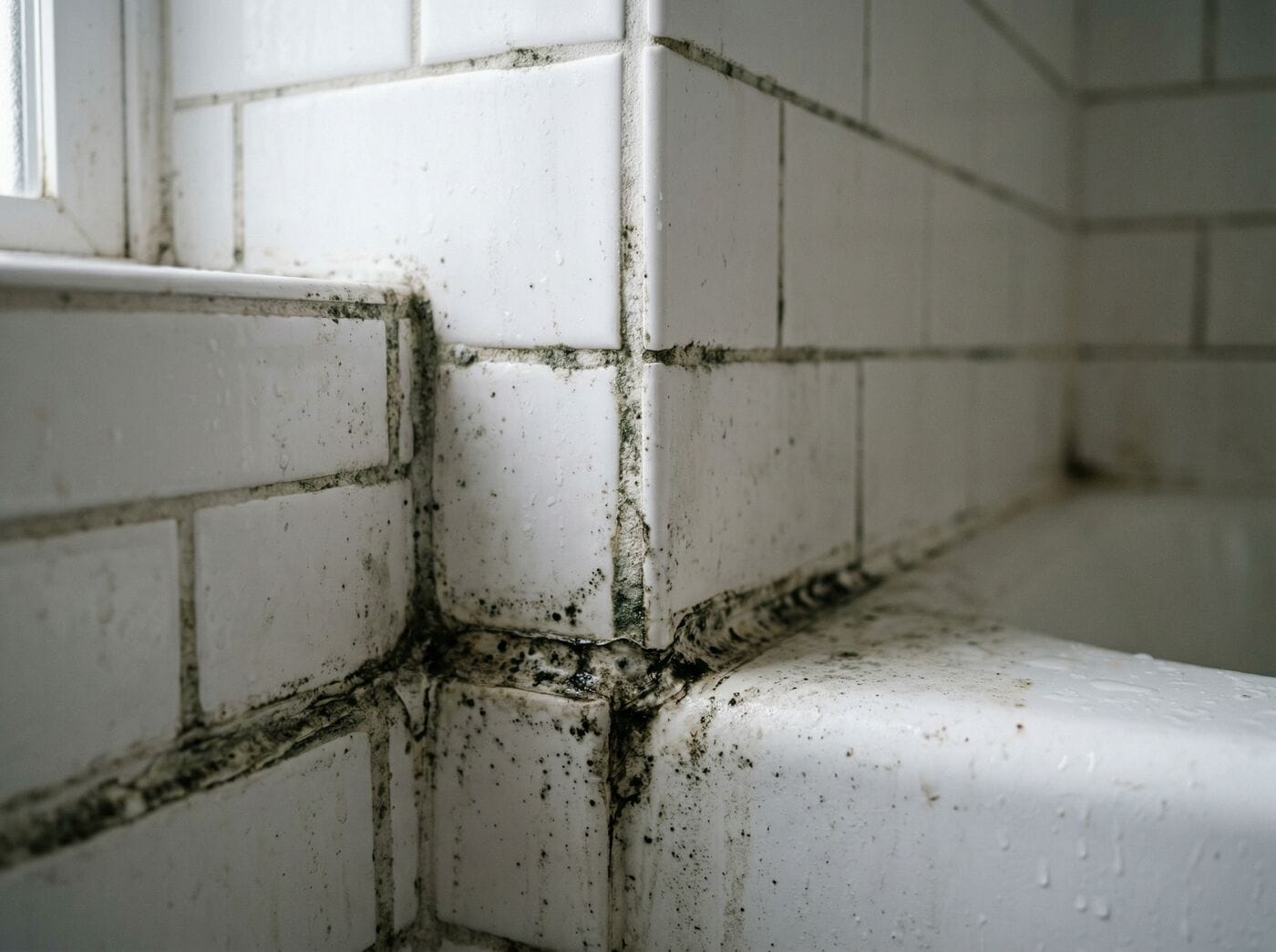
- Dark gray, green, or black discoloration on grout lines that keeps returning after cleaning
- Musty or earthy odor that lingers in the bathroom even after it has dried out
- Soft, spongy, or discolored drywall near the tub, shower, or toilet base
- Peeling, bubbling, or blistering paint on walls or ceiling near the shower
- Staining or discoloration on the ceiling directly above the shower or tub
- Visible mold growth inside the exhaust fan housing or on the fan grille
- Dark spotting or staining on the back wall or floor of the vanity cabinet
- Water stains or discoloration on the floor around the toilet base
- Recurring mold that returns within weeks of cleaning or bleaching
- Respiratory symptoms - coughing, sneezing, or irritation - that improve when you leave the bathroom
Important: Recurring mold that returns within weeks of cleaning is almost always a sign that the underlying moisture conditions have not been addressed. Surface treatment alone does not solve a bathroom mold problem.

Moisture damage and mold staining inside a bathroom vanity cabinet - a common finding during bathroom mold inspections that is invisible until the cabinet doors are opened.
Root Causes
Why Bathrooms Are Prone to Mold Growth
Understanding why bathrooms develop mold helps explain why professional inspection with the right equipment is essential - and why cleaning the surface alone rarely solves the problem long-term.
Daily Steam from Showers and Baths
Every shower introduces a significant volume of warm, humid air into a small enclosed space. Without adequate ventilation, this moisture condenses on cooler surfaces - walls, ceilings, grout lines, and caulk - and never fully dries between uses. Over weeks and months, this repeated moisture exposure creates ideal conditions for mold colonization.
Inadequate or Failing Exhaust Ventilation
Bathroom exhaust fans are the primary defense against moisture accumulation. Undersized fans, fans with clogged grilles, fans that terminate in the attic or wall cavity instead of outside, and fans that occupants simply do not run long enough all contribute to chronic moisture buildup in bathroom air and on surfaces.
Slow Plumbing Leaks Behind Walls
Supply line connections, drain fittings, and shower valve bodies that develop slow leaks can deposit moisture inside wall cavities for months or years before any visible sign appears at the surface. By the time staining or odor is noticed, mold may already be extensive on drywall and structural framing behind the tile.
Condensation on Cool Surfaces
Tile, porcelain, and drywall surfaces in bathrooms are often cooler than the humid air inside the room after a shower. Warm moist air contacting these cool surfaces deposits moisture directly onto them - feeding mold growth even when there is no plumbing leak and even when the exhaust fan is running.
Grout and Caulk Degradation
Grout and caulk are porous materials that absorb moisture with every use. As they age, crack, or lose adhesion, they allow water to penetrate behind tile surfaces and into wall cavities. Failed caulk at the tub-to-wall joint is one of the most common entry points for water intrusion into bathroom wall framing.
Subfloor Moisture from Toilet and Tub
Toilet wax ring failures, slow tub drain leaks, and grout failures on shower floors allow water to reach the subfloor and floor joists below the bathroom. This type of moisture intrusion is often completely invisible from the surface and is only detectable with moisture meters and thermal imaging from below.
What's Included
What's Included in Every Bathroom Mold Inspection
Our bathroom mold inspections are comprehensive - covering visual assessment, moisture measurement, thermal imaging, ventilation evaluation, and laboratory testing when needed.
Full Visual Inspection of All Accessible Areas
We inspect every accessible area of the bathroom: shower enclosure, tub surround, tile grout and caulk lines, ceiling, walls near fixtures, vanity cabinet interior, under-sink plumbing area, toilet base, exhaust fan, and any visible drywall. All visible staining, discoloration, and growth is documented with photographs.
Moisture Meter Testing on Walls and Floors
Calibrated moisture meters measure moisture content in drywall, subfloor, and structural materials at multiple locations throughout the bathroom. Elevated readings behind tile walls, beneath flooring, and inside vanity cabinets reveal hidden moisture that feeds mold growth long before it becomes visible.
Thermal Imaging for Hidden Moisture
Infrared thermal imaging cameras detect hidden moisture pockets behind tile walls, under flooring, and inside wall cavities. Thermal imaging reveals slow plumbing leaks, condensation zones, and moisture pathways that are completely invisible to the naked eye - and to moisture meters alone.
Air and Surface Sampling
Air samples may be collected inside the bathroom and compared to outdoor baseline levels to quantify mold spore concentrations. Surface samples are taken from suspect staining on grout, caulk, drywall, or wood to confirm mold species and contamination. All samples are analyzed by an accredited independent laboratory.
Exhaust Fan and Ventilation Assessment
We evaluate the performance of the bathroom exhaust fan, check for proper termination outside the home, and assess whether the fan has adequate capacity for the room size. Undersized or failing exhaust fans are one of the most common contributors to bathroom mold problems.
Detailed Written Report
A comprehensive written report is delivered within 1-2 business days documenting all findings: photographs, moisture meter readings, thermal images, lab results, and a plain-English explanation of what was found and what needs to be addressed. Reports are accepted by contractors, insurance companies, and real estate transactions.
Why Thermal Imaging Matters in Bathroom Inspections
The most significant mold problems in bathrooms are often the ones you cannot see. Mold growing on the back face of drywall behind tile, on wood framing inside wall cavities, and on subfloor materials beneath the floor surface produces no visible surface signs until the damage is already extensive.
Thermal imaging detects the temperature differentials caused by hidden moisture - revealing slow plumbing leaks, condensation zones, and moisture pathways inside walls and floors that would otherwise go undetected until structural damage or health symptoms force the issue. Combined with moisture meter readings, thermal imaging gives us a complete picture of what is actually happening inside your bathroom.
The Process
What to Expect During a Bathroom Mold Inspection
Here is exactly what happens from the time we arrive to the delivery of your written report.
STEP 01
Arrival and Initial Walk-Through
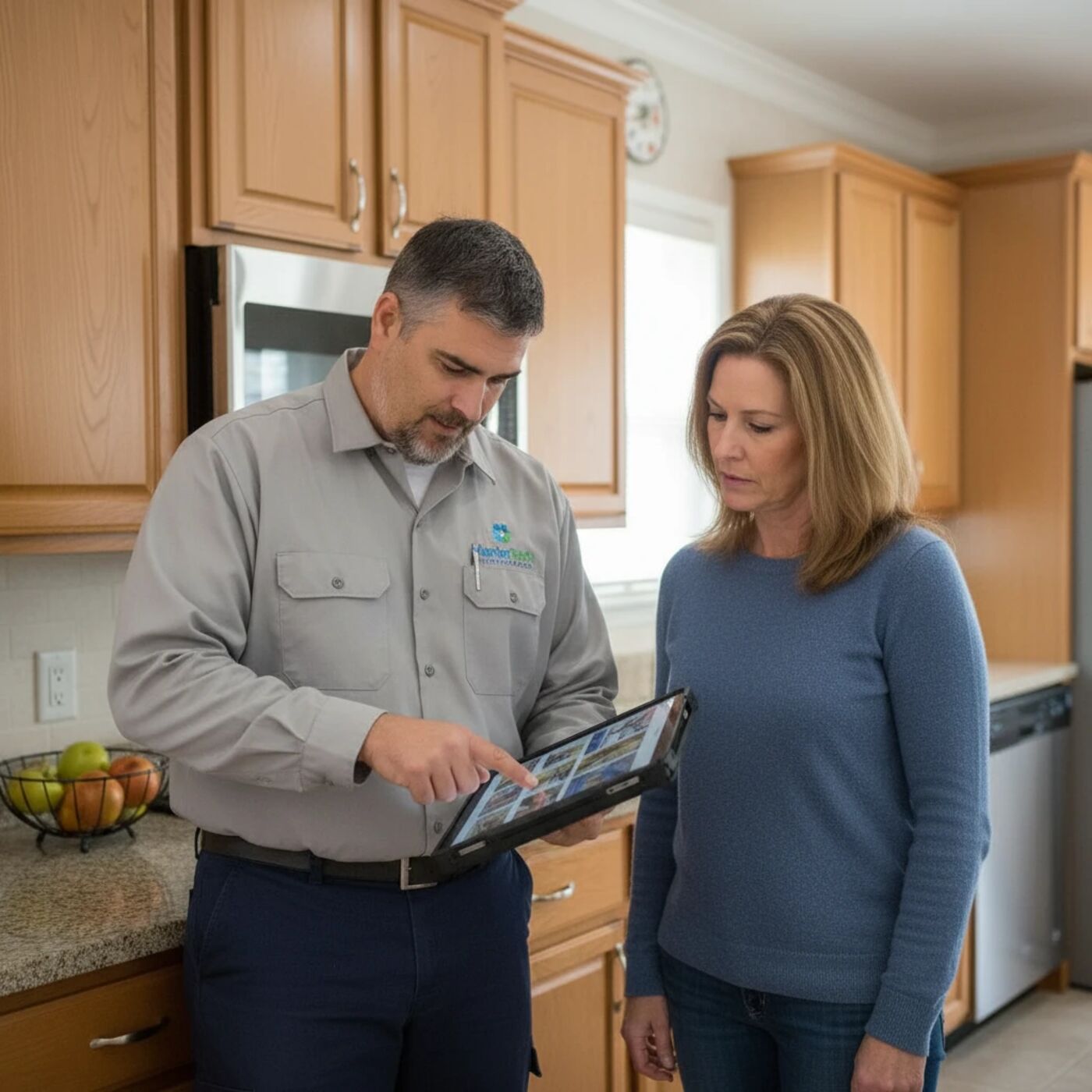
We start with a brief conversation about what you have noticed - recurring spots on grout, musty odors, past plumbing leaks, or any concerns. We review the bathroom layout and discuss any known history of water intrusion or prior cleaning attempts.
STEP 02
Full Visual Inspection
We systematically inspect every accessible area: shower enclosure and tub surround, all tile grout and caulk lines, ceiling and upper wall surfaces, vanity cabinet interior, under-sink plumbing connections, toilet base and surrounding floor, exhaust fan housing, and any visible drywall surfaces. All staining and discoloration is documented with photographs.
STEP 03
Moisture Meter Readings Throughout
Calibrated moisture meters test the moisture content of drywall behind fixtures, subfloor materials, and any accessible structural members at multiple locations. We map moisture distribution to identify the wettest zones and determine whether conditions are active or historical.
STEP 04
Thermal Imaging Scan
An infrared thermal imaging camera is used to detect temperature differentials caused by hidden moisture, active plumbing leaks, and condensation zones inside wall cavities. Thermal imaging identifies moisture sources that are not visible to the naked eye and not reachable by surface moisture meters.
STEP 05
Air and Surface Sampling (When Indicated)
If sampling is warranted based on visual findings, we collect air samples inside the bathroom and an outdoor control sample. Surface samples are taken from any suspect growth on grout, caulk, or building materials. All samples are sent to an accredited independent laboratory for analysis.
STEP 06
Report and Findings Review
A detailed written report is delivered within 1-2 business days. It includes all photographs, moisture readings, thermal images, lab results, and a plain-English explanation of findings and recommended next steps. We are available to answer your questions after delivery.
Inspection or testing - or both? In many cases, a thorough visual inspection with moisture meter readings and thermal imaging is sufficient to identify the problem and its source. Air and surface sampling is recommended when the extent of contamination is unclear, when documentation is needed for real estate or insurance, or when specific mold species identification is required. We will explain your options clearly before proceeding.

Professional Equipment
Finding Mold Where You Can't See It
A visual inspection alone is not enough for bathrooms. Moisture meters measure the actual moisture content of building materials - drywall, subfloor, framing - at multiple locations throughout the space. Elevated readings in wall materials behind a shower surround, for example, indicate active moisture intrusion that is not yet visible on the tile surface.
Thermal imaging adds another layer of diagnostic capability, detecting temperature differentials caused by moisture inside wall cavities and under floors. Together, these tools give us a complete picture of the moisture environment in your bathroom - not just what is visible from the surface.
- Calibrated moisture meters for drywall and structural materials
- Professional infrared thermal imaging camera
- Air sampling pumps and certified cassettes for lab analysis
- Surface sampling supplies for suspect growth areas
- Accredited independent laboratory for all sample analysis
Source Identification
Common Causes of Bathroom Mold in York County, PA
Identifying and correcting the moisture source is the only way to ensure mold does not return after remediation. Here are the most common causes we find during bathroom inspections in York County.
Exhaust fan undersized for bathroom square footage
Exhaust fan terminating in wall cavity or attic instead of outside
Occupants not running exhaust fan long enough after showering
Failed or cracked caulk at tub-to-wall and shower-to-floor joints
Grout that has become porous, cracked, or unsealed over time
Slow supply line or drain connection leak inside vanity cabinet
Toilet wax ring failure allowing water to reach the subfloor
Missing or failed shower pan liner allowing water to reach the subfloor
Condensation from cold water supply pipes on humid days
Inadequate insulation on exterior bathroom walls creating cold surfaces
Health Concerns
Health Effects of Bathroom Mold Exposure
Bathrooms are enclosed spaces where mold spores become concentrated in the air during and after showering. Because occupants spend time in the bathroom every single day - often breathing humid air at close proximity to mold-contaminated surfaces - health effects from bathroom mold can develop gradually without a clear cause being identified.
Health effects vary based on the type of mold present, the concentration of spores, and individual sensitivity. Children, elderly individuals, and those with asthma, allergies, or compromised immune systems are particularly vulnerable. Common symptoms associated with bathroom mold exposure include:
- Persistent nasal congestion, runny nose, or sneezing
- Coughing or throat irritation that worsens in the bathroom
- Eye redness, watering, or irritation
- Headaches that occur or worsen after showering
- Skin rashes or irritation without a clear cause
- Worsening asthma or allergy symptoms at home
- Fatigue or general malaise that improves when away from home
- Musty odors that linger on clothing or towels stored in the bathroom
Important note: If occupants experience symptoms that worsen in the bathroom or immediately after showering, or that improve when away from home, a professional bathroom mold inspection is strongly recommended regardless of whether mold is visible on the surface.
The Air Quality Connection
How Bathroom Mold Affects Air Quality Throughout Your Home
Bathroom mold does not stay contained to the bathroom. Mold spores and humid air from the bathroom can travel throughout the home through several pathways:
- Open doors allow mold-spore-laden bathroom air to enter hallways and adjacent rooms
- HVAC return air registers in or near bathrooms draw contaminated air into the duct system
- Exhaust fans that terminate in wall cavities or attics spread humid air and spores into building cavities
- Mold growing inside wall cavities shared with adjacent rooms can affect air quality in those rooms
- Towels, clothing, and bath items stored in a moldy bathroom carry spores to other areas
- Addressing bathroom mold often resolves unexplained odors and symptoms in adjacent rooms
Why Choose Us
Why Choose Mastertech Environmental of York for Bathroom Mold Inspections?
Bathroom mold inspections require experience, the right equipment, and a commitment to honest, independent findings. Here is what sets Mastertech Environmental of York apart.
17+ Years of Experience
Thousands of bathroom mold inspections completed across York County. We know exactly where mold hides in bathrooms and what conditions indicate active risk versus historical staining.
Certified Mold Inspector
Our inspector holds professional certifications in mold inspection and remediation protocols. We follow IICRC and EPA guidelines for sampling and assessment to ensure accurate, defensible findings.
Professional-Grade Equipment
We use calibrated moisture meters, professional-grade thermal imaging cameras, and certified air sampling pumps. All lab analysis is performed by accredited independent laboratories.
No Conflict of Interest
We never perform mold remediation. Our only role is independent inspection and testing. This means our findings are completely unbiased - we have no financial interest in the outcome of the inspection.
Clear, Actionable Reports
Reports include moisture readings, thermal images, lab results, photographs, and plain-English conclusions. We explain exactly what was found, what it means, and what your options are - without pressure or upselling.
Locally Owned and Operated
Based in York, PA. You deal directly with the inspector - not a call center or franchise rep. Fast scheduling, direct communication, and deep knowledge of local housing stock and bathroom conditions.
Service Coverage
Bathroom Mold Inspections Across York County, PA
We provide bathroom mold inspections throughout York County, Pennsylvania and surrounding areas. If your property is outside this list, reach out - we often cover nearby counties and can coordinate based on your location.
Schedule a Bathroom InspectionCommon Questions
Bathroom Mold Inspection FAQs
Answers to the questions York County homeowners ask most often about bathroom mold inspections.
Related Mold Inspection Services
Bathroom mold inspection is one part of a comprehensive mold and moisture assessment program. We offer a full range of services across York County, PA.
Crawl Space Mold Inspection
Certified mold inspection for crawl spaces. We assess floor joists, subfloor sheathing, vapor barriers, and foundation walls.
Learn moreBasement Mold Inspection
Certified mold inspection for both finished and unfinished basements. We find hidden mold, identify the moisture source, and give you a clear written report.
Learn moreFull Mold Inspection and Testing
Complete residential mold testing with accredited lab analysis and a detailed written report delivered within 1-2 business days.
Learn moreSchedule Your Bathroom Inspection
Don't guess what's behind your bathroom walls. Know for certain.
If you smell something musty, see recurring staining on grout or caulk, or just want peace of mind about your bathroom, call or text us at (717) 676-3574 or fill out the form below. We schedule quickly, deliver reports within 1-2 business days, and give you honest, independent findings with zero pressure.
- Certified Mold Inspector - 17+ years of experience and thousands of inspections completed.
- Behind-Tile and Wall Cavity Assessment - We find mold where it hides, not just on surfaces.
- Moisture Meters and Thermal Imaging - We find hidden moisture and mold risk without guessing.
- Locally Based - Serving York, Dallastown, Red Lion, Hanover, West Manchester, and nearby towns.
Call or Text
(717) 676-3574
Tom@mastertechyork.com
Location
York, Pennsylvania 17408
Mon-Fri 9:00am to 5:00pm
Schedule a Bathroom Mold Inspection
Call (717) 676-3574 or fill out the form below to get started.