
Invasive Mold Inspection & Wall Cavity Testing in York, PA
Sometimes the finished side of a wall looks completely normal even though there was a leak behind it. A plumbing problem, roof leak, flooding or an old water loss can leave questions that a fresh coat of paint and a dry moisture reading do not answer. A regular, non-invasive mold inspection can tell us a lot, and that is usually where I start. But when the history or inspection findings point to a particular concealed area, looking inside that wall or ceiling cavity may be the reasonable next step. I use small access openings to evaluate selected cavities, document what is there and collect mold samples when they will help answer the question. This is targeted investigation—not a reason to start opening every wall in the house.
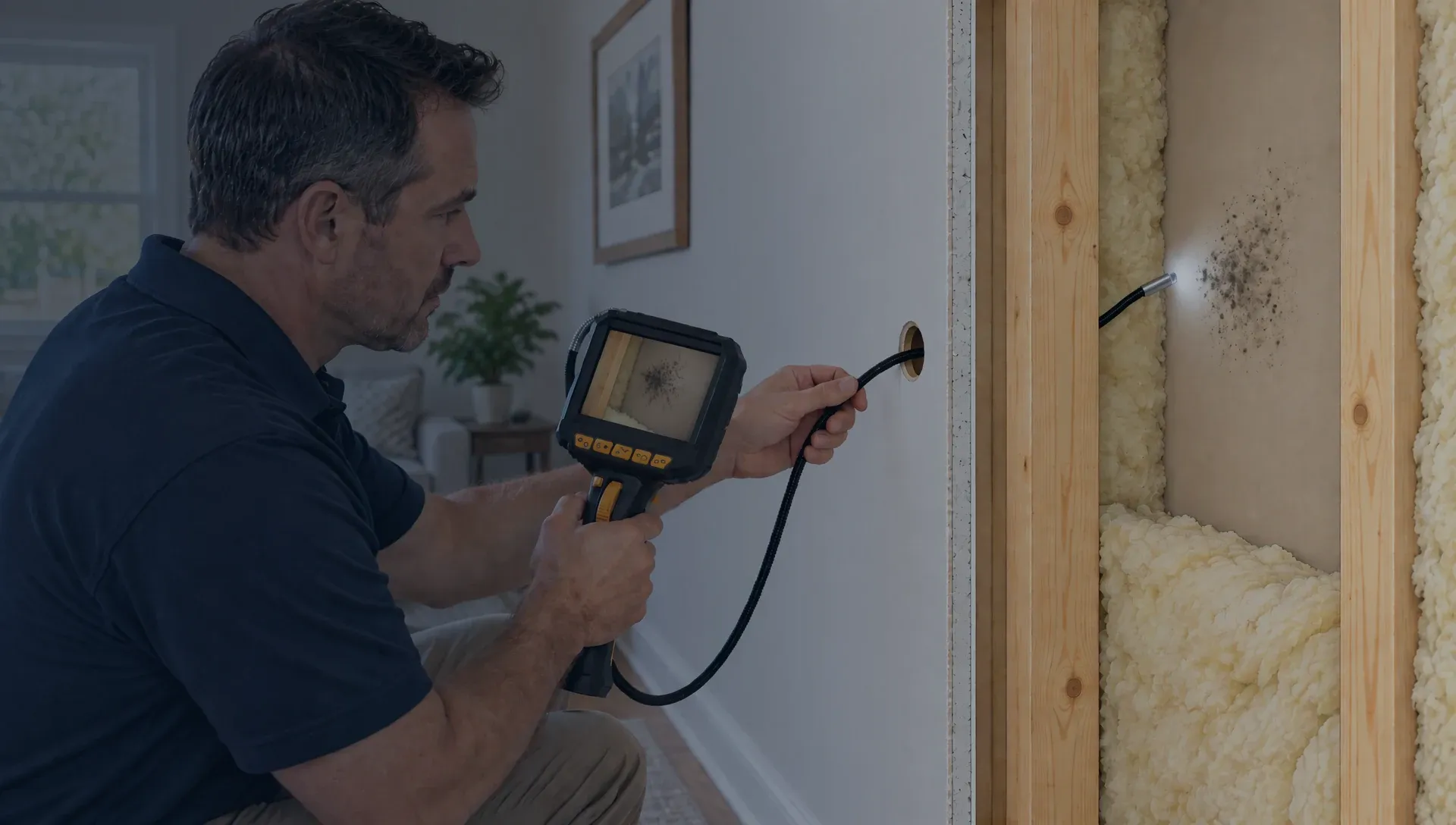
AI explanatory illustration with a side cutaway—not an actual inspection photo or a portrait of Tom. The cutaway shows a cavity that would normally be concealed.
When Does It Make Sense to Look Inside the Wall?
I recommend looking inside a wall because there is a specific question to answer, not because mold could theoretically be behind any finished surface. The starting point is what happened in the building, where the water went and what the regular inspection tells us. A leak near a bathroom, for example, gives us a much better reason to investigate that cavity than a general worry about the whole house.
The examples below are reasons to consider it, not an automatic requirement to make an opening. I want to know when the problem happened, how long it lasted, what was removed and what was left in place. Photos from the original water loss, drying records and the history of repairs can help narrow down the area. Walls or ceilings replaced after a water loss, or a previous remediation project with unanswered questions, may also deserve a closer look.
Drywall can test completely dry today even though moisture was present inside the cavity months or years ago. A dry reading tells us about the material at the time of the inspection. It does not tell us that an old leak never reached the back of the drywall or that concealed materials were properly addressed. That distinction is often the reason targeted access makes sense.
Reasons to consider targeted access
- Previous plumbing, dishwasher or refrigerator leaks
- Roof leaks or long-term bathroom leaks
- Flooding, water damage or basement water intrusion
- Previous mold remediation or repairs after a water loss
- Musty odors without an obvious visible source
- Mold sampling findings that justify a closer look
- An area that had significant moisture in the past but is dry now
The history and inspection findings determine whether an opening will actually help.
How an Invasive Mold Inspection Works
First I review the areas of concern, the history of leaks or moisture problems and the findings from the regular mold inspection. I use that information to identify which wall or ceiling cavities would be useful to investigate. We discuss the purpose of each location before anybody opens anything, so you understand what question we are trying to answer.
MasterTech does not cut the openings. The property owner arranges for a contractor, handyman, maintenance person or another appropriate person of their choosing to create access. I identify the area or cavity to investigate—not the exact safe penetration point. The person making the opening is responsible for choosing that point and checking for wiring, plumbing, framing and other concealed building components. Do not assume that a marked area is a clearance to drill or cut.
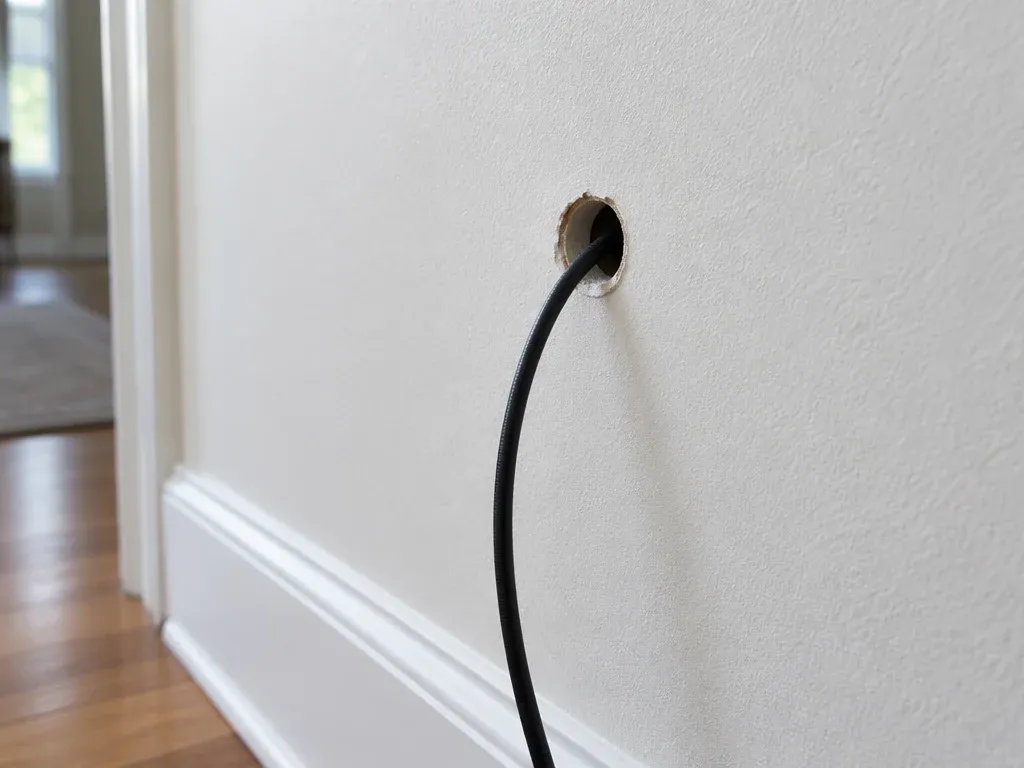
Most openings only need to be approximately 1–2 inches. Once suitable access is available, I can use a borescope to see portions of the cavity that are not visible from the room. The methods below are selected for the conditions and the question being investigated; every cavity does not need every kind of test. Samples are collected when they provide useful information, not simply to use up an allowance.
I document the accessible conditions with photographs and relevant readings, arrange laboratory analysis of collected samples and incorporate the findings into the inspection report. The report explains what was evaluated, what the findings mean and any limits caused by insulation, framing or other obstructions. A small opening does not provide an unrestricted view of everything inside a wall.
What the investigation may include
- Visual and borescope inspection of the accessible cavity
- Moisture testing where applicable
- Cavity air sampling when appropriate
- Swab or tape-lift sampling when appropriate
- Photographs of concealed conditions
- Laboratory analysis when samples are collected
What If Mold Is Found When the Wall Is Opened?
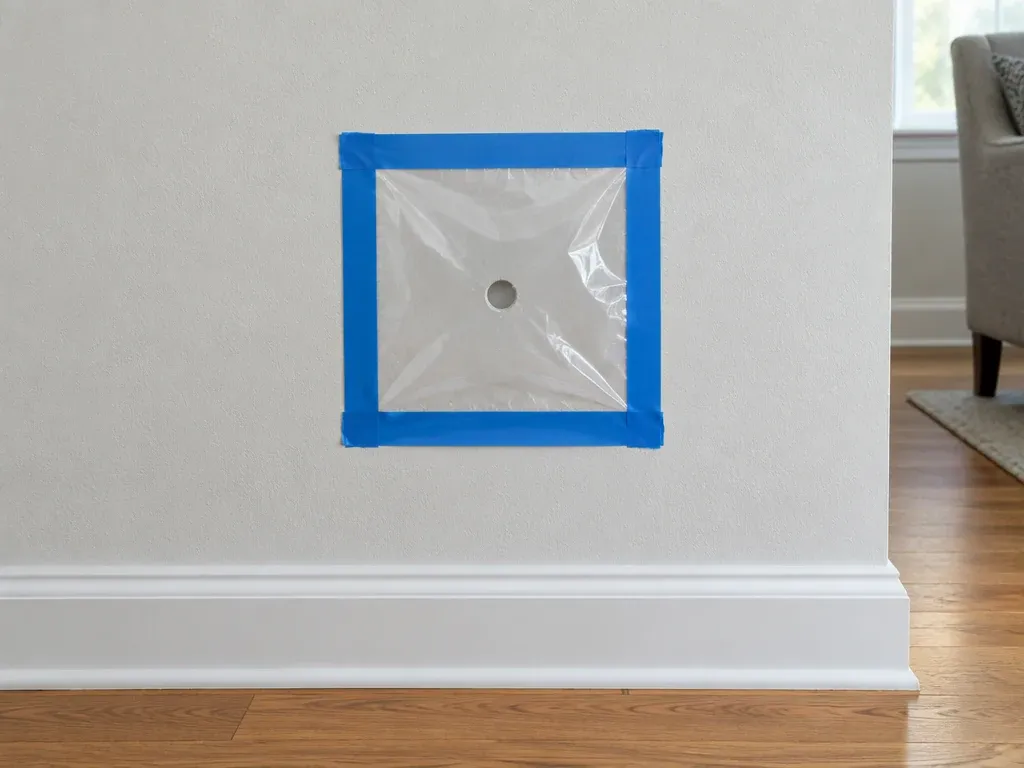
If obvious or significant suspected mold growth is encountered while an opening is being created, stop. Do not keep enlarging the opening to see how far it goes. Temporarily cover the opening with plastic and tape around the perimeter. The material should not be scraped, wiped, vacuumed or unnecessarily disturbed while we work out the next step.
Let me evaluate the condition before the work continues. Depending on what is visible, the history and the surrounding areas, additional investigation may still be useful—or professional mold remediation may be the appropriate next step. Finding visible growth can change the plan; there is no need to finish a predetermined list of holes just because we originally discussed it.
The purpose is to obtain enough useful information to make a reasonable decision. It is not to keep opening walls until every concealed condition has been exposed. A temporary cover keeps the opening covered while the findings and next steps are considered; it is not remediation or a permanent repair.
Invasive Mold Inspection Pricing
Targeted cavity evaluation, documentation and interpretation. Openings and repairs are arranged separately by the owner.
Minimum invasive mold investigation
- Up to 2 concealed-cavity investigation locations
- Up to 2 mold samples when sampling is warranted
- Visual / borescope evaluation
- Relevant moisture evaluation
- Photographic documentation
- Laboratory analysis of collected samples
- Findings and recommendations in the inspection report
Additional investigation locations
Evaluation of that cavity and one mold sample when appropriate. Standard scope is up to 8 investigation locations.
Additional same-location samples
When another mold sample is warranted from the same investigation location.
The $295 minimum covers a targeted invasive investigation with up to two locations and up to two mold samples when sampling is warranted. It is not a promise to collect samples that would add nothing to the findings. Each additional investigation location is $115 and includes evaluation of that cavity plus one sample when appropriate. Standard scope is up to eight locations.
If a second or other additional sample is warranted from the same location, it is $85 per additional sample. That is different from adding another cavity. We discuss the investigation locations and any additional sampling before proceeding so you know what work is being added and what it costs.
You are not simply paying for a laboratory sample. Each location takes inspection time, photographs, documentation and professional interpretation of the conditions. Collected samples also require review of the laboratory findings and incorporation into the overall inspection report. Those pieces are what make the information useful.
These are the invasive-investigation charges, separate from regular mold inspection pricing. They do not include creating the openings or repairing the finishes afterward. Access arrangements and any work by your contractor are the property owner's responsibility.
Existing Mold Inspection Clients
If access openings are already available during the original mold inspection, concealed-cavity investigation locations can generally be added for $115 per location.
If I must return to the property specifically for an invasive investigation, the $295 minimum applies.
These arrangements cover the cavity investigation—not creating or repairing the opening.
Who Makes the Openings?
MasterTech does not cut drywall, plaster or paneling. The property owner is responsible for arranging suitable access through a contractor, handyman, maintenance person or another appropriate person. That person is responsible for the exact safe penetration point and checking concealed building components before creating the opening. I can identify the cavity we need to evaluate, but I do not clear a particular spot as safe to cut.
If you are a tenant, buyer, property manager or anyone other than the property owner, written authorization from the owner is required before invasive inspection is performed. Access and permission need to be worked out before the investigation, not after a hole has been made.
MasterTech does not provide drywall or plaster repair, painting, texture matching or reconstruction. Openings can remain temporarily covered until the findings and next steps are known. Arrange any permanent repair separately, and avoid closing an area that may need further evaluation or remediation before that work is complete.
Not Every Wall or Ceiling Should Be Opened
Invasive inspection is generally intended for finished materials such as drywall, plaster and wood paneling. That does not mean every material is appropriate to disturb. In older homes—or whenever the materials raise a reasonable concern—I may recommend against opening an area because of possible asbestos, lead-based paint or another hazardous building material.
Mold inspection does not include asbestos or lead testing. Appearance alone is not a clearance to disturb a material. Additional testing or evaluation may be needed before access is created. It is better to resolve that question first than to make an opening and discover afterward that the material should have been left alone.
Finding Mold in One Wall Doesn't Automatically Mean It's Everywhere
A finding inside one cavity tells us about that particular area. It could be an isolated condition left by an old leak, or it could be part of a larger moisture problem. We have to interpret it alongside the building history, moisture findings, nearby areas, laboratory results and previous water damage or repairs. The location and the pattern matter as much as the fact that something was found.
A problem behind the dishwasher does not automatically mean every bedroom wall has the same condition. It also should not be dismissed without considering where the water may have traveled. The report puts the finding in that context and explains whether more investigation is reasonable.
The reverse is important, too: a normal sample from one cavity does not prove that every concealed wall or ceiling cavity is mold-free. Sampling and the view through a small opening both have limits. This service evaluates selected locations; it does not certify all concealed spaces in the house.
What About Health Symptoms?
Mold inspection and testing can help determine whether an indoor mold condition is present and document the conditions found. An inspection cannot determine whether mold is causing an individual's symptoms. A laboratory result does not make that medical connection either.
Discuss health concerns with an appropriate medical professional. My role is to evaluate the building, explain the findings and provide useful information about the areas inspected. You can share the report with your medical professional, but it is a building assessment—not a diagnosis or an assessment of your personal health.
If We Find a Condition That Needs Remediation
MasterTech of York performs inspection and testing only. I do not sell the mold remediation work. If the findings warrant remediation, I can explain what needs to be addressed and provide recommendations or a written remediation scope when appropriate. The moisture source and affected materials need to be considered together; a lab result by itself is not a repair plan.
After a separate remediation contractor finishes, I can perform independent Post-Remediation Verification (PRV) before walls or ceilings are reconstructed. That gives us an opportunity to evaluate the accessible cleaned area and determine whether the agreed verification criteria have been met before new finishes hide the structure again.
With concealed mold, timing matters. Once new drywall is installed, the cleaned framing and other concealed surfaces are no longer visible. Discuss verification while the remediation work is being planned so inspection and any appropriate testing can happen before reconstruction. PRV is a separate service, not a reason to close the wall before the work has been evaluated.
Most Mold Inspections Don't Need Holes in the Walls
Most mold inspections do not require invasive investigation. If I can answer the important questions through visual inspection, moisture testing, thermal imaging, normal mold sampling and the history of the property, there is no reason to start opening walls. A musty smell or an old leak is a reason to assess the building, not an automatic reason to cut into it.
The regular inspection helps us decide whether there is a legitimate unanswered question about a particular concealed area. Invasive investigation is recommended when that question cannot reasonably be answered from the finished surface and the information inside would help decide what to do next.
This is diagnostic work, not something I try to add to every inspection. Tell me what happened, what has already been repaired and what you still need to know. If a regular inspection is the sensible first step, I will say so. If targeted access would be useful, I will explain why and which areas make sense to investigate.
Where I work
I cover York and the towns around it — basically anything within about 7 miles of 2400 Taxville Rd, York, PA 17408, plus a good bit of York County beyond that. If you're close and don't see your town, call me anyway.
Based in York, not a call center
You reach me directly, and I'm the one who shows up and does the inspection. Most weeks I can be out within a couple of days, sooner if you're up against a closing date.
Not Sure If an Invasive Inspection Makes Sense?
Tell me what happened and what you still need to know.
A previous leak, old water loss, repairs, past remediation, unusual mold results or a musty odor can all be useful starting points. Include the location, when it happened and what work has already been done. Photos or earlier reports can help explain the concern.
I can determine whether a regular mold inspection should come first or whether targeted invasive investigation makes sense. Please do not arrange openings before we have discussed the areas, access and any material concerns.