
Mold inspection and testing in Tyler Run, PA
Tyler Run is a small pocket a few miles south of downtown York, and it's defined by one thing: the slope. Houses here are built into a hillside, which means walkout basements, retaining walls, terraced yards and storm water that crosses your property on its way to the creek. Almost every mold problem I find in Tyler Run traces back to water moving across the ground rather than a leak inside the house. I measure where it goes and put it in writing.
- — CMI certified, PMII, since 2010
- — $450 flat, 4 samples included
- — The lot gets inspected, not just the basement
- — Report in 1-2 business days
Why hillside houses in Tyler Run get wet basements
On a slope, your foundation is downhill from everyone else's rain. That single fact drives most of what I find here.
Tyler Run is small — a couple of thousand people on the hills south of the city, usually spoken about together with Queens Gate next door. The housing goes back to around the 1940s in places, with later building filling in around it, so you'll find a wartime-era house and a 1980s one on the same street. But the age of the house matters less here than almost anywhere else I work, because the dominant variable is the topography.
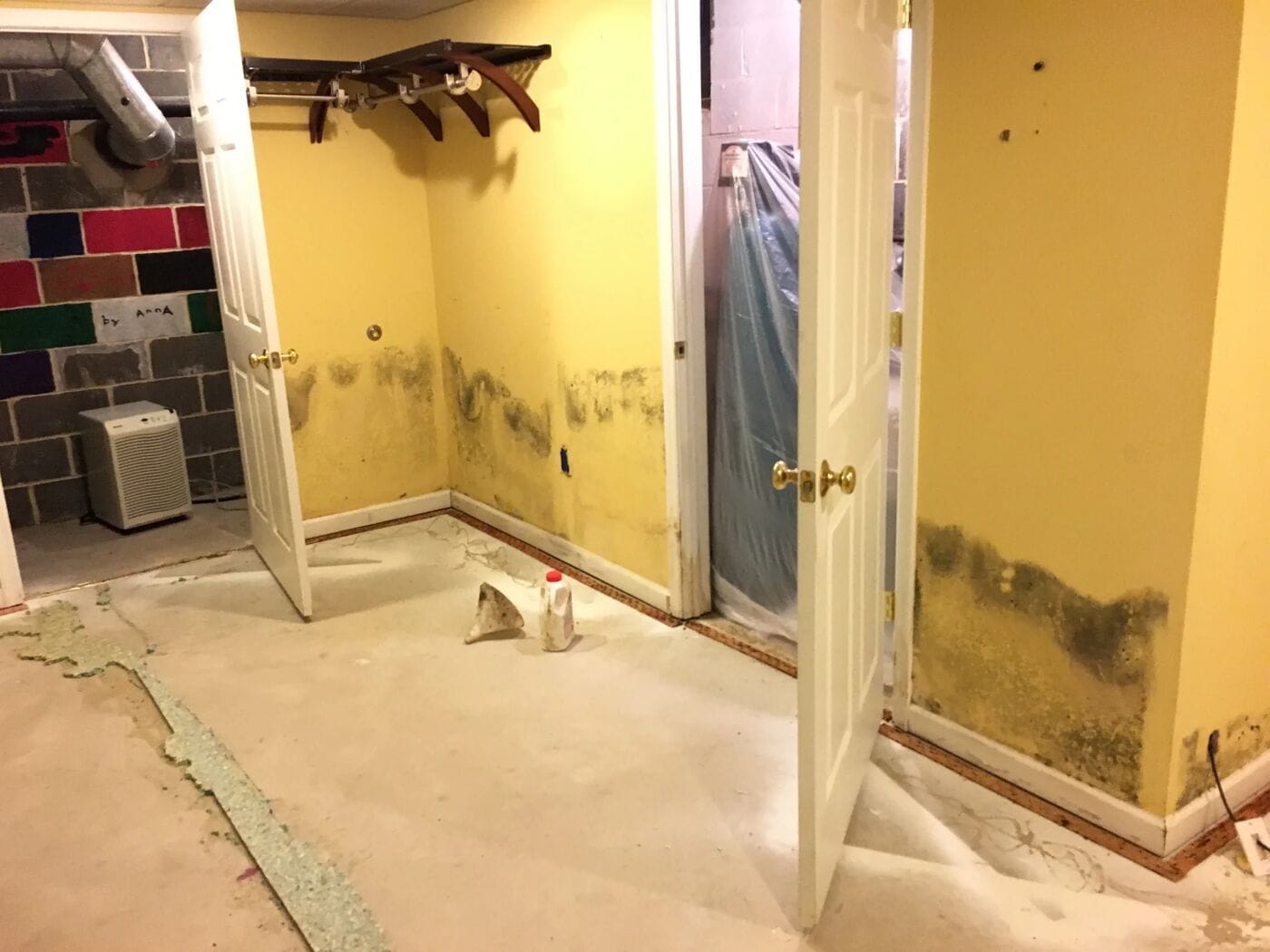
Building into a hillside gives you the walkout basement, which is a genuinely different structure from a full basement or a crawl space. One or two walls are buried in the grade. Another is above ground with doors and windows in it. The buried walls are in permanent contact with soil that sits in the fifties year round, so they run cool; the daylight wall is exposed to outside air and sun. Inside a single finished room you have a cool damp end and a warm dry end, and the corner where they meet is where humid air condenses out on the coldest surface it can find. When a walkout basement grows mold behind the drywall, that corner is where it starts nine times out of ten. Everybody looks at the walkout doors, where there's plenty of light to see by. The problem is at the other end.
Then there's water on the surface. Storm water on a slope is not a local matter. The rain that falls on the properties above you, on the streets above those, and on every driveway and roof between here and the top of the hill has to travel downhill, and a good deal of it crosses your lot on the way to the drainage swales and to Tyler Run itself. If the grade immediately around your foundation has flattened, if a walk or patio has settled toward the house, or if a swale that used to carry water around the building has been filled in for a lawn, that runoff loads the foundation wall directly. The creek does its part too — small watersheds like this rise fast in a hard rain and drop just as fast, which is enough to wet the low corner of a lot and anything stored in the basement there.
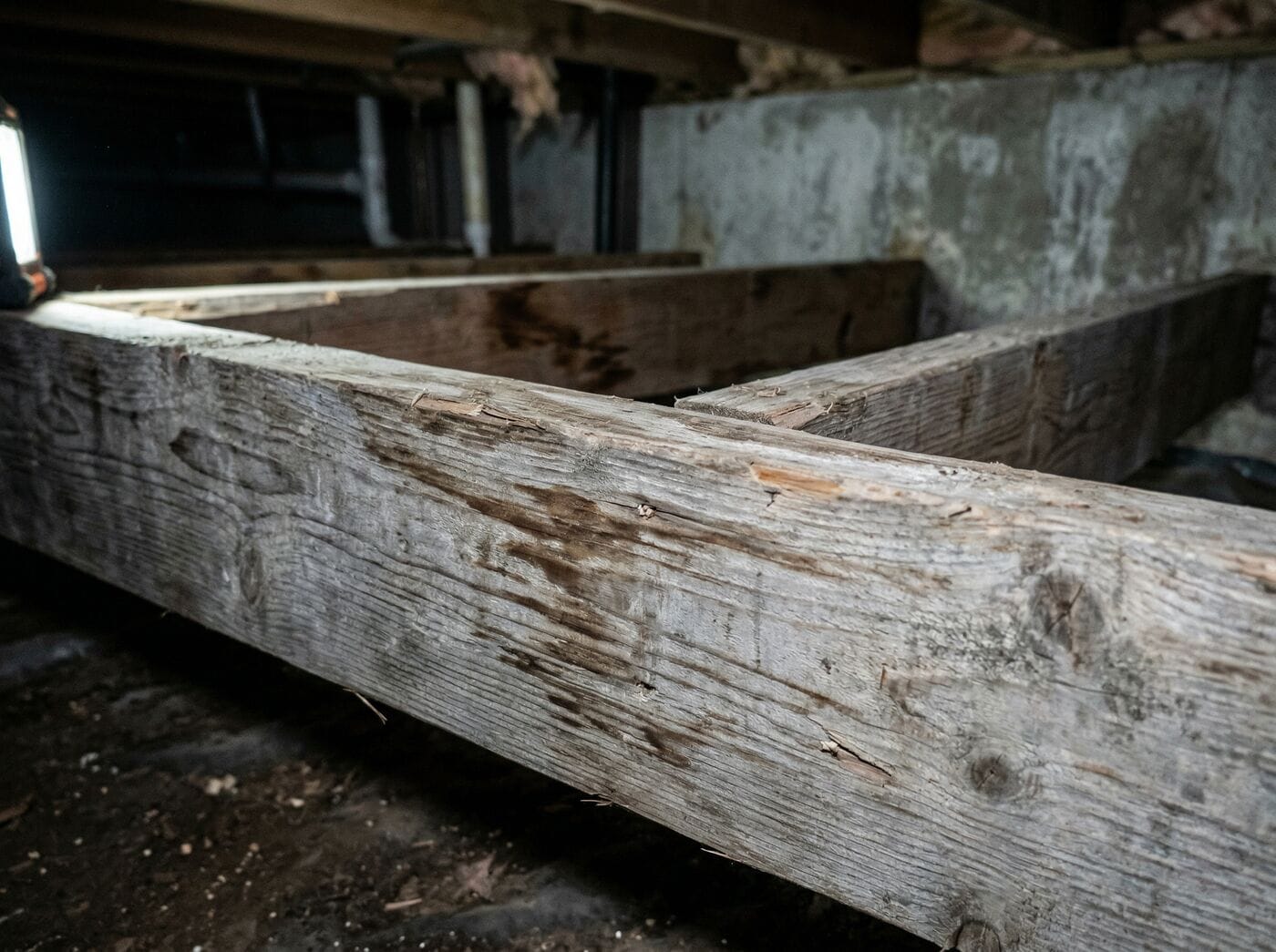
Retaining walls deserve their own paragraph. Half the yards here have one, and many of them are older than the idea that a retaining wall needs a drainage layer and a weep path behind it. When that drainage fails or was never there, the wall holds saturated soil against whatever is behind it — sometimes the house itself. On the inside you get an even band of elevated moisture along the bottom of the wall for its whole length, which is a distinctive pattern: plumbing leaks are localized, hydraulic loading is not.
Above grade, decks and patios built over the walkout are a recurring source. The ledger board, the door threshold and the flashing where the deck meets the house are all places water gets in and runs along the rim joist. Inside, that shows up as a wet header above the walkout doors and mold on the back of the trim, well away from anything you'd associate with the deck.
With rentals — including student housing associated with York College a short distance away — the same physics apply, just with faster turnover and more cosmetic repair layered over it. Whoever hires me, the inspection covers the lot and the structure, and the report says what the readings say.
What I run into most in Tyler Run
- Hillside lots south of the city — grade changes across a single property that are measured in feet, not inches.
- Walkout and daylight basements built into the slope, with one or two walls buried and one wall of glass and doors.
- Houses dating back to the 1940s alongside later infill, so two very different construction eras on the same street.
- Retaining walls, terraces and stacked-block landscaping, most of it older than its drainage.
- Storm water arriving from uphill properties rather than originating on the lot.
- Tyler Run and the drainage swales that feed it, which rise quickly in heavy rain and load the low corners of nearby lots.
- Decks, patios and screened rooms over walkout basements — leaks at the ledger and the door threshold that show up inside as a wet header.
- Student and short-term rentals near York College — fast turnovers, cosmetic repairs, and complaints that need documenting quickly.
Tell me the address, whether the basement is a walkout, and what you're seeing. I'll come back with timing and pricing.
When it's worth getting mold testing in Tyler Run
If any of this is your house, a $450 inspection is cheaper than waterproofing a wall that's wet because of the yard.
A walkout basement that's damp at one end only
The buried end stays cool and humid while the daylight end is dry. The transition corner between them is where condensation collects behind finished walls, and it's the first place I take readings.
Water that sheets across the yard in a storm
On a slope, the runoff from everything uphill has to cross your lot. If it arrives at the foundation faster than the ground can take it, the wall gets loaded whether or not your gutters are perfect.
A retaining wall holding soil against the house
When a retaining wall loses its drainage, it holds saturated soil directly against the structure. The inside face reads wet along the whole bottom, evenly, which is a signature you can't get from a plumbing leak.
A creek or swale that rises fast
Tyler Run itself comes up quickly in heavy rain and drops just as fast. Nothing about that is a mold problem by itself — the material it wetted on the way through is.
How a Tyler Run mold inspection goes
The lot comes first here, then the house. You can't diagnose a hillside basement from the inside only.
You call or text me
You get me directly. Tell me whether the basement is a walkout, where the lot slopes, and what you're seeing. On a hillside property the grade tells me more in thirty seconds than a photograph of a stain does.
I come out and look
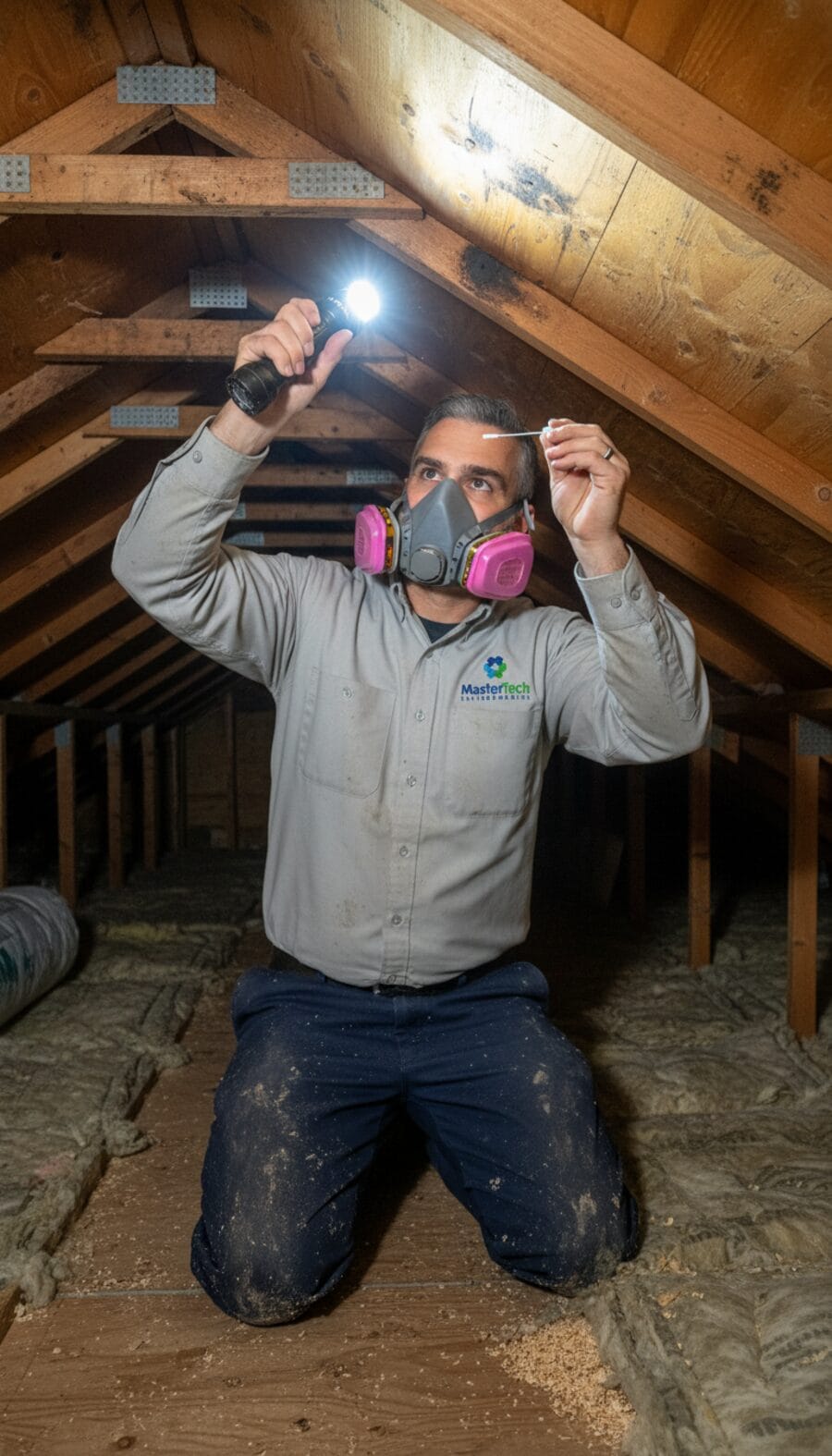
Sixty to ninety minutes for a typical home. I walk the lot before I go inside — where the water arrives, where it leaves, what the retaining walls and downspouts are doing — then read moisture on the buried walls, the bottom plate, the finishes and the ceiling under any deck or patio above.
I sample where it answers a question
4 samples included. In a walkout I'll usually take one at the buried end, one in the living space above, and one outdoors as a baseline, because the two ends of a walkout basement genuinely have different air. Extras are $85 each and I'll tell you before I take one.
The lab runs it
Independent accredited lab. I don't own it, get no cut of the findings, and sell no cleanup on the back of them.
You get the report
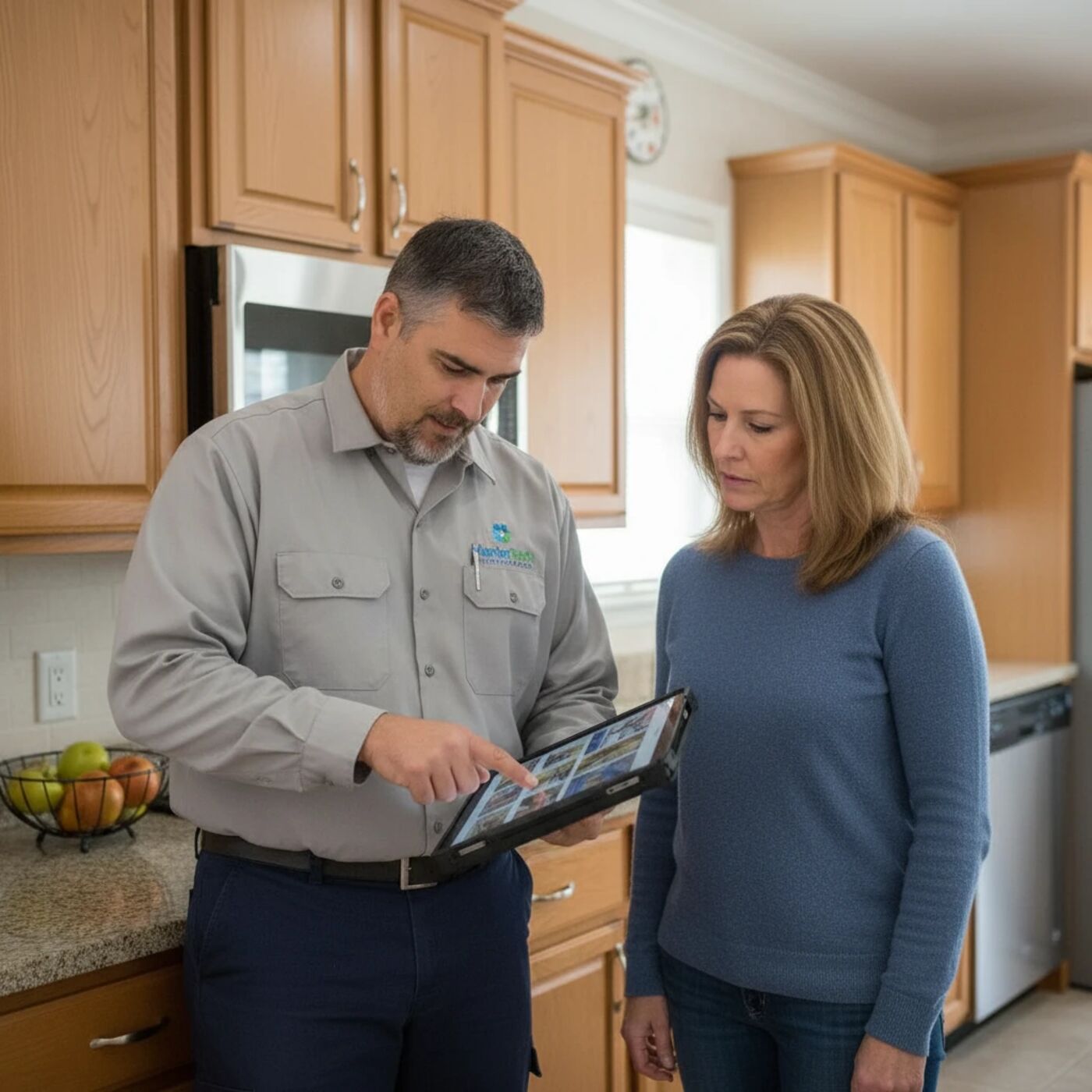
Written report in 1-2 business days: photos inside and out, moisture readings by location, lab data, my read on where the water enters the lot and the house, and what to fix in what order.
We go over it on the phone
Plain English, and specific enough that an excavator or a drainage contractor can quote the grading work rather than guessing at it.
I don't do remediation, and that changes everything
An interior drainage system is an easy thing to sell to someone with a wet hillside basement. Sometimes it's also the wrong answer.
- No remediation work sold, ever
- No referral fees from waterproofing or drainage contractors
- No ownership stake in the lab that runs the samples
- I'll tell you when the answer is outside the house, not inside it
- Samples taken because a question needs answering, not to run up a bill
- If your Tyler Run house tests clean, the report says clean
What a mold inspection costs in Tyler Run, PA
Flat pricing, nothing hidden. Extra samples beyond the 4 included are $85 each. Lab results come back in 1-2 business days.
- Visual inspection of the areas of concern
- Thermal imaging
- Moisture meter readings
- 4 air or surface samples
- Accredited independent lab analysis
- Written report with photos and readings
- Phone walkthrough of the results
Covers properties or inspected areas up to approximately 2,500 sq ft. Larger properties may need more inspection time, more areas or more sampling, so the price can go up — I'll tell you the number before I come out.
Schedule a residential inspection- Visual inspection of the areas of concern
- Thermal imaging
- Moisture meter readings
- 4 air or surface samples
- Accredited independent lab analysis
- Written report with photos and readings
- Phone walkthrough of the results
Covers the extra reporting and square footage that comes with commercial buildings. Additional samples $85 each.
Schedule a commercial inspectionSee the report before you hire me
The inspection is only worth as much as the paperwork you're left holding. Mine lays out what I looked at, what I found, what the lab said, and what should happen next — in language you can hand to a contractor, a landlord, or a realtor.
- Inspection summary
- Lab sample results
- Moisture readings
- Area-by-area notes
- Photos of findings
- Recommendations
- Limitations
- Next steps
Mold inspection services in Tyler Run, PA
Basements, crawl spaces, attics, rentals and pre-purchase testing, at flat pricing with no trip charge.
Basement Mold Inspection
Moisture readings, thermal imaging and air samples in finished and unfinished basements.
Learn moreCrawl Space Mold Inspection
Joists, subfloor, vapor barrier and foundation walls in the space nobody looks at.
Learn more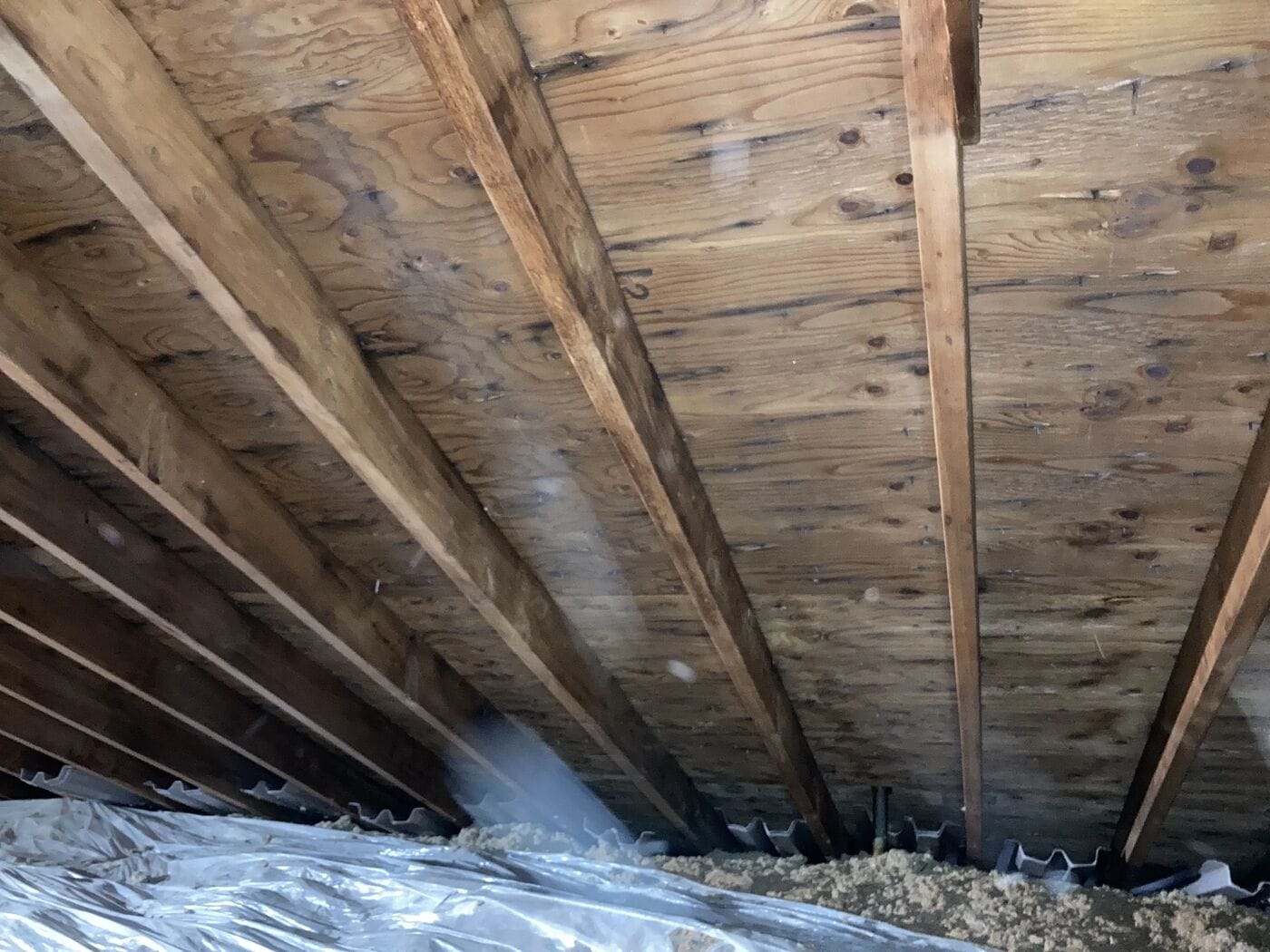
Attic Mold Inspection
Roof sheathing, rafters, bath fan venting and attic ventilation problems.
Learn more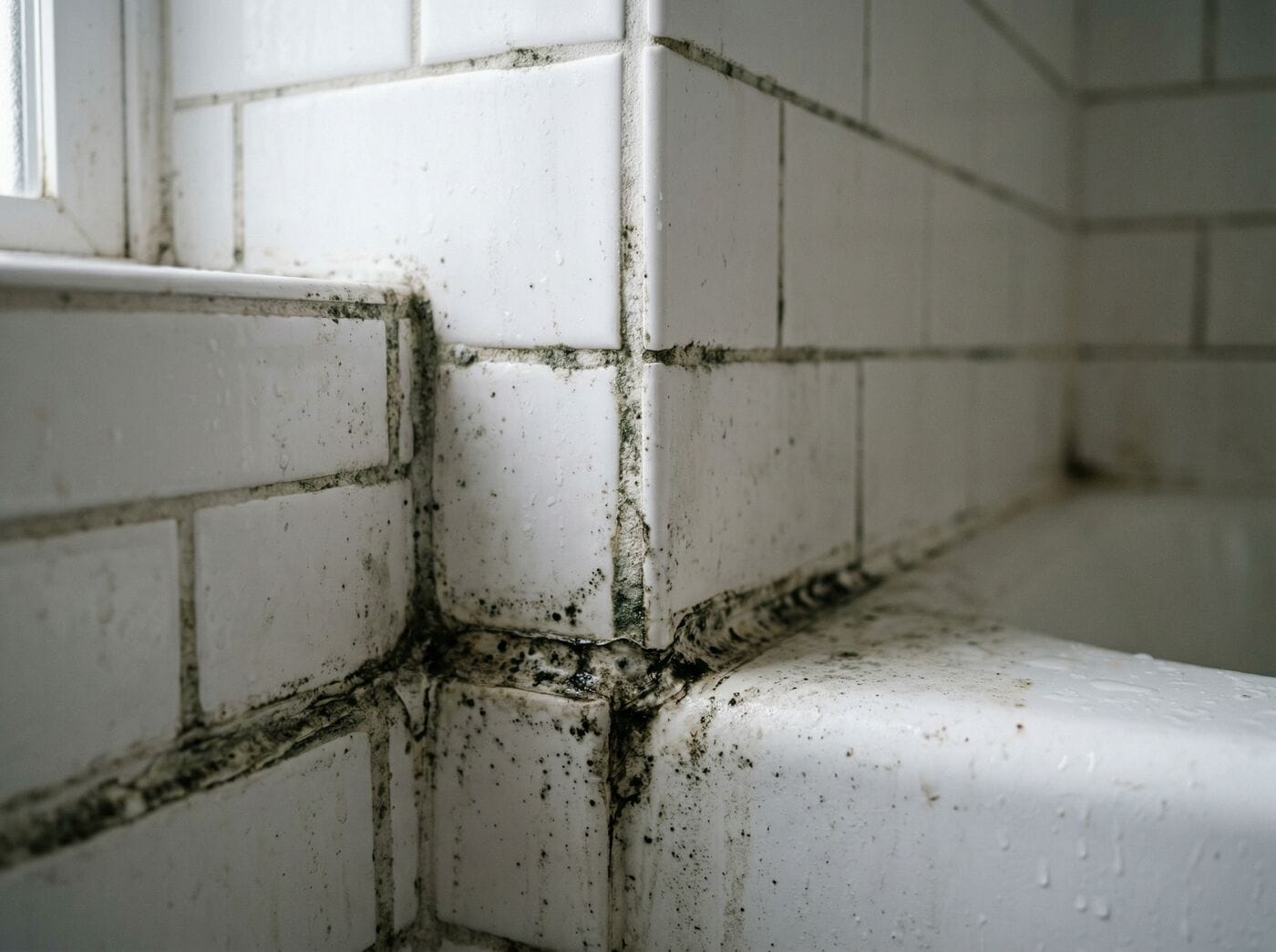
Bathroom Mold Inspection
Grout, under-sink cabinets, subfloor and exhaust fans in the dampest room in the house.
Learn more
Real Estate Mold Inspection
Pre-purchase and pre-listing testing with a report in 1-2 business days.
Learn more
Mold Clearance Testing
Independent post-remediation verification after a remediation contractor finishes the work.
Learn more
Commercial Mold Inspection
Offices, rentals, schools, restaurants and warehouses, with documentation you can file.
Learn more
Landlord / Tenant Mold Inspection
Neutral third-party inspections and reports for rental disputes and code complaints.
Learn moreLooking for one thing in particular?
If you came here for one specific problem, these pages go straight at it.
Mold inspection cost in York, PA
The flat price — $450 residential, $785 commercial — what it includes, and why free inspections cost more.
Read thisMold inspector near me
What a real inspection covers, what to ask before you hire, and why free ones cost more.
Read thisMold testing near me
Air, surface and ERMI testing explained, with what each one can and can't tell you.
Read thisAttic mold
Why attics in this climate grow mold on the sheathing, and how the testing answers it.
Read thisArticles about basements, drainage and storm water
How water gets into a lower level, written up from the inspections themselves.
Fall Drainage Issues & Foundation Moisture
Fall is when drainage problems become mold problems. Clogged gutters, saturated soil, and heavy autumn rains drive moisture into basements and crawl spaces just as temperatures create ideal mold growth conditions. Here's what to do before winter arrives.
Read the articleWhat Happens to Mold Levels After a York County, PA Flood or Heavy Rain
A flood or significant rain event does not immediately produce a mold problem - but it starts a clock. Here's exactly what happens to mold spore levels in the hours and days after a water event, and when to get your home tested.
Read the articleHow Poor Drainage Around York Homes Feeds Basement Mold
Most basement mold problems in York County do not start inside the house. They start outside it - with drainage problems that push water toward the foundation every time it rains. Here's how that connection works and what to look for around your home.
Read the articleWhat Tyler Run homeowners, buyers and renters say
Rated 5.0 from 5 Google reviews.
I could not recommend this business enough for mold inspections! If you're looking for quick turnaround, great communication and honest upfront service - this is your place. Tom was respectful, professional, and explained everything in great detail.
Truly the best! I can't say enough good things about Tom. I truly feel like I had someone I could count on by my side during this very stressful situation.
We had a great experience with Tom at Mastertech throughout this whole process. They took extra time to answer all of our questions and explained everything in a way that actually made sense.
Tyler Run mold inspection questions
$450 residential, $785 commercial, both with 4 lab samples included and additional samples at $85. Tyler Run is a few minutes south of the shop, so there's no trip charge.
Where I work
I cover York and the towns around it — basically anything within about 7 miles of 2400 Taxville Rd, York, PA 17408, plus a good bit of York County beyond that. If you're close and don't see your town, call me anyway.
Based in York, not a call center
You reach me directly, and I'm the one who shows up and does the inspection. Most weeks I can be out within a couple of days, sooner if you're up against a closing date.