
Mold inspection and testing in North York, PA
North York is a small, dense borough — incorporated in 1899, built out in rowhomes and twins not long after, and packed into a few hundred acres along the Codorus. It has more rental housing per block than almost anywhere else I work, and more code enforcement to go with it. That means a lot of my work here is documentation: a neutral, dated, lab-backed report that a landlord, a tenant or a borough inspector can all read the same way. I test and document. I don't sell remediation.
- — CMI certified, PMII, since 2010
- — $450 flat, 4 samples included
- — Neutral third-party reports for rentals and code notices
- — Report in 1-2 business days
Why North York rowhomes and rentals get mold
Dense masonry housing, a lot of it rented, on low ground next to a creek. Each of those contributes something different, and the report has to say which one you're dealing with.
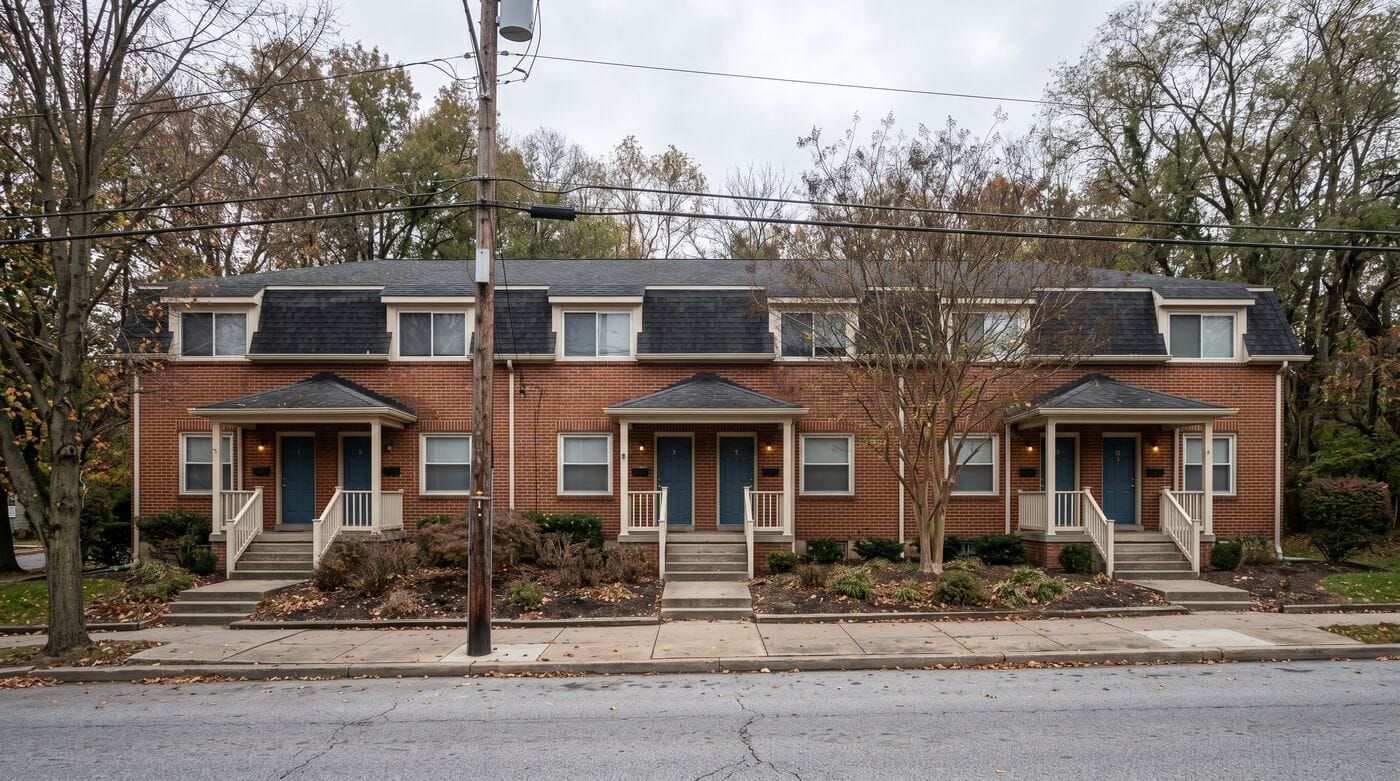
North York is physically small and built tight. The borough has been its own municipality since 1899, and most of its housing went up in the following two or three decades: brick rowhomes and twins, a few larger singles, and a handful of commercial buildings along the main streets. That means shared masonry almost everywhere, cellars with stone or early block walls, plaster on lath upstairs, and no vapor control anywhere in the assembly — none of which existed when these were built.
The party wall is the first thing that separates a borough inspection from a township one. In a row you own half the brick, and masonry does not care whose deed it's on. If the unit beside yours has a downspout discharging at the foundation, open joints in the mortar, or has been sitting vacant and unheated through a winter, you get damp plaster and staining on your side, and there is nothing you can do on your own side to stop it. A meaningful share of my inspections here end with me telling an owner that their wall is wet and the cause is fifteen feet away through the brick. That's worth knowing before you pay someone to re-drywall it twice.
The second thing is the tenure mix. A large fraction of the borough's housing is rented, and much of it has been converted — single-family houses cut into two or three units, bathrooms and kitchens added where there was never plumbing, exhaust fans installed decades later and vented into a joist bay or a soffit rather than through the wall. The borough maintains rental property maintenance requirements and does enforce them, which means the disputes I get called into usually have a paper trail attached: a complaint, a notice, sometimes a hearing date. Those cases don't need somebody's opinion. They need moisture readings by room, dated photographs, and accredited lab data, from someone who has no cleanup contract riding on the outcome.
The third is the water. The Codorus Creek runs along the borough, the low ground here is genuinely low, and flood risk along this stretch is enough of a live issue that it has been the subject of federal flood risk management study work covering the city and North York together. Practically, that shows up in basements as a tide line on the block, furnaces and water heaters sitting up on blocks, and a bottom plate that has been soaked more than once. Old flood water doesn't keep growing mold on its own — but the framing, insulation, finished walls and stored belongings that got wet and were never properly dried absolutely do.
Finally, there's the stack effect, which in a three-story rowhome is the mechanism that turns a cellar problem into a bedroom problem. Air moves upward through a building of this shape almost continuously. A cellar that smells of wet stone is feeding the second and third floors all day, which is why I sample vertically rather than only in the room where the complaint started.
My job is to work out which of those four you actually have and prove it — readings, thermal imaging, and independent lab results, written so it means the same thing to every person who reads it.
What I run into most in North York
- Early-1900s rowhomes and twins — the borough has been incorporated since 1899 and much of the housing stock followed within twenty years.
- Shared masonry party walls — telling which direction the water came through the brick is usually the question that actually matters.
- A high proportion of rentals and converted units — single-family houses cut into apartments, with plumbing and fans added long after the fact.
- Borough rental maintenance and code enforcement — reports that need to stand up to an inspector, not just reassure a homeowner.
- Codorus Creek frontage and low ground — repeated wetting and drying over decades leaves material behind whether or not water ever came back.
- Small lots with little setback — downspouts, walkways and alleys all discharge within a few feet of the foundation.
- Stone and early block cellars with dirt or patched floors — permanently damp by design, with no mechanical drying anywhere.
- Second- and third-floor units over unvented bathrooms — the stack effect carries moisture and odor upward through the whole building.
Owner, tenant or buyer — tell me the address and what's happening. I'll come back with timing and pricing.
When you need mold testing in North York, PA
If any of this sounds familiar, a $450 inspection costs less than one round of arguing about it — and a lot less than remediating the wrong wall.
Damp plaster on a party wall you don't fully own
In a row, half the brick belongs to someone else. A vacant unheated unit, a failed downspout or open mortar joints next door show up as staining on your side, usually in the same place every spring.
A tenant complaint the landlord disputes
Or the reverse. Either way, the argument goes nowhere without dated readings and lab data from a third party who isn't selling either side a cleanup.
A basement on the low ground near the Codorus
If the mechanicals sit on blocks and there's a tide line on the wall, water has been in there. The flood is over; the framing, the bottom plate and the stored material that never dried are what's left.
A borough code notice you have to answer
A notice needs documentation, not a verbal opinion. Photos, moisture readings by room, accredited lab results and a clear statement of the source, dated and signed.
How a North York mold inspection goes
Same process whether you own the building, rent a unit in it, or are trying to answer a code notice about it.
You call or text me
You get me, not a call center. Tell me whether you're the owner, the tenant or the buyer, what you're seeing, and whether there's a code notice or a hearing date involved. That changes how I document it.
I come out and look
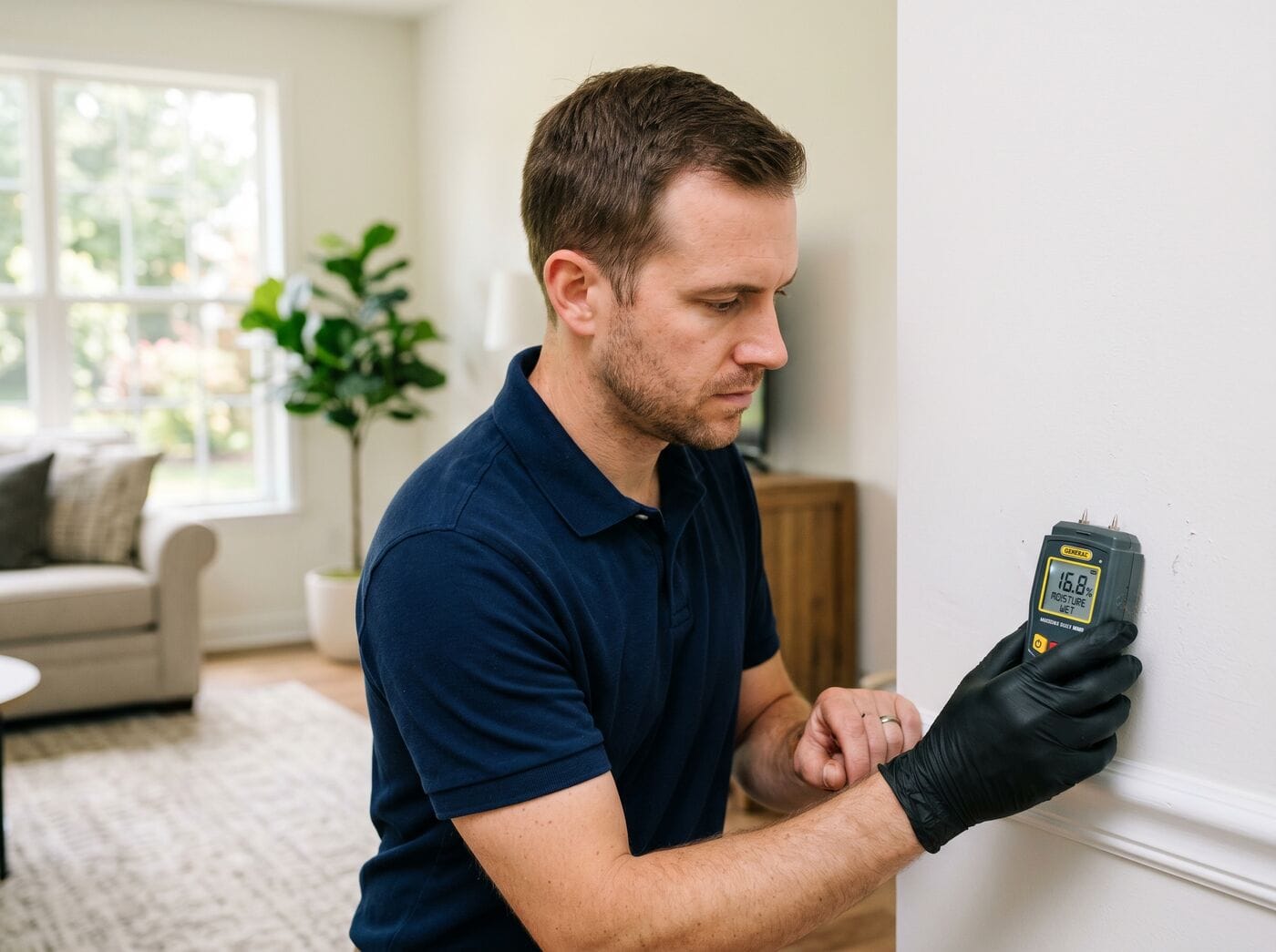
About ninety minutes for a single home, longer for a converted multi-unit. Visual inspection of the cellar, the affected rooms, the baths and the attic, moisture readings on plaster, brick and framing, and thermal imaging to find wet material behind finished surfaces.
I sample where it answers a question
4 samples included. In a rowhome or a rental I'll usually take one per floor plus an outdoor baseline, because vertical air movement through the building is the whole issue in this housing stock. Extras are $85 each and never taken without telling you.
The lab runs it
Independent accredited lab. I don't own it, I take no cut of the findings, and I have no remediation work to sell afterward — which is the only reason a report is worth anything in a dispute.
You get the report
Written report in 1-2 business days: photographs, moisture readings by location, the lab's own data pages, my read on the source, and recommended next steps in order.
We go over it on the phone
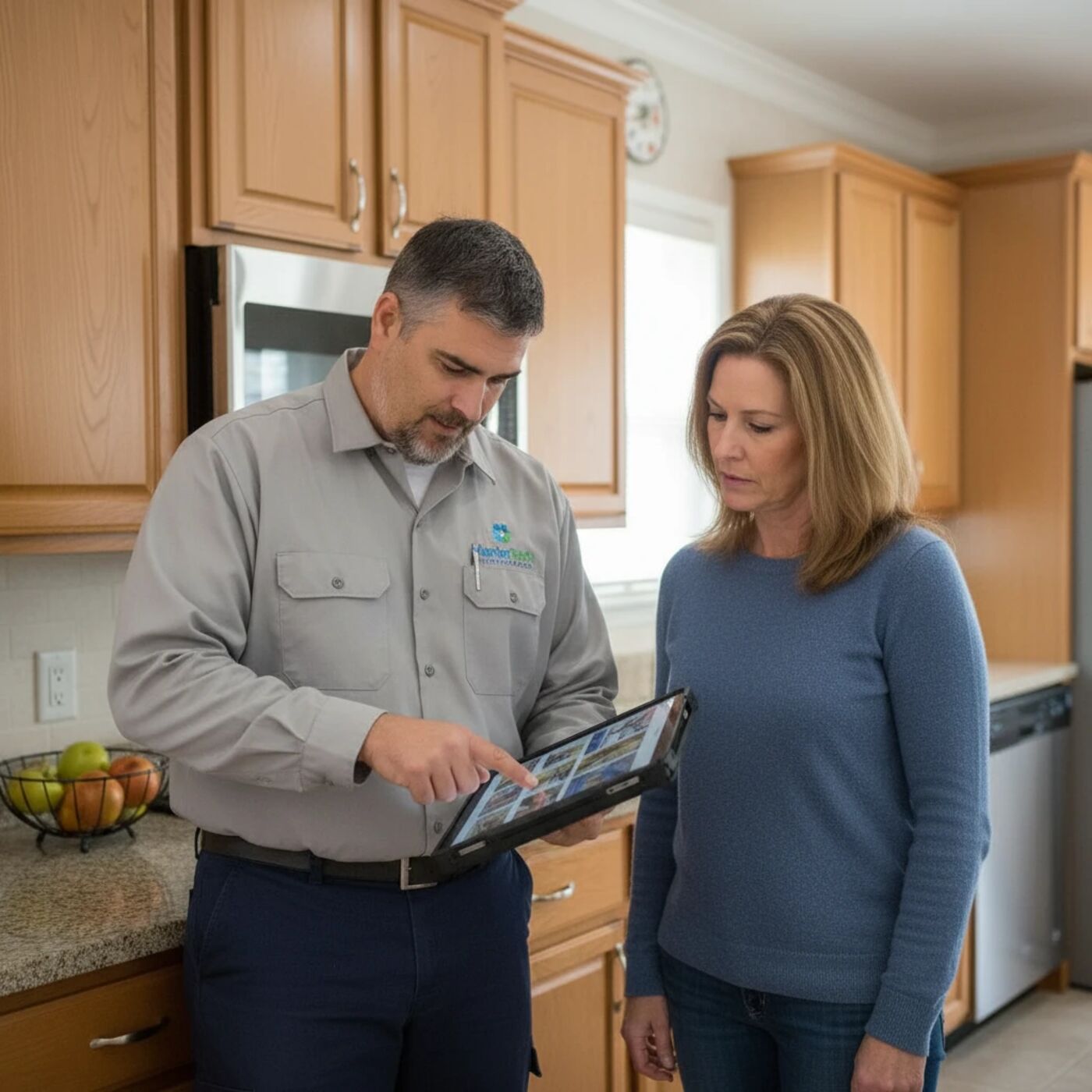
In plain English, so you can hand it to a landlord, a tenant, a code officer, an insurer or a magistrate and have it carry weight without me there to explain it.
Neutral, and that's the entire product
In a rental dispute, a report is only as good as the independence of the person who wrote it. Most companies that test mold also sell the cleanup.
- No remediation work sold, ever
- No referral fees from remediation contractors
- No ownership stake in the lab that runs the samples
- I work for whoever hired me — landlord or tenant — and the findings don't change
- Samples taken because a question needs answering, not to run up a bill
- If the unit tests clean, the report says clean
What a mold inspection costs in North York, PA
Flat pricing, nothing hidden. Extra samples beyond the 4 included are $85 each. Lab results come back in 1-2 business days.
- Visual inspection of the areas of concern
- Thermal imaging
- Moisture meter readings
- 4 air or surface samples
- Accredited independent lab analysis
- Written report with photos and readings
- Phone walkthrough of the results
Covers properties or inspected areas up to approximately 2,500 sq ft. Larger properties may need more inspection time, more areas or more sampling, so the price can go up — I'll tell you the number before I come out.
Schedule a residential inspection- Visual inspection of the areas of concern
- Thermal imaging
- Moisture meter readings
- 4 air or surface samples
- Accredited independent lab analysis
- Written report with photos and readings
- Phone walkthrough of the results
Covers the extra reporting and square footage that comes with commercial buildings. Additional samples $85 each.
Schedule a commercial inspectionSee the report before you hire me
The inspection is only worth as much as the paperwork you're left holding. Mine lays out what I looked at, what I found, what the lab said, and what should happen next — in language you can hand to a contractor, a landlord, or a realtor.
- Inspection summary
- Lab sample results
- Moisture readings
- Area-by-area notes
- Photos of findings
- Recommendations
- Limitations
- Next steps
Mold testing services in North York, PA
All of it available in the borough at flat pricing, for owner-occupied homes, rentals and the commercial buildings along the main streets.
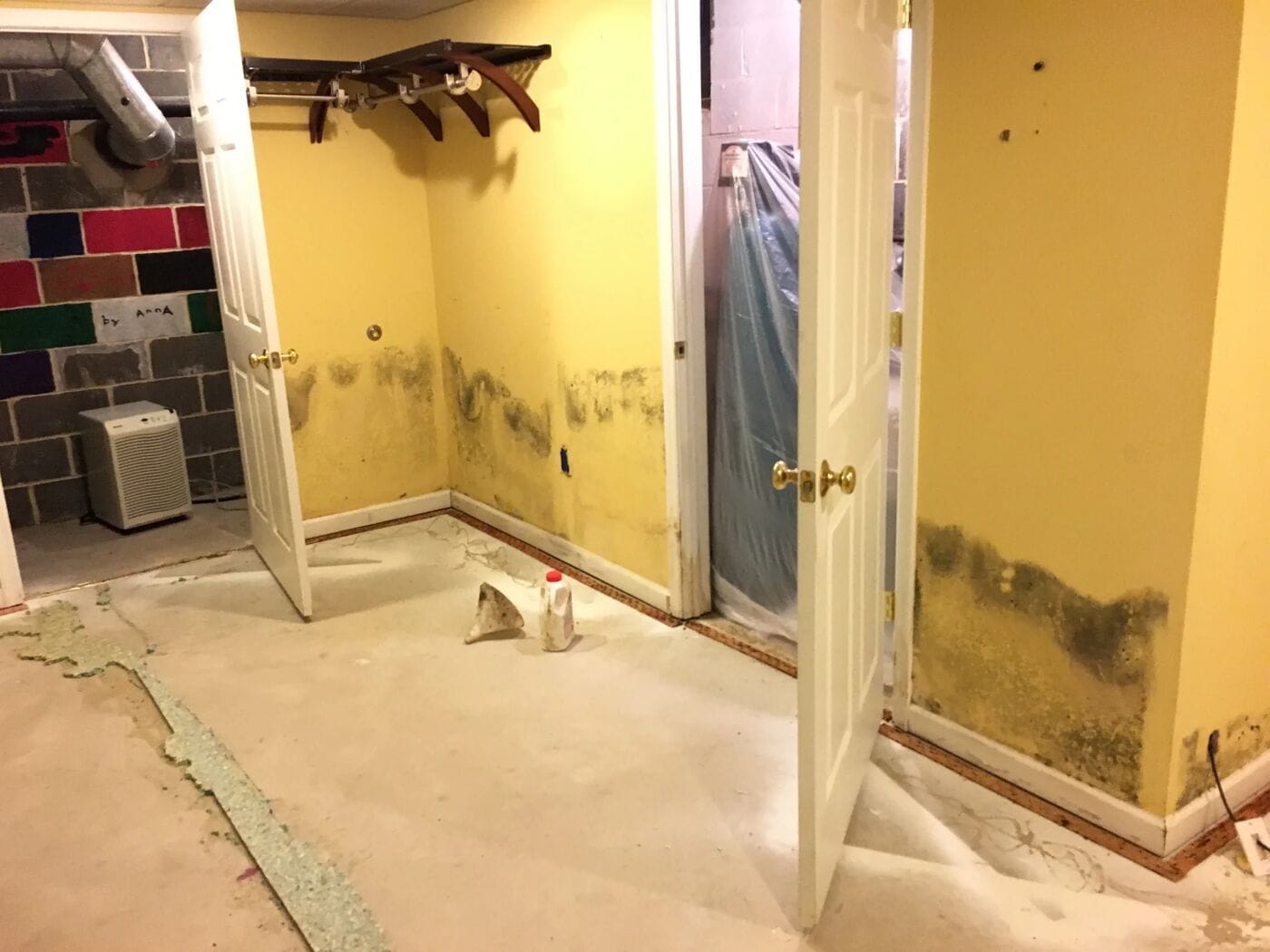
Basement Mold Inspection
Moisture readings, thermal imaging and air samples in finished and unfinished basements.
Learn more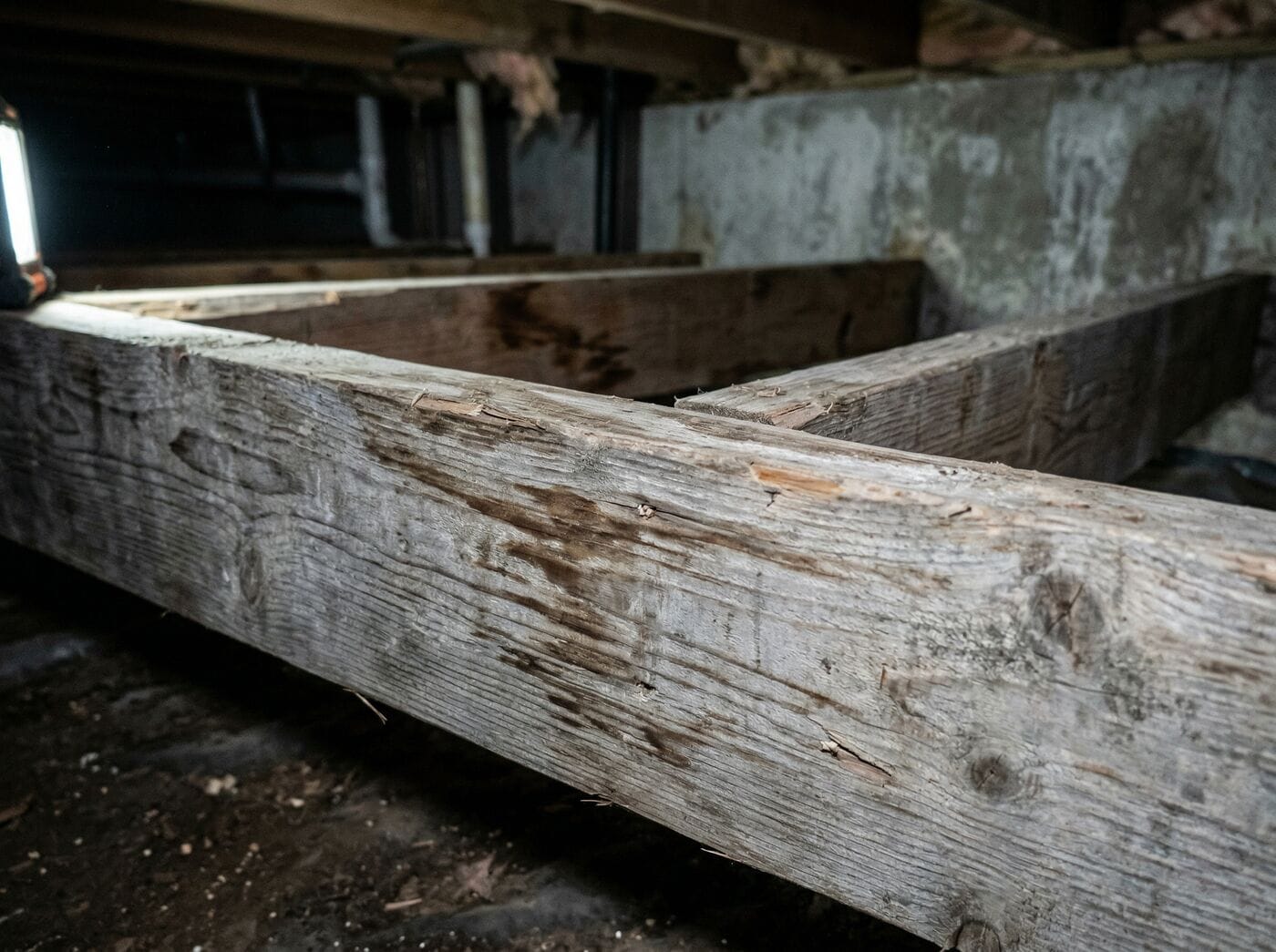
Crawl Space Mold Inspection
Joists, subfloor, vapor barrier and foundation walls in the space nobody looks at.
Learn more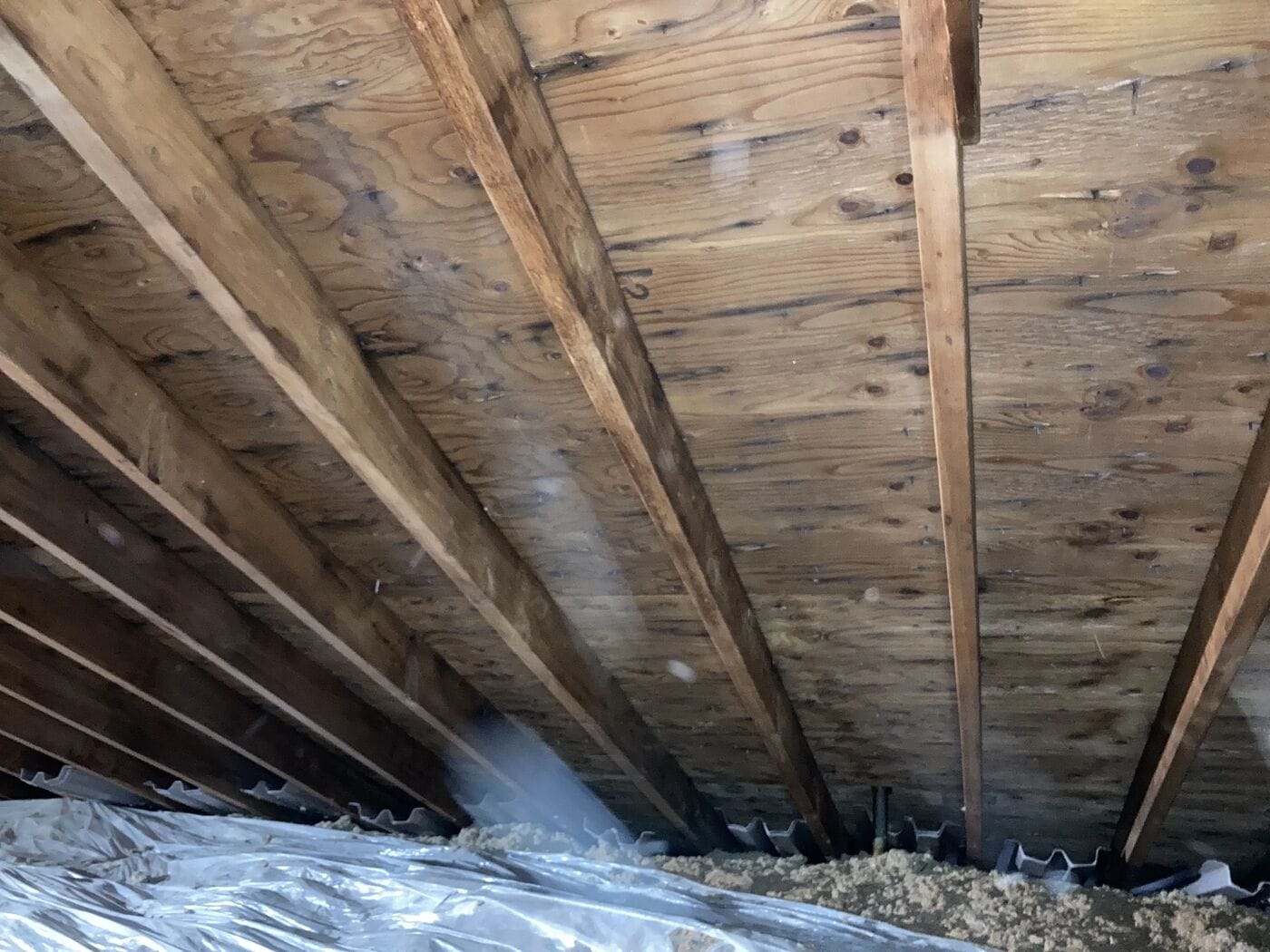
Attic Mold Inspection
Roof sheathing, rafters, bath fan venting and attic ventilation problems.
Learn more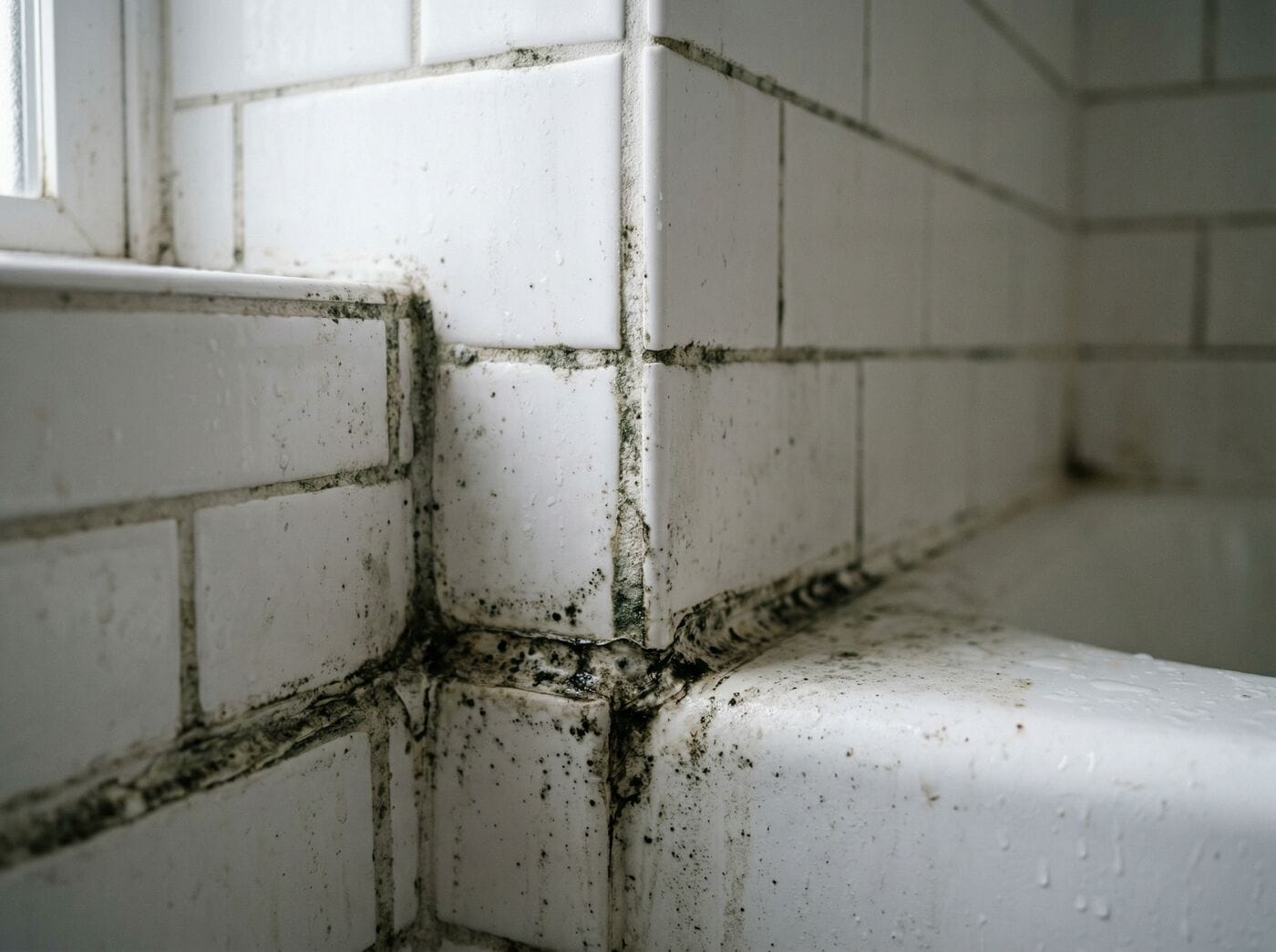
Bathroom Mold Inspection
Grout, under-sink cabinets, subfloor and exhaust fans in the dampest room in the house.
Learn more
Real Estate Mold Inspection
Pre-purchase and pre-listing testing with a report in 1-2 business days.
Learn more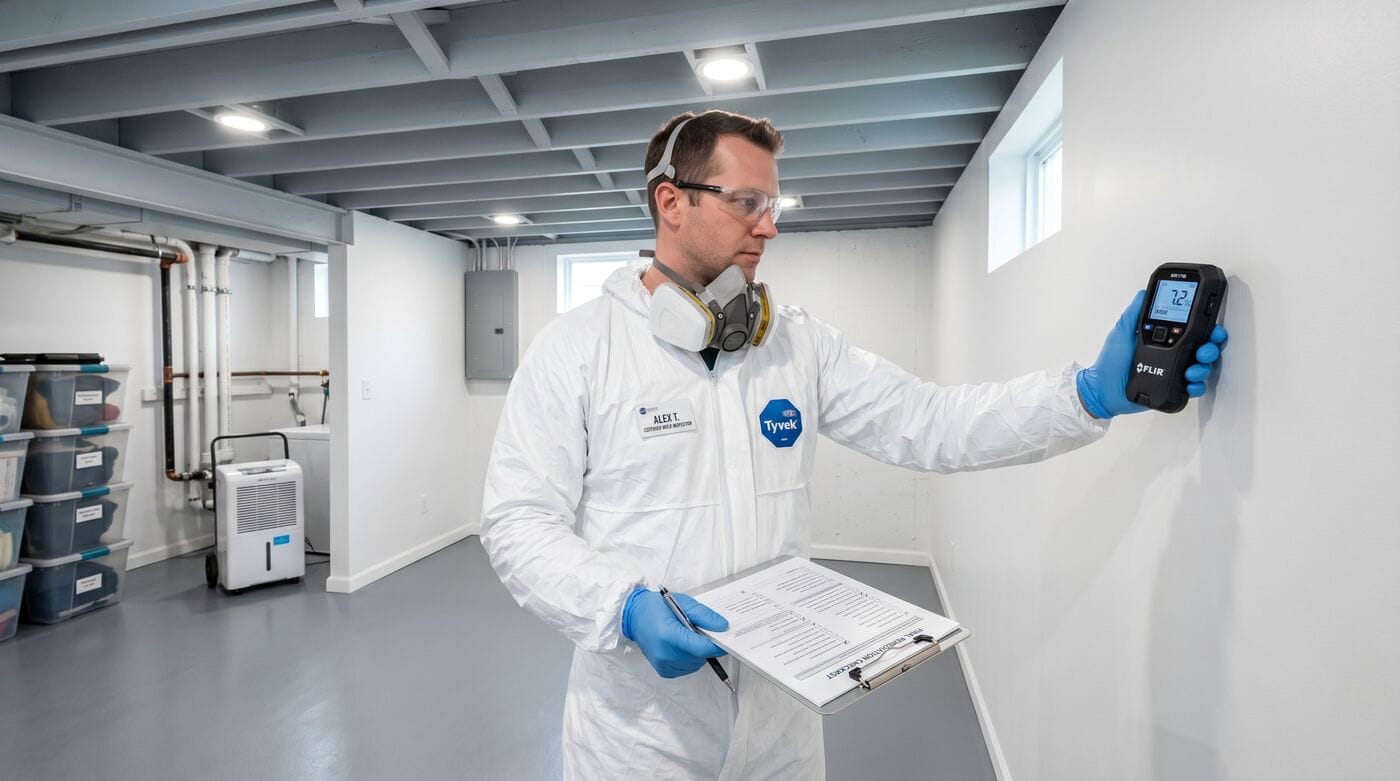
Mold Clearance Testing
Independent post-remediation verification after a remediation contractor finishes the work.
Learn more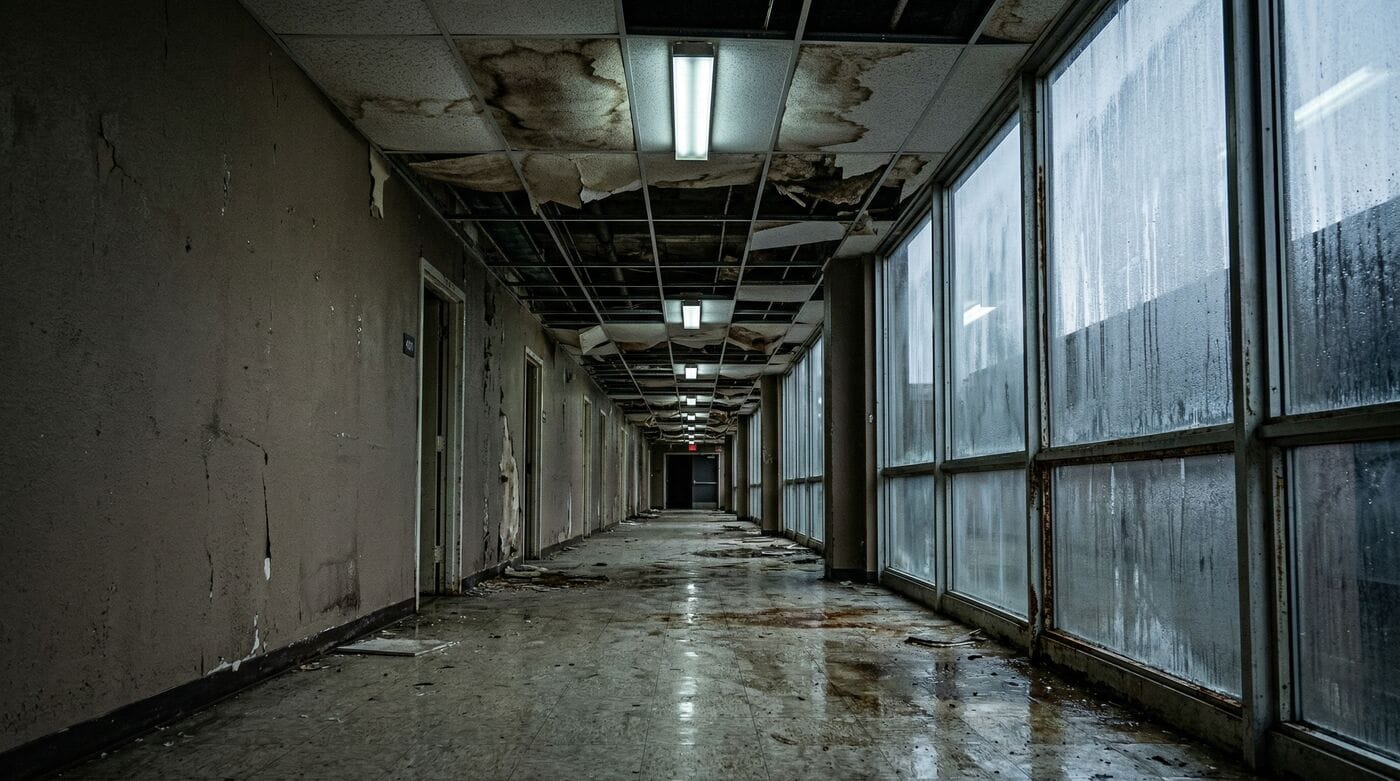
Commercial Mold Inspection
Offices, rentals, schools, restaurants and warehouses, with documentation you can file.
Learn moreLandlord / Tenant Mold Inspection
Neutral third-party inspections and reports for rental disputes and code complaints.
Learn moreLooking for one thing in particular?
If you came here searching for something specific, these pages answer it directly.
Mold inspection cost in York, PA
The flat price — $450 residential, $785 commercial — what it includes, and why free inspections cost more.
Read thisMold inspector near me
What a real inspection covers, what to ask before you hire, and why free ones cost more.
Read thisMold testing near me
Air, surface and ERMI testing explained, with what each one can and can't tell you.
Read thisAttic mold
Why attics in this climate grow mold on the sheathing, and how the testing answers it.
Read thisArticles about mold in York and York County
Rentals, rowhomes and old cellars, written up from the inspections themselves.
Why Older Rental Properties in York, PA Are Prone to Mold Issues
York County has one of the oldest housing stocks in Pennsylvania, and a large share of those homes are now rentals. Age, deferred maintenance, and occupancy patterns combine to make older rental properties unusually vulnerable to mold. Here is why it happens and what landlords can do about it.
Read the articleMold Testing for Landlords: When It Makes Sense
Not every rental property needs mold testing every year, and not every tenant complaint needs an immediate lab report. But some situations genuinely call for it. Here is a clear, practical guide to knowing the difference.
Read the articleWhat North York owners, tenants and buyers say
Rated 5.0 from 5 Google reviews.
I could not recommend this business enough for mold inspections! If you're looking for quick turnaround, great communication and honest upfront service - this is your place. Tom was respectful, professional, and explained everything in great detail.
Truly the best! I can't say enough good things about Tom. I truly feel like I had someone I could count on by my side during this very stressful situation.
We had a great experience with Tom at Mastertech throughout this whole process. They took extra time to answer all of our questions and explained everything in a way that actually made sense.
North York mold inspection questions
$450 for a residential inspection, $785 for commercial, both including 4 accredited lab samples. Extra samples are $85 each and I tell you before I take one. North York is minutes from the shop, so nothing gets added for travel.
Where I work
I cover York and the towns around it — basically anything within about 7 miles of 2400 Taxville Rd, York, PA 17408, plus a good bit of York County beyond that. If you're close and don't see your town, call me anyway.
Based in York, not a call center
You reach me directly, and I'm the one who shows up and does the inspection. Most weeks I can be out within a couple of days, sooner if you're up against a closing date.